Cuthalla – Cthulu the Elder god
https://www.wizard101central.com/wiki/Creature:Cuthalla
https://www.wizard101central.com/wiki/Quest:The_Grotto
https://en.wikipedia.org/wiki/Cthulhu

Cuthalla is one of the three ancient spirits that Wizards help put to rest as part of the Quest “The Grotto”. Eeglis and Ulwark are the other two.
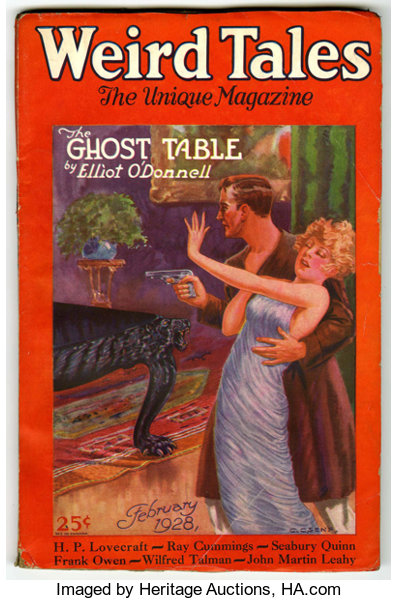
Cthulhu is a fictional cosmic entity created by writer H. P. Lovecraft. It was first introduced in his short story “The Call of Cthulhu”, published by the American pulp magazine Weird Tales in 1928. Considered a Great Old One within the pantheon of Lovecraftian cosmic entities, this creature has since been featured in numerous popular culture references. Lovecraft depicts it as a gigantic entity worshipped by cultists, in the shape of a green octopus, dragon, and a caricature of human form. The Lovecraft-inspired universe, the Cthulhu Mythos, where it exists with its fellow entities, is named after it.
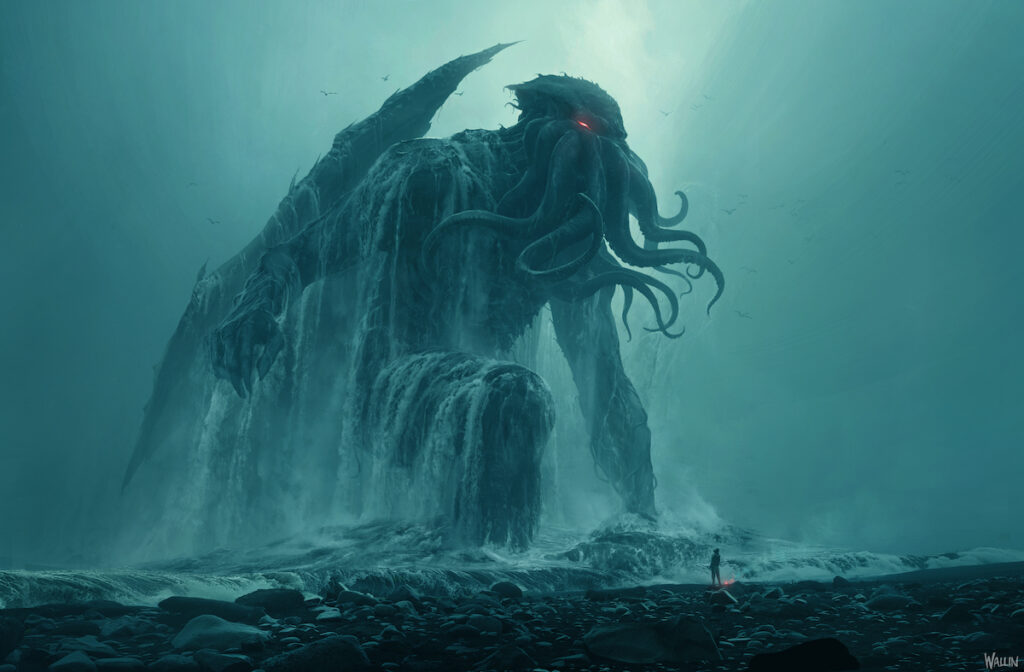
In “The Call of Cthulhu”, H. P. Lovecraft describes a statue of Cthulhu as: “A monster of vaguely anthropoid outline, but with an octopus-like head whose face was a mass of feelers, a scaly, rubbery-looking body, prodigious claws on hind and fore feet, and long, narrow wings behind.” Cthulhu is said to resemble a green octopus, dragon, and a human caricature, hundreds of meters tall, with webbed, human-looking arms and legs and a pair of rudimentary wings on its back. Its head is depicted as similar to the entirety of a gigantic octopus, with an unknown number of tentacles surrounding its supposed mouth.
Invented by Lovecraft in 1928, the name Cthulhu was probably chosen to echo the word chthonic (Ancient Greek “of the earth”), as apparently suggested by Lovecraft himself at the end of his 1923 tale “The Rats in the Walls”. The chthonic, or earth-dwelling, spirit has precedents in numerous ancient and medieval mythologies, often guarding mines and precious underground treasures, notably in the Germanic dwarfs and the Greek Chalybes, Telchines, or Dactyls.

Lovecraft transcribed the pronunciation of Cthulhu as Khlûl′-hloo, and said, “the first syllable pronounced gutturally and very thickly. The ‘u’ is about like that in ‘full’, and the first syllable is not unlike ‘klul’ in sound, hence the ‘h’ represents the guttural thickness” yielding something akin to /χ(ə)ʟʊʟˈluː/. S. T. Joshi points out, however, that Lovecraft gave different pronunciations on different occasions. According to Lovecraft, this is merely the closest that the human vocal apparatus can come to reproducing the syllables of an alien language. Cthulhu has also been spelled in many other ways, including Tulu, Katulu, and Kutulu. The name is often preceded by the epithet Great, Dead, or Dread.
Long after Lovecraft’s death, Chaosium stated in the Call of Cthulhu role-playing game: “we say it kuh-THOOL-hu”, even while noting that Lovecraft said it differently. Others use the pronunciation Katulu or Kutulu
The current list of all the (known) Celestia references are located here.
Although I am well versed in Pop Culture references, I do not claim to have caught them all. Let me know your favorites in the comments and if I’ve missed one you caught, let me know so I can add it to the list.
Text for this article is excerpted from the linked wiki pages
Cuthalla image is from Wizard101, and is copyright of KingsIsle Entertainment.
Weird Tales Feb 1928 by Rural Publishing cover is borrowed from Wikipedia and is in the Public Domain.
Cthulhu sketch by Lovecraft, H.P. (Howard Phillips), “Cthulhu” (1934). Howard P. Lovecraft collection. Brown Digital Repository. Brown University Library. This image is borrowed from Wikipedia and is in the public domain.
Cthulhu Art is borrowed from the Mega Pencil Blog article The Best Cthulhu Art from the Lovecraft Mythos and is (c) Andrée Wallin
Image usage qualifies as fair use under US copyright law.
 Vulcan Stev's Database