Kur – Kur the ancient Mesopotamian underworld
https://wiki.wizard101central.com/wiki/Creature:Kur
https://wiki.wizard101central.com/wiki/Quest:To_the_Chimera!
https://en.wikipedia.org/wiki/Ancient_Mesopotamian_underworld
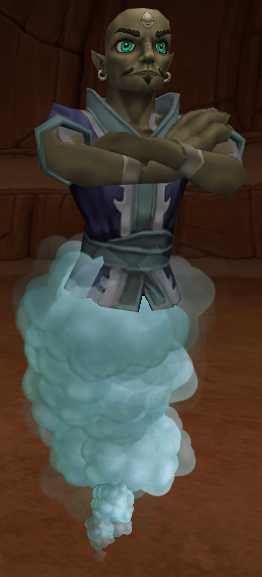
Thank you Ashley D. for finding this one.
Kur is the Djinni that Sinbad’s traitorous former first-mate Akbari used to wish the Chimera away from Sinbad. After failing to defeat your wizard in combat, Akbari wishes Kur would just go away. Which he does.
The ancient Mesopotamian underworld (known in Sumerian as Kur, Irkalla, Kukku, Arali, or Kigal, and in Akkadian as Erṣetu), was the lowermost part of the ancient near eastern cosmos, roughly parallel to the region known as Tartarus from early Greek cosmology. It was described as a dark, dreary cavern located deep below the ground, where inhabitants were believed to continue “a transpositional version of life on earth”. The only food or drink was dry dust, but family members of the deceased would pour sacred mineral libations from the earth for them to drink. In the Sumerian underworld, it was initially believed that there was no final judgement of the deceased and the dead were neither punished nor rewarded for their deeds in life.
The ruler of the underworld was the goddess Ereshkigal, who lived in the palace Ganzir, sometimes used as a name for the underworld itself. Her husband was either Gugalanna, the “canal-inspector of Anu”, or, especially in later stories, Nergal, the god of war. After the Akkadian Period (c. 2334–2154 BC), Nergal sometimes took over the role as ruler of the underworld. The seven gates of the underworld are guarded by a gatekeeper, who is named Neti in Sumerian. The god Namtar acts as Ereshkigal’s sukkal, or divine attendant. The dying god Dumuzid spends half the year in the underworld, while, during the other half, his place is taken by his sister, the scribal goddess Geshtinanna, who records the names of the deceased. The underworld was also the abode of various demons, including the hideous child-devourer Lamashtu, the fearsome wind demon and protector god Pazuzu, and galla, who dragged mortals to the underworld.
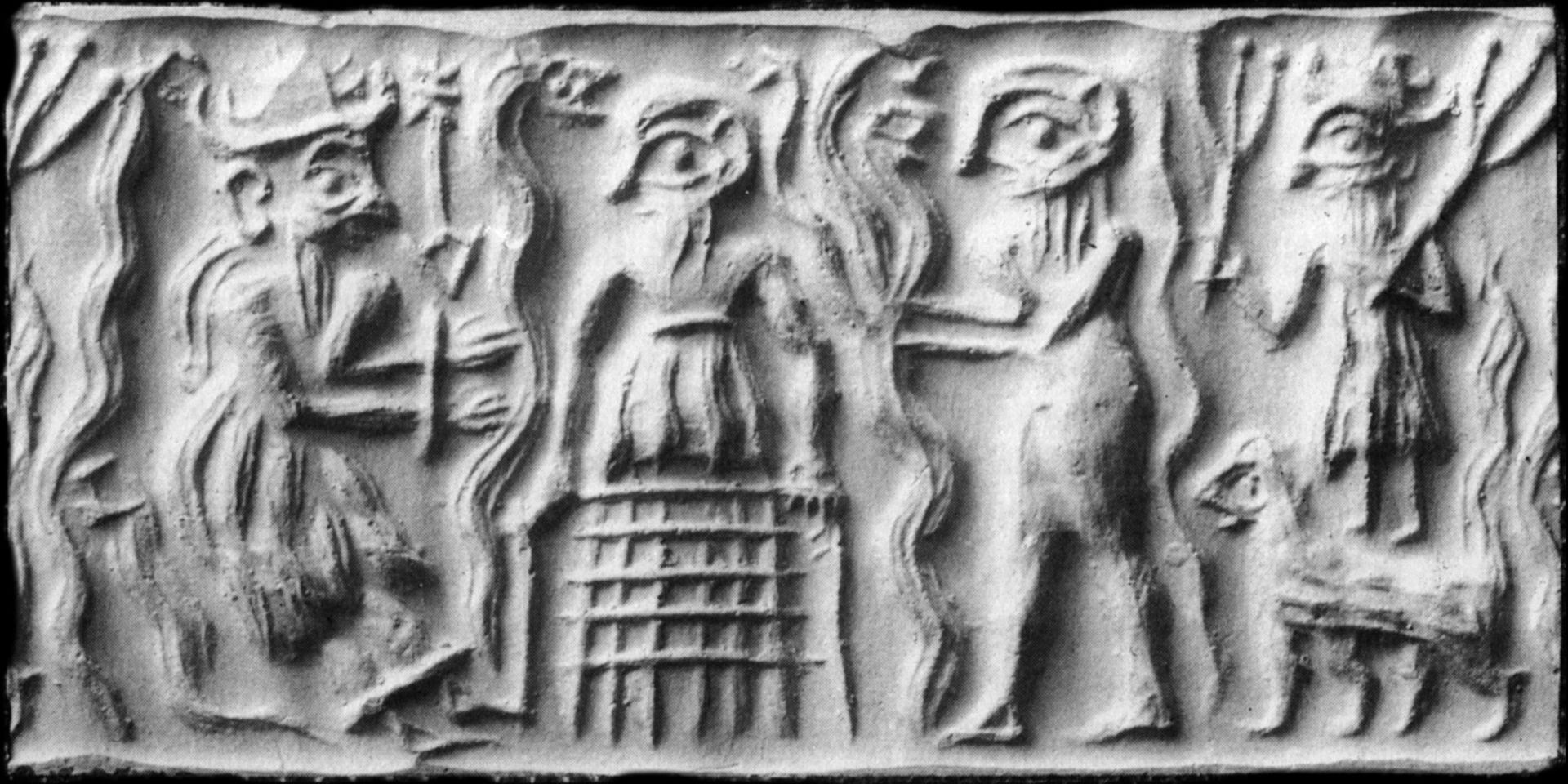
The Sumerians had a large number of different names which they applied to the underworld, including Arali, Irkalla, Kukku, Kur, Kigal, and Ganzir. All of these terms were later borrowed into Akkadian. The rest of the time, the underworld was simply known by words meaning “earth” or “sand”, including the terms Kur and Ki in Sumerian and the word erṣetu in Akkadian. When used in reference to the underworld, the word Kur usually means “ground”.
The current list of all the (known) Mirage references can be found here.
Although I am well versed in Pop Culture references but I do not claim to have caught them all. Let me know your favorites in the comments and if I’ve missed one you caught, let me know so I can add it to the list.
Text for this article is excerpted from the linked wiki pages
Kur image is from Wizard101, and is copyright of KingsIsle Entertainment
Mesopotamian Underworld image is borrowed from Wikipedia. It is in the public domain.
Image usage qualifies as fair use under US copyright law.
 Vulcan Stev's Database