Heidi – Heidi
https://wiki.wizard101central.com/wiki/Creature:Heidi
https://en.wikipedia.org/wiki/Heidi
https://en.wikipedia.org/wiki/Heidi_(1937_film)
https://en.wikipedia.org/wiki/Heidi_(1968_film)
https://www.rarenewspapers.com/view/694629

After saving the Cupcake Factory in Gutenstadt, Dieter requests assistance from your wizard. He needs you to save his house from a monster, a creature of fire and fury, a spawn of the infernal depths known only as… Heidi.
Heidi doesn’t start fires because fires are bad. However, “ALL WIZARDS WILL BURN!” “I AM THE AVATAR OF THE INFERNO!” “LET THE FLAMES DANCE AND WRITHE!” We’ll let you decide.
Heidi is a work of children’s fiction published between 1880 and 1881 by Swiss author Johanna Spyri, originally published in two parts as Heidi: Her Years of Wandering and Learning and Heidi: How She Used What She Learned. It is a novel about the events in the life of a 3-year-old girl in her paternal grandfather’s care in the Swiss Alps. It was written as a book “for children and those who love children” (as quoted from its subtitle).
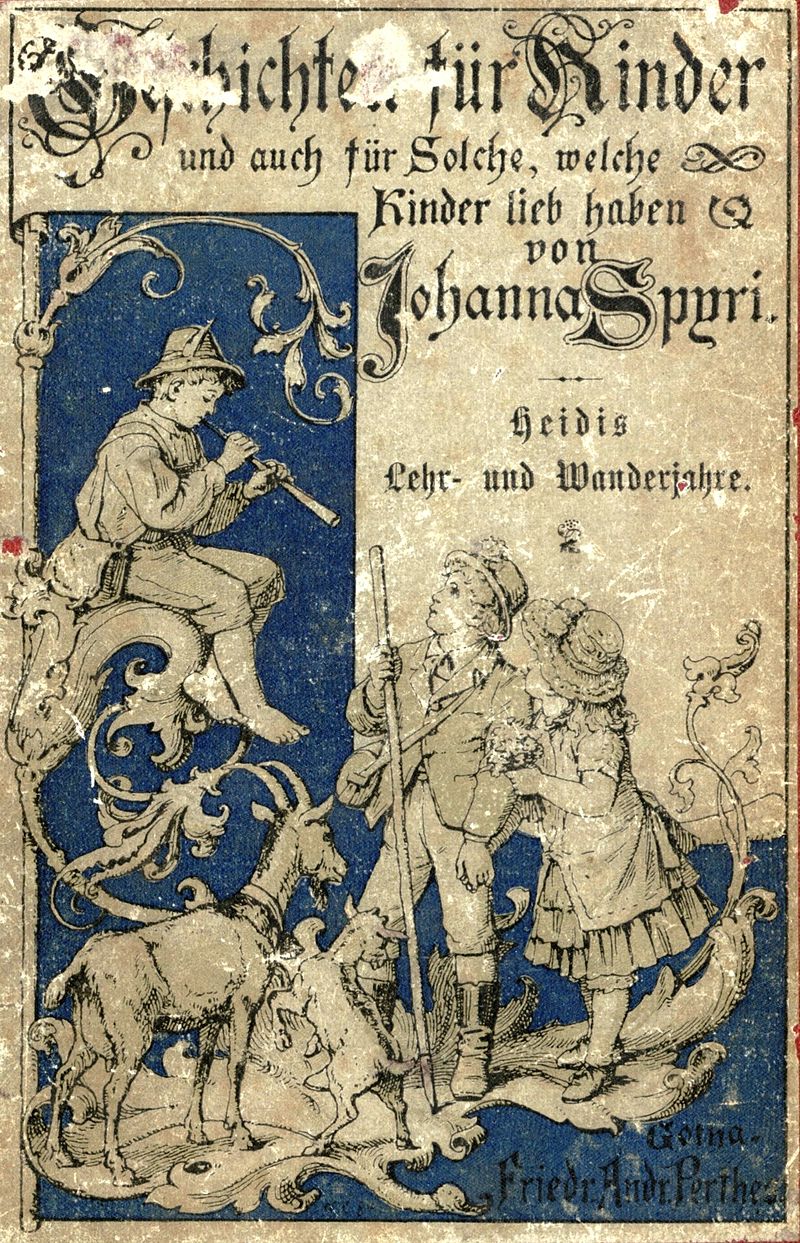
Heidi is one of the best-selling books ever written and is among the best-known works of Swiss literature.
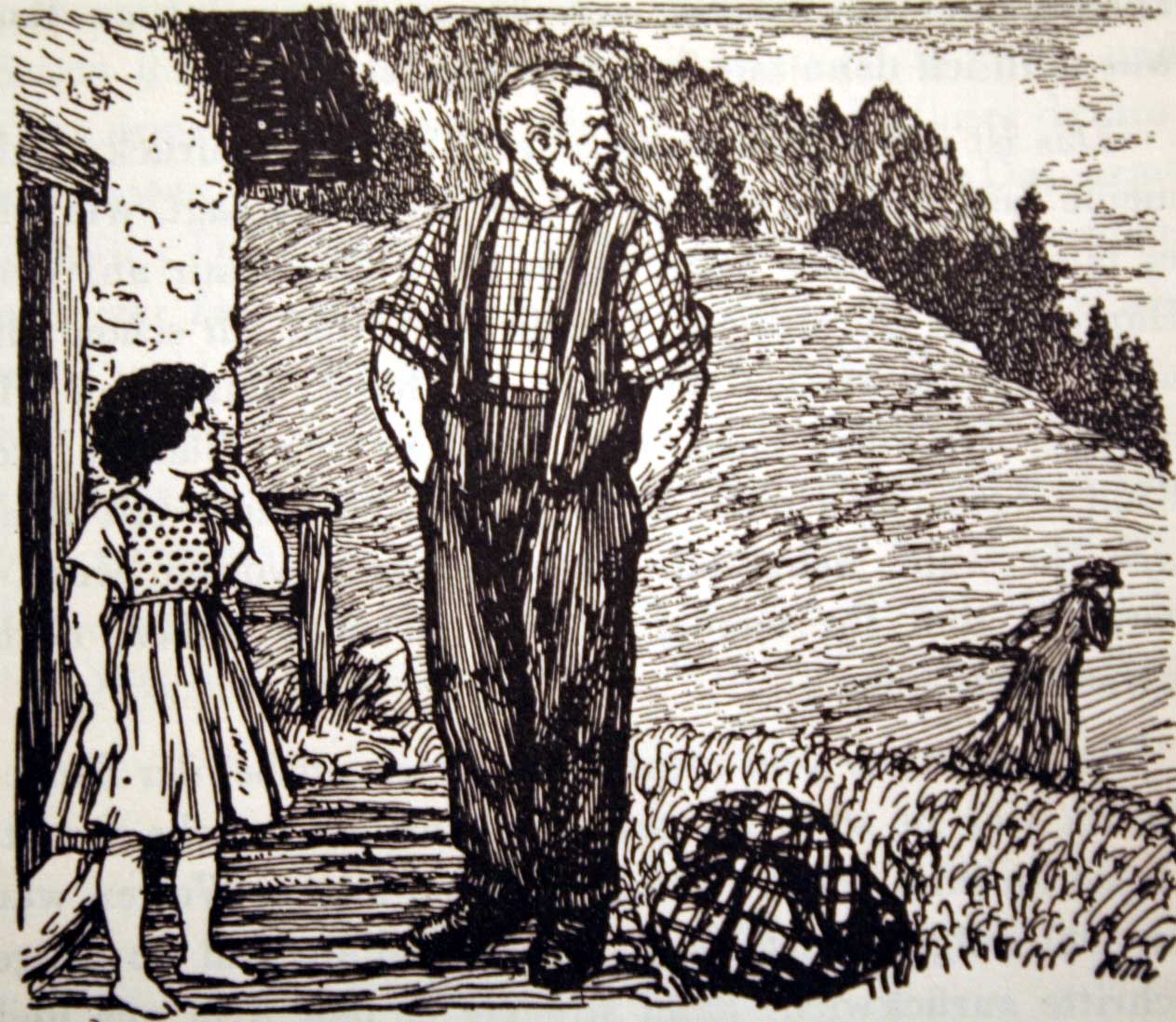
Heidi is initially raised by her maternal grandmother and Dete in Maienfeld. Shortly after the grandmother’s death, Dete is offered a good job as a maid in the big city, and takes 5-year-old Heidi to live with the Alm-Uncle as her paternal grandfather. He briefly resents Heidi’s arrival, but the girl’s evident intelligence and cheerful yet unaffected demeanour soon earn his genuine, if reserved, love. Heidi enthusiastically befriends her new neighbours, young Peter the goatherd, his mother Brigitte, and his blind maternal grandmother. With each season that passes, the mountaintop inhabitants, especially Peter and the grandmother, grow more attached to Heidi, and she to them. However, the grandfather refuses to allow Heidi to attend school, quarrelling with the local pastor and schoolmaster when they try to encourage him to do so, and Heidi is illiterate as a result.
Thirteen English translations were done between 1882 and 1959, by British and American translators: Louise Brooks, Helen B. Dole, H.A. Melcon, Helene S. White, Marian Edwardes, Elisabeth P. Stork, Mabel Abbott, Philip Schuyler Allen, Shirley Watkins, M. Rosenbaum, Eileen Hall, and Joy Law. As of 2010, only the Brooks, Edwardes and Hall translations are still in print. The preface of the 1924 English translation was written by Adeline Zachert.
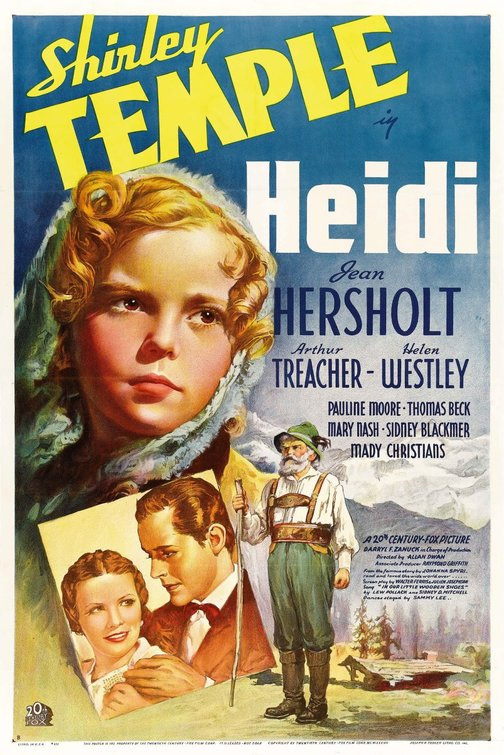
About 25 film or television productions of the original story have been made. Two of the more famous are the 1937 film starring Shirley Temple and the 1968 made-for-tv film. The 1968 version debuted on November 17, 1968 on NBC. It starred actress Jennifer Edwards, stepdaughter of Julie Andrews and daughter of Blake Edwards, in the title role, alongside Maximilian Schell, Jean Simmons, and Michael Redgrave. The score was composed by John Williams. The film was sponsored by Timex.
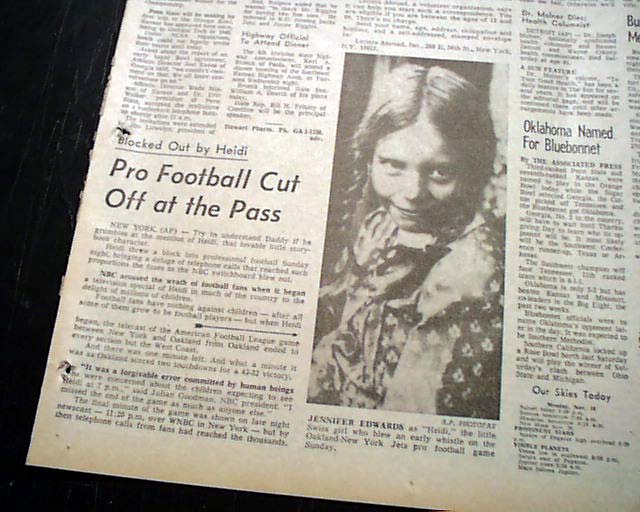
Heidi became a part of sports and pop culture lore as NBC’s decision to pull away from coverage of an American Football League (AFL) game between the New York Jets and the Oakland Raiders to air the film at its scheduled time of 7 p.m. Eastern, caused viewers to miss a frantic late comeback by the Raiders to win the game, prompting controversy and viewer complaints.
The current list of all the Karamelle references can be found here.
Heidi image is from Wizard101, and is (c) KingsIsle Entertainment,
and is being used in a way that qualifies as fair use under US copyright law.
Heidi book cover and illustration are borrowed from Wikipedia and are in the public domain.
Heidi (1937) movie poster is borrowed from the IMP Awards and is copyright 20th Century Fox.
Image of the Russell Daily News is borrowed from Timothy Hughes Rare & Early Newspapers website and is copyright 2024
Image usage qualifies as fair use under US copyright law.
 Vulcan Stev's Database