Copy Qhat – “Copy Cat” and Jamie Madrox the Multiple Man
https://wiki.wizard101central.com/wiki/Creature:Copy_Qhat_(Star)
https://wiki.wizard101central.com/wiki/Creature:Copy_Qhat_(Ice-Myth)
https://www.merriam-webster.com/dictionary/copycat
https://english.stackexchange.com/questions/66368/whats-the-origin-of-copycat
https://en.wikipedia.org/wiki/Jamie_Madrox
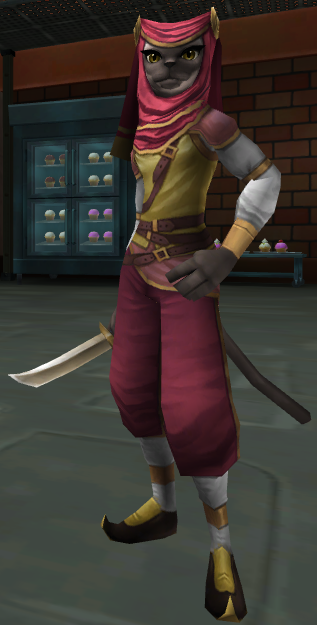
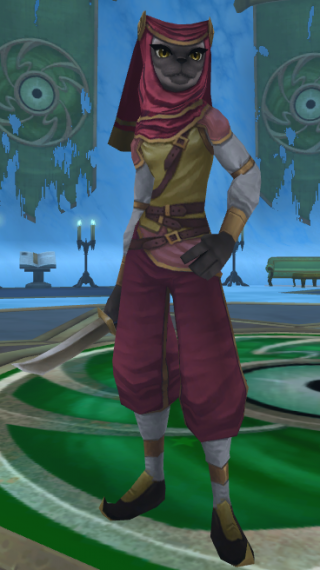
Copy Qhat is a member of the Cabal who was present at the Grand Summit organized by the Old One in an attempt to reorganize the splintered Cabal. The Wizard first encounters Copy Qhat in Karamelle. Copy Qhat was also briefly known as Fuzhi when she masqueraded as the String Caster of the Order of the Sacred Yarn.
Your Wizard first encounters Copy Qhat in Karamelle and then again in Novus. In Karamelle, if your wizard faces her with less than a full team, she will summon minions to your team that are a hindrance rather than a help.
Copycat: noun
copy·cat ˈkä-pē-ˌkat
1 : one who imitates or adopts the behavior or practices of another
2 : an imitative act or product
This is a slang term and was likely used in speech for a long time before being committed to the page, but the first print copy can still give us a rough idea of origin. Etymonline.com tells us:
copycat (n.)
by 1884, Amer.Eng., probably at least a generation older, from copy + cat. As a verb, from 1932.
Constance Cary Harrison’s 1887 quasi-memoir Bar Harbor Days contains the first written evidence of the term copycat—that we know of, anyway. “Our boys say you are a copy cat, if you write in anything that’s been already printed.” Another early example comes from a different Maine-born writer, Sarah Orne Jewett, in her 1890 novel Betty Leicester: A Story for Girls. “I wouldn’t be such a copy-cat,” Lizzie French tells Betty, upon hearing that Betty wants to start a second all-girls club. Jewett used it again in her 1896 novel Country of Pointed Firs, about an elderly landlady in small-town coastal Maine who tells her friend Mrs. Fosdick, “In these days, the young folk is all copy-cats, ‘fraid to death they won’t be all just alike.” Mrs. Fosdick’s response suggests that the term had been part of the spoken vernacular for some time: “I ain’t heard of a copy-cat this great many years,” said Mrs. Fosdick, laughing; ” ’twas a favorite term o’ my grandmother’s.”

Although these books use the expression, it seems that this phrase has actually already been in use, the way the author wrote it without putting “” around the word copycat, which seems to assume that the reader knows what the author is writing about.
Alliteration plays a role here – consider “busybody”.

Art by David Lloyd from the cover of Madrox 2
James Arthur Madrox, also called the Multiple Man, is a fictional character appearing in American comic books published by Marvel Comics. Created by writer/editor Len Wein, he first appeared in Giant-Size Fantastic Four #4 (February 1975).
A mutant with the ability to create instant duplicates of himself, Madrox was mainly a minor or supporting character until his appearance in the 1987 miniseries Fallen Angels. The character underwent greater development under writer Peter David through his appearance in David’s run of the monthly series X-Factor (vol. 1) in the 1990s, and in David’s second and ongoing run of the title (vol. 3) in the 2000s.
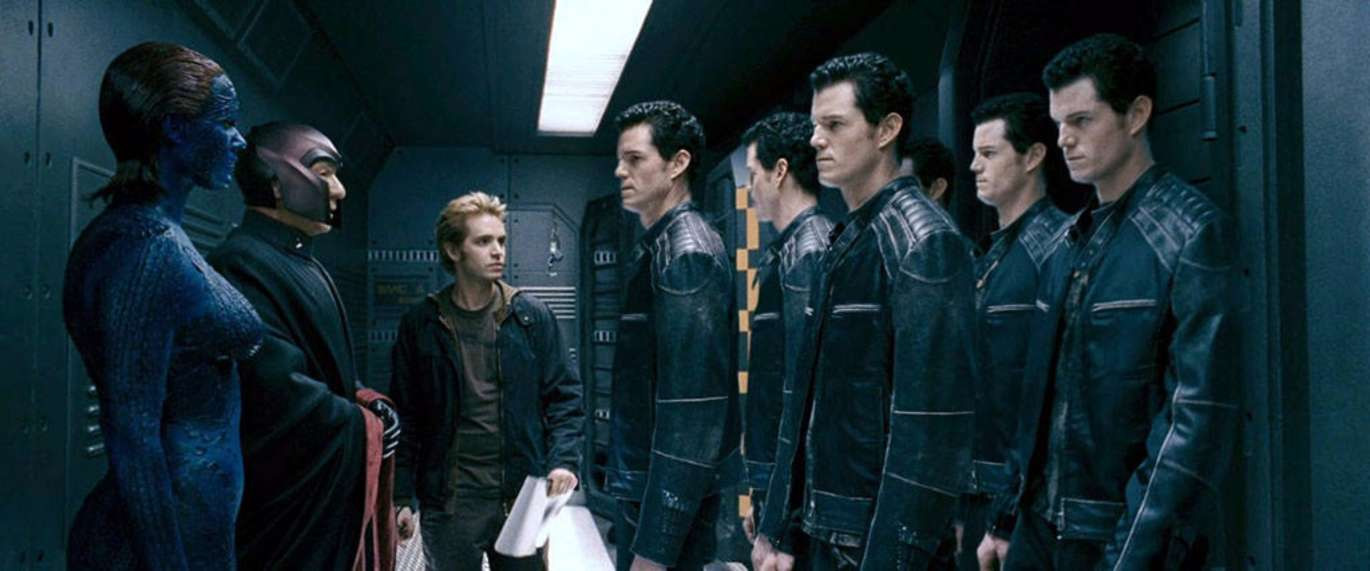
The character has appeared in multiple television, film and video game adaptations, most notably in the 2006 film X-Men: The Last Stand, in which he was portrayed by Eric Dane.
The current list of all the Karamelle references can be found here.
Copy Qhat images are from Wizard101, and are (c) KingsIsle Entertainment, they are being used in a way that qualifies as fair use under US copyright law.
Don’t Be a Copy Cat image is borrowed from https://www.letsgetyourbookpublished.com/
Cover for Madrox #2 is copyright Marvel Comics
Image from X-Men the Last Stand is copyright 20th Century Fox and Marvel Productions.
Image usage qualifies as fair use under US copyright law.
 Vulcan Stev's Database