Azteca Flowers – Flowers Native to Dirt (notably the Peruvian magic tree)
https://wiki.wizard101central.com/wiki/NPC:Eloise_Merryweather
https://wiki.wizard101central.com/wiki/Quest:Flower_to_the_People
https://plantflowerseeds.com/products/codonopsis-viridis
https://www.gardenia.net/plant/magnolia-ivory-chalice
https://en.wikipedia.org/wiki/Cantua_buxifolia
https://en.wikipedia.org/wiki/Alyogyne_huegelii
https://www.plantdelights.com/products/cypella-herbertii

Aside from introducing you to Katherine Rockhammer in Wizard City, Eloise is the mostly silent traveling companion to Zeke. Always close to Zeke on whatever world you visit, she offers gear available for stitching and handles the stitching for fashion conscious wizard. This changes in Azteca when Eloise requests your wizard’s help in locating rare flowers for an exhibit to be held at the Marleybone Royal Museum.
Eloise needs a Green Bellflower, White Chalice, a Red Cantuta, a Blue Hibiscus, and a Gold Cypella. These are Spiral versions of the following flowers native to Dirt.. er.. Earth.
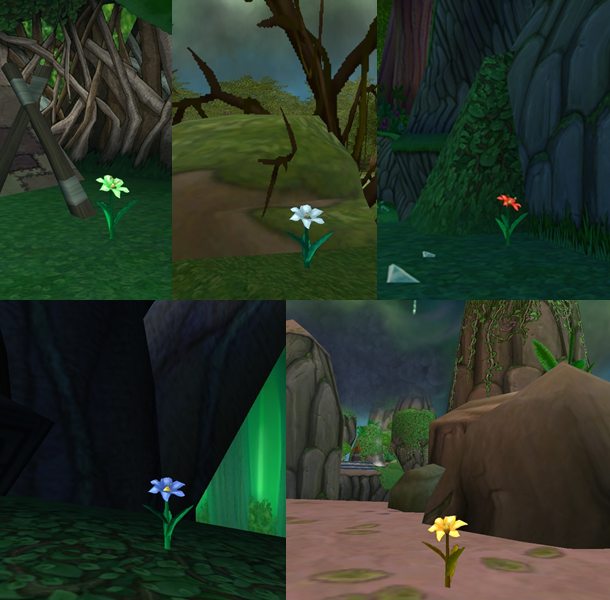
a Red Cantuta, a Blue Hibiscus, and a Gold Cypella
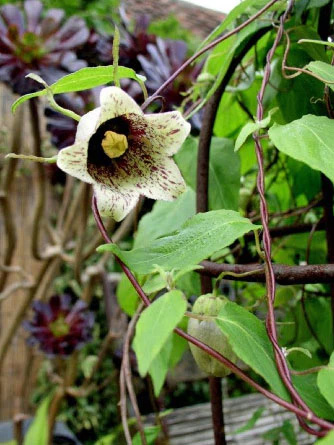
Codonopsis viridis, commonly known as Green Bonnet Bellflower, is a charming perennial herb native to North America. Admired for its dainty, bell-shaped flowers that range from pale green to yellowish-white, it brings a touch of elegance to natural landscapes. The vine’s heart-shaped leaves create an appealing backdrop, adding to its visual allure. Thriving in well-draining soil and partial shade, this plant adapts gracefully to woodland gardens or shaded borders. Known for its potential medicinal uses in traditional herbal remedies, Codonopsis viridis is not only an ornamental delight but also holds a place in folk healing practices. Its understated beauty and cultural significance make it a valued addition to gardens, linking nature and tradition.
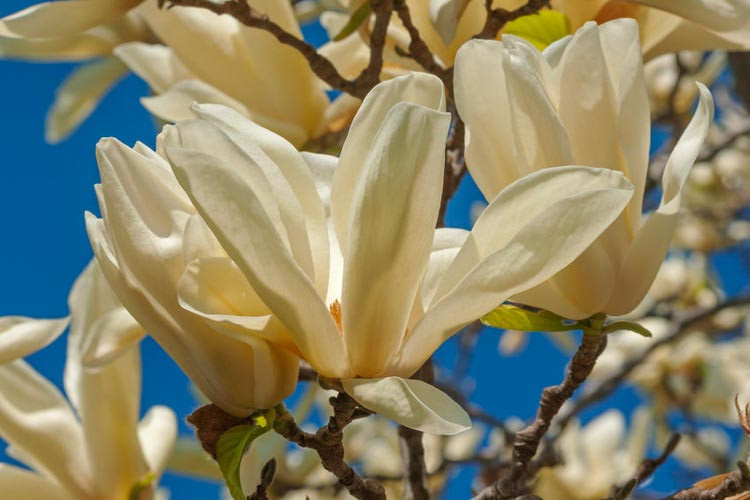
Magnoliaceae, Magnolia ‘Ivory Chalice’ is a large deciduous shrub or small tree with exquisite, upright, chalice-shaped, ivory flowers, 6 in. across (15 cm), in late winter or early spring. Fragrant, the blooms appear on naked branches, before the leaves unfurl. The foliage of obovate, dark green leaves turns to a coppery-bronze color in the fall before shedding to the ground. This Magnolia creates a very dramatic scene in the garden when in full bloom. While very hardy, its blooms, like those of most early blooming Magnolias, are susceptible to late frosts.
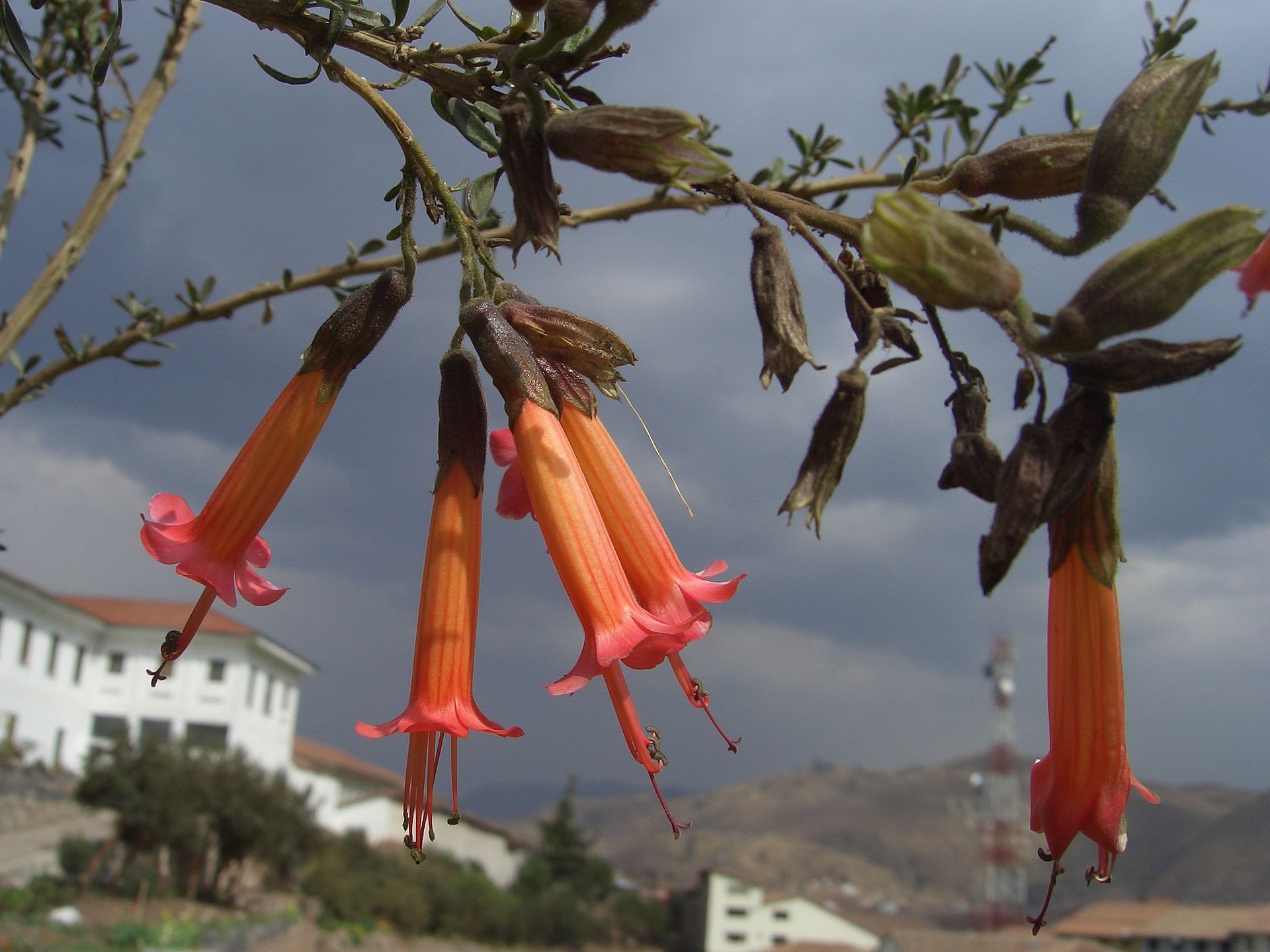
Given it’s place in Incan mythology, Cantua buxifolia, known as qantu, qantus or qantuta (Quechua,) is appropriate for Azteca. It is a flowering plant found in the high valleys of the Yungas of the Andes mountains in western South America. Also known as the Peruvian magic tree, it is an evergreen shrub growing to 4 m (13 ft) tall by 2.5 m (8.2 ft) wide with small leaves and clusters of brilliant pink, narrow tubular flowers in early spring. It is the national flower of Peru and one of two national flowers of Bolivia.
The Inca legend associated with the cantua is the tale of two kings named Illimani and Illampu and their sons. Both kings were powerful and wealthy rulers of a vast country in the Qullasuyu region (today’s Bolivian Altiplano), and each had a beloved son whom the people held in great esteem. But as time passed, the kings became irritated at each other’s prosperity, and eventually one of them attacked the other.
During the battle, the two kings mortally wounded each other, and were carried away. Each on his dying bed called his son and had him vow to avenge him, even if each son had been opposed to the war in the first place. Bound by their pledge, the sons prepared and led a second war even though they held no grudge against each other. History repeated, and each son inflicted a fatal wound on the other.
But instead of harsh words, the dying sons generously forgave each other, and asked that their servants place them side by side on the green grass of the battlefield. Then appeared Pachamama, goddess of fertility, who told the young kings before they died that they shouldn’t have suffered from their fathers’ unjustified enmity. To punish their dead fathers, their stars fell from the sky and became the snow-covered mountains still named Illimani and Illampu which are some of the highest peaks in Bolivia.
The rivers of their slowly melting snow are their tears of regret and fertilize the valleys. The cantua bloom symbolizes the people’s unity, and bears the colours of the two kings’ sons (red and yellow), as well as green (standing for hope).
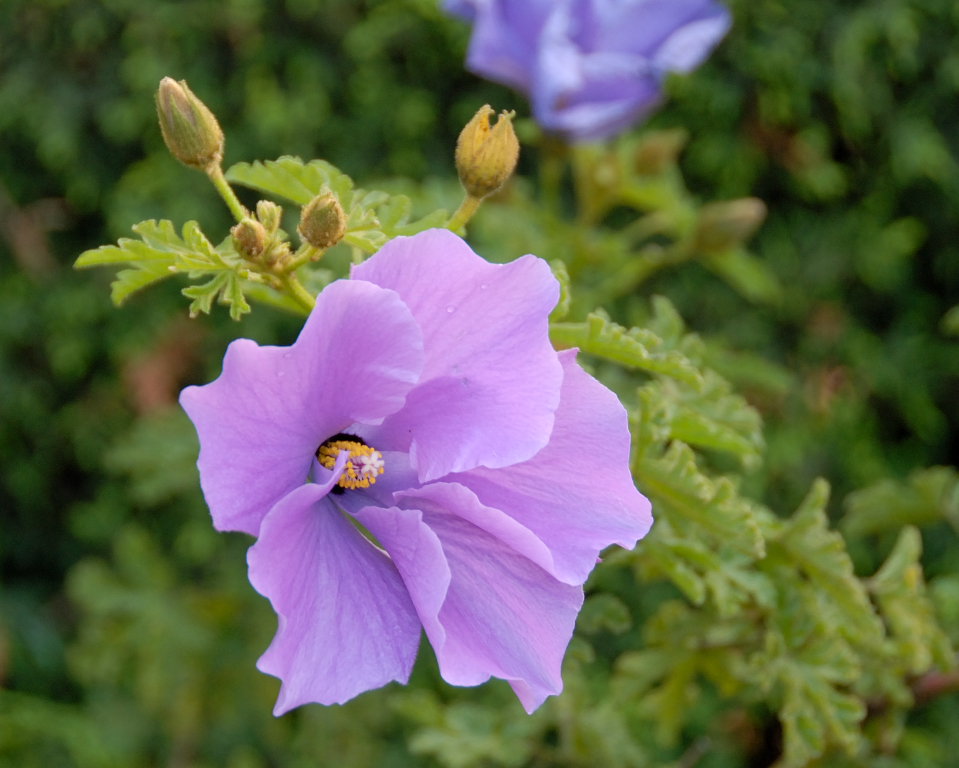
Alyogyne huegelii Australian Beauty or Lilac Hibiscus, is a flowering plant found in the Southwest botanical province of Western Australia, extending along its entire coastline. A large-flowered shrub, the species favors the sands of coastal shrublands and heath. The large flower, highly variable in color, is similar to that of Hibiscus. It was previously placed in that genus, and is commonly named lilac hibiscus and blue hibiscus. It is widely cultivated as a flowering plant for the garden.
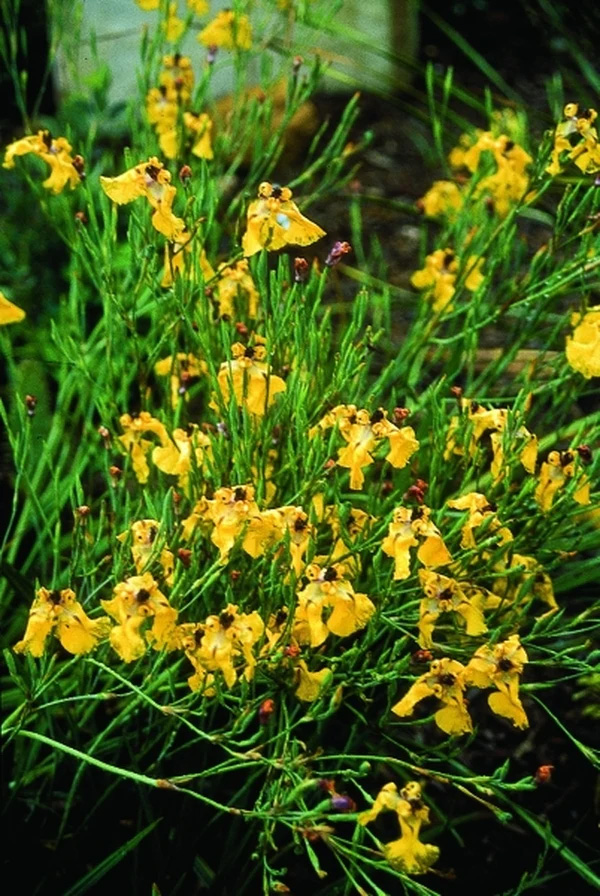
Cypella herbertii, Herbert’s Goblet Flower, is a little-known but easy-to-grow South American bulb. From April through most of the summer, the 1″ wide, short, pleated foliage is overshadowed by the nearly-naked flower stems. The mass of flower stems is topped with ornate, three-petaled, yellow-orange, goblet-shaped flowers (resembling tigridias; for the less horticulturally inclined…patriot hats). Although each Cypella herbertii flower only lasts a couple of days, a mass of flowers is truly a welcomed spot of color, day after day. A sunny, well-drained location will yield best results.
Text for this article is excerpted from the linked wiki pages
Eloise Merryweather amd Azteca Flower images are from Wizard101, and are copyright of KingsIsle Entertainment. The Azteca Flowers Images are borrowed from Final Bastion.
Alien Graphics made the composite image
Green Bonnet Bellflower image is copyright plantflowerseeds.com
Magnolia ‘Ivory Chalice’ image is copyright gardenia.net
Cantutas image is borrowed from Wikipedia. It appears to be copyright Ghiz~commonswiki and is shared under the GFDL GNU Free Documentation License
Lilac Hibiscus image is borrowed from Wikipedia. It is in the public domain.
Herbert’s Goblet Flower image is copyright plantdelights.com
Image usage qualifies as fair use under US copyright law.
The other Eloise quest references can be found here.
 Vulcan Stev's Database