Donny Kong – Donkey Kong and King Kong
https://wiki.wizard101central.com/wiki/Creature:Donny_Kong
https://wiki.wizard101central.com/wiki/Quest:Banana-Fana-Foe
https://en.wikipedia.org/wiki/Donkey_Kong_(1981_video_game)
https://en.wikipedia.org/wiki/Donkey_Kong
https://en.wikipedia.org/wiki/King_Kong
https://en.wikipedia.org/wiki/The_Name_Game
https://www.youtube.com/watch?v=5MJLi5_dyn0
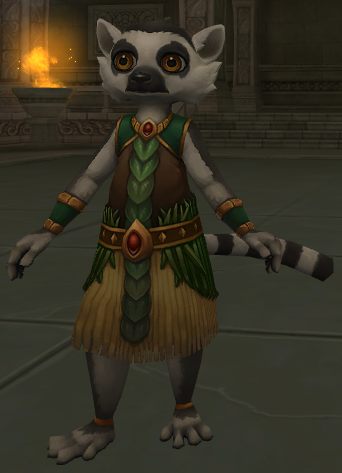
Centaurzan informs you that Donny Kong’s Banana Horde has been stolen by Kroks. It ‘s up to your wizard to find the horde and return them to Donny Kong. The Kroks who stole Donny’ Banana Horde did not understand the true power of the horde. Potassium! Infused with Potassium and vitamins, Donny will become big and strong. Big enough to stomp houses. Strong enough to throw trees like spears. Donny will become King! At least that was his plan until your wizard stops him.
“You! I know you! You bested the thieving Kroks and recovered my Banana Hoard. Silly reptiles never understood its true power. POTASSIUM! Who wants a squishy army of fruit monsters? What can they do? But with a spell of Potassium Steal, their power will become mine! Infested with Potassium and vitamins, I will become big and strong. Big enough to stomp houses, strong enough to throw trees like spears. Donny Kong will become King! And nothing will be able to stop me!” – Donny Kong
The quest name where you finally confront Donny Kong is entitled Banana-Fana-Foe. That is a direct quote from the 1964 hit song The Name Game by Shirley Ellis
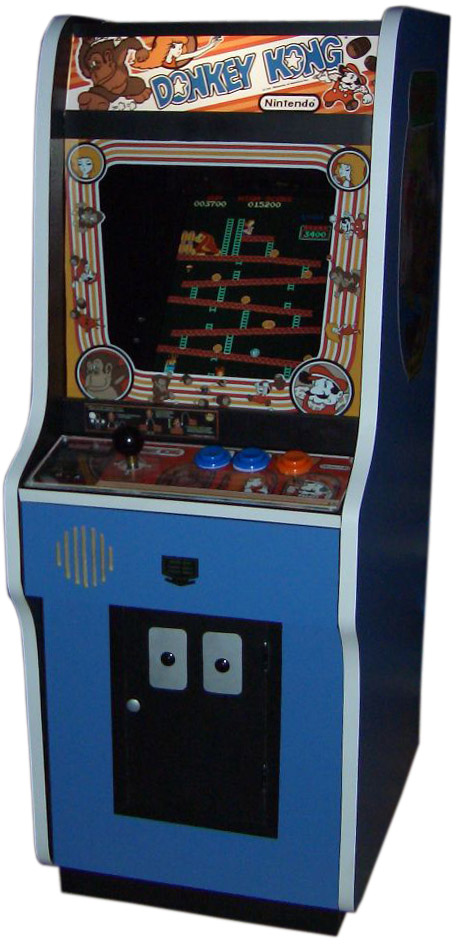
Donkey Kong is a 1981 arcade video game developed and published by Nintendo. As Mario,(known at the time as “Jumpman”) the player runs and jumps on platforms and climbs ladders to ascend a construction site and rescue Pauline from a giant gorilla, Donkey Kong. It is the first game in the Donkey Kong series and Mario’s first appearance in a video game.
Although Nintendo of America’s staff was initially apprehensive, Donkey Kong succeeded commercially and critically, becoming the highest-grossing game of 1981 and 1982. It was ported to the Game & Watch, selling eight million units, while Nintendo licensed the game to Coleco, a developer of arcade conversions for home consoles, selling six million cartridges. It was later ported to the Nintendo Entertainment System (NES), designed to replicate its technological capabilities; both the game and NES were integral in spreading Japanese video games to Western audiences. Donkey Kong’s various ports sold more than 15 million units worldwide. Other companies cloned the game and avoided royalties altogether. Universal City Studios unsuccessfully sued Nintendo, alleging that Donkey Kong violated its trademark of the King Kong franchise.
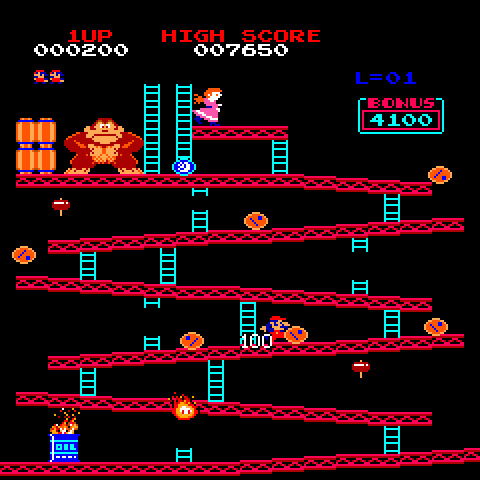
The character was so popular that it became a video game series and media franchise created by the Japanese game designer Shigeru Miyamoto for Nintendo. It follows the adventures of Donkey Kong, a large, powerful gorilla, and other members of the Kong family of apes. Donkey Kong games include the original arcade game trilogy by Nintendo R&D1; the Donkey Kong Country series by Rare and Retro Studios; and the Mario vs. Donkey Kong series by Nintendo Software Technology. Various studios have developed spin-offs in genres such as edutainment, puzzle, racing, and rhythm. The franchise also incorporates animation, printed media, theme parks, and merchandise.
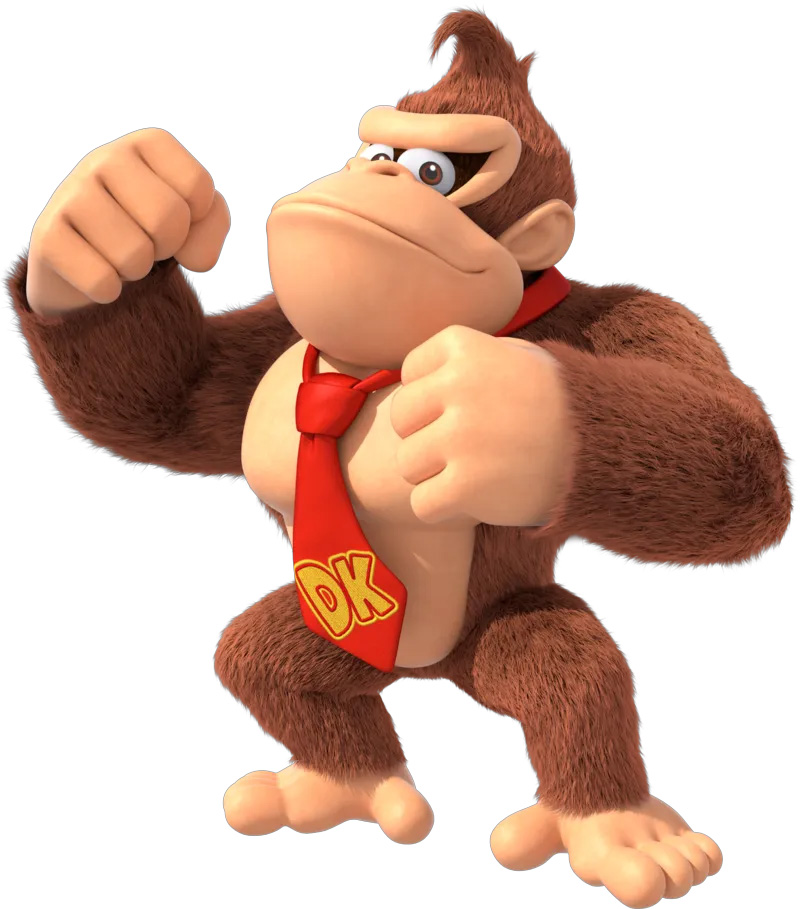
Hiroshi Yamauchi (then president of Nintendo) wanted primarily to target the North American market, so he mandated that the game be given an English title, as with many previous Nintendo games. Shigeru Miyamoto, the designer of the game, decided to name the game for the ape, who he said was the strongest character. The story of how Miyamoto came up with the name “Donkey Kong” varies. A false urban myth says that the name was originally meant to be “Monkey Kong”, but was misspelled or misinterpreted due to a blurred fax or bad telephone connection. Another, more credible story claims Miyamoto looked in a Japanese-English dictionary for something that would mean “stubborn gorilla”, or that “Donkey” was meant to convey “silly” or “stubborn”; “Kong” was common Japanese slang for “gorilla”. A rival claim is that he worked with Nintendo’s export manager to come up with the title, and that “Donkey” was meant to represent “stupid and goofy”. In 2001, Miyamoto stated that he thought the name would convey the thought of a “stupid ape”.
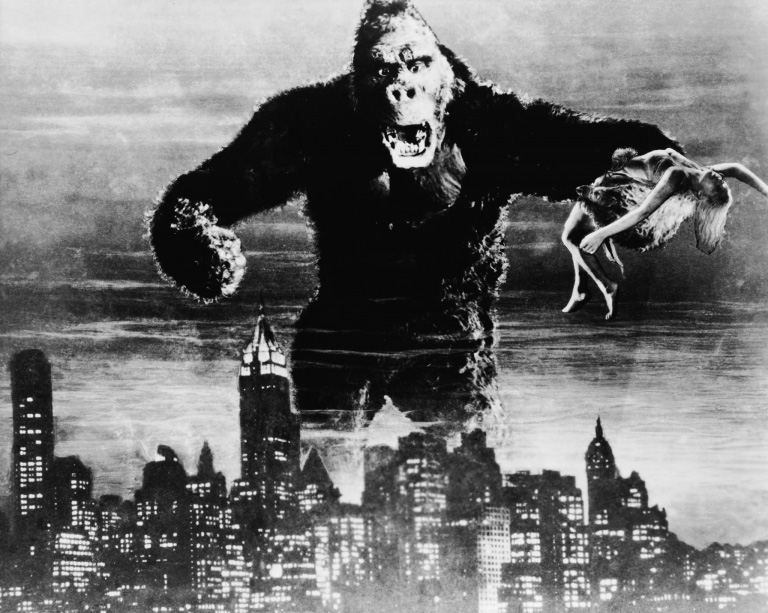
King Kong, also referred to simply as Kong, is a fictional giant monster, or kaiju, resembling a gorilla, who has appeared in various media since 1933. Kong has been dubbed the King of the Beasts, and over time, it would also be bestowed the title of the Eighth Wonder of the World, a widely recognized expression within the franchise. His first appearance was in the novelization of the 1933 film King Kong from RKO Pictures, with the film premiering a little over two months later.
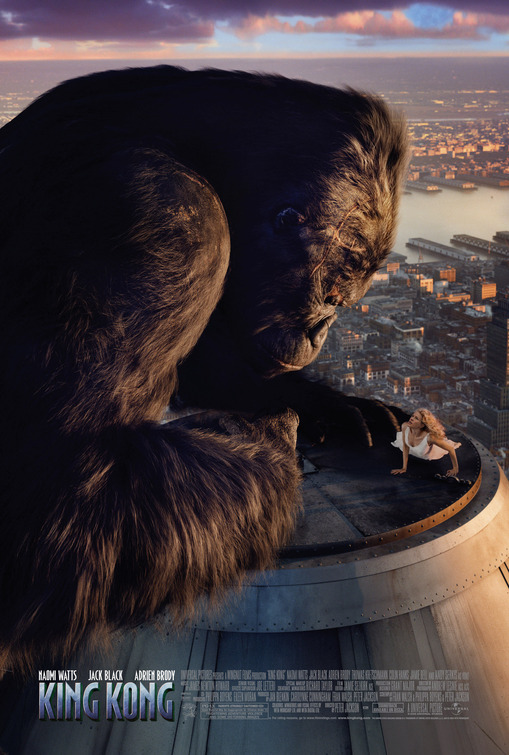
The Japanese film company Toho later produced King Kong vs. Godzilla (1962), featuring a giant Kong battling Toho’s Godzilla, and King Kong Escapes (1967), a film loosely based on Rankin/Bass’ The King Kong Show (1966–1969). In 1976, Dino De Laurentiis produced a modern remake of the original film directed by John Guillermin. A sequel, King Kong Lives, followed a decade later featuring a Lady Kong. Another remake of the original, set in 1933, was released in 2005 by filmmaker Peter Jackson.
Kong: Skull Island (2017), set in 1973, is part of Warner Bros. Pictures and Legendary Entertainment’s Monsterverse, which began with a reboot of Godzilla in 2014. A sequel, Godzilla vs. Kong, once again pitting the characters against one another, was released in 2021. It was followed by the film Godzilla x Kong: The New Empire in 2024, which featured more of Kong’s kind.
“The Name Game” is a song co-written and performed by Shirley Ellis as a rhyming game that creates variations on a person’s name. She explains through speaking and singing how to play the game. The first verse is done using Ellis’s first name; the other names used in the original version of the song are Lincoln, Arnold, Tony, Billy, Marsha, and Nick.
Written by American singer Shirley Ellis (who based the song on a game she played as a child) and Lincoln Chase. Ellis’s recording, produced by Charles Calello, was released in late 1964 as “The Name Game”. The record scored third on the Billboard Hot 100, and fourth on the magazine’s R&B charts during 1965. The record was re-released in 1966 and again in 1973.
A verse can be created for any name, with X as the name and Y as the name without the first consonant sound (if it begins with a consonant), as follows:
(X), (X), bo-b (Y)
Bonana-fanna fo-f (Y)
Fee fi mo-m (Y)
(X)!
If the name starts with a b, f, or m, that sound simply is not repeated. For example: Billy becomes “Billy Billy bo-illy”; Fred becomes “bonana fanna fo-ed”; Martha becomes “fee fi mo-artha”
Using the name Steven as an example, the song follows this pattern:
Steven, Steven, bo-beven,
Bonana-fanna fo-feven
Fee fi mo-meven
Steven!
Text has been borrowed from the listed urls
The current list of all the Lemuria references can be found here.
Donny Kong image is from Wizard101, and is (c) KingsIsle Entertainment, it is being used in a way that qualifies as fair use under US copyright law.
All Donkey Kong images are borrowed from Wikipedia and are copyright Nintendo USA.
King Kong 1933 publicity still is copyright RKO Pictures / Warner Bros.
King Kong 2005 movie poster is borrowed from the Imp Awards and is copyright Universal Pictures.
 Vulcan Stev's Database