Eye Robots – Isaac Asimov’s “I, Robot” and the iPhone
https://wiki.wizard101central.com/wiki/Creature:Eye_Robot_(Balance)
https://wiki.wizard101central.com/wiki/Creature:Eye_Robot_(Ice)
https://wiki.wizard101central.com/wiki/Creature:Eye_Robot_(Storm)
https://en.wikipedia.org/wiki/I,Robot https://en.wikipedia.org/wiki/Three_Laws_of_Robotics https://en.wikipedia.org/wiki/I,_Robot(film)
https://en.wikipedia.org/wiki/IPhone
Your wizard encounters these golems and others like them throughout Sky City. These three versions are the only ones called Eye Robots and they are encountered during the quests; “To Save Sky City!,” “A Warm Welcome?,” “Mongonium Heist,” and “The Secret Struggle.”
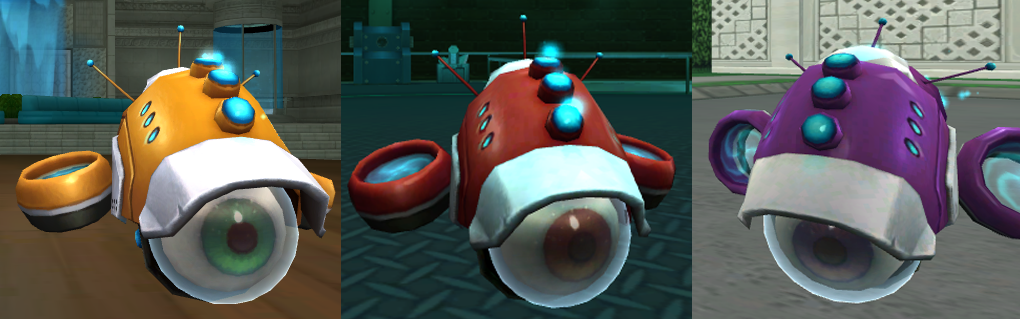
“All Outsiders must be made to conform. Your mind will be disrupted and brought into harmony with the Community. Do not resist!” – Balance Eye Robot
Balance Eye Robot Monstrology Tome Description
Comes in a variety of single colors and extremely high price points.
Ice Eye Robot Monstrology Tome Description
Made redundant by the Eye Drone, which can do everything this can, plus sometimes make calls.
Storm Eye Robot Monstrology Tome Description
Has three crucial laws by which it must operate. They were accidentally deleted in a software update.
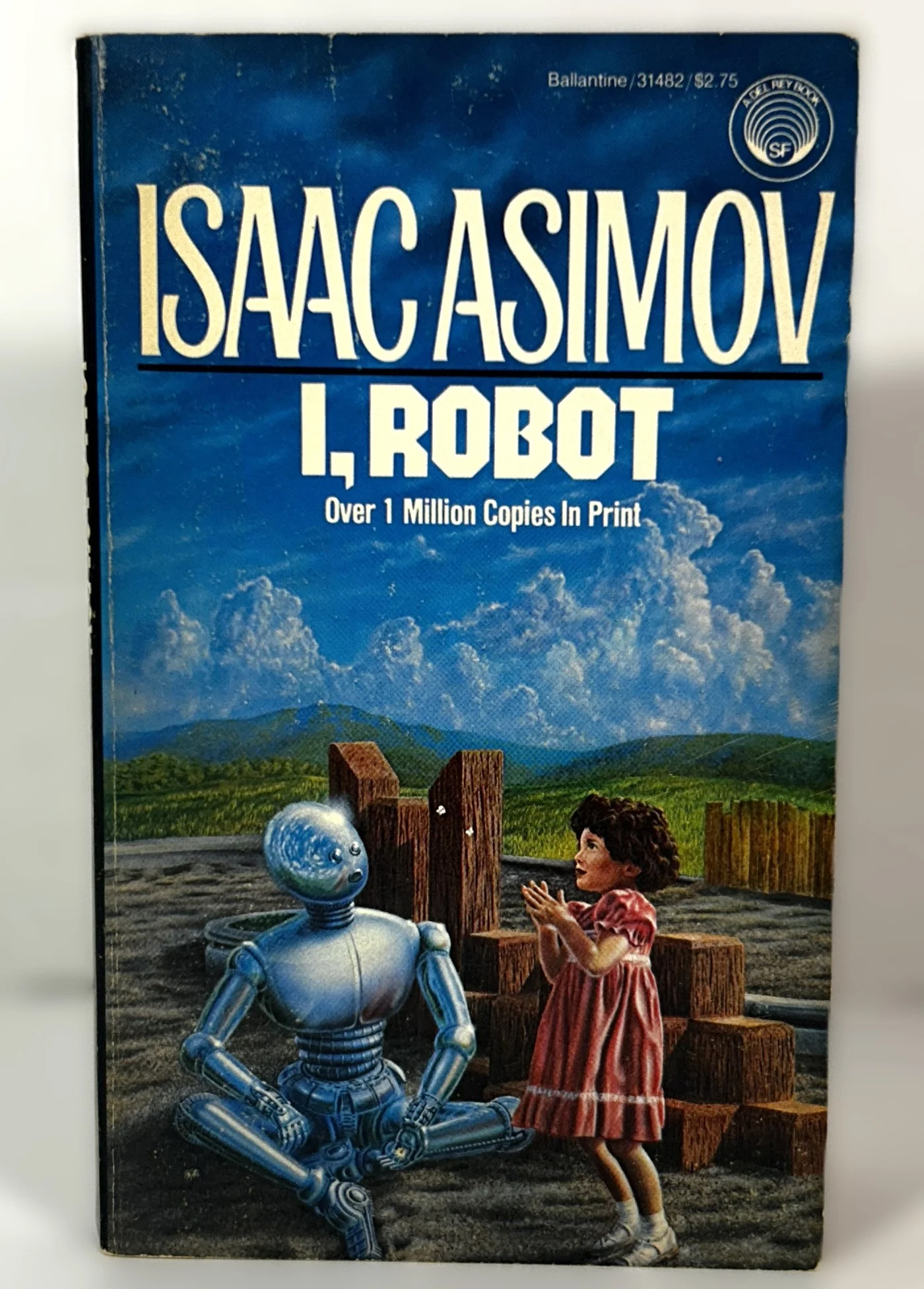
I, Robot is a collection of Isaac Asimov’s positronic robot science fiction short stories. The stories originally appeared in the American magazines Super Science Stories and Astounding Science Fiction between 1940 and 1950 and were then compiled into a single publication by Gnome Press in 1950, in an initial edition of 5,000 copies. The stories contained within delineate the Three Laws of Robotics.
The Three Laws of Robotics (often shortened to The Three Laws or Asimov’s Laws) are a set of rules devised by science fiction author Isaac Asimov, which were to be followed by robots in several of his stories. The rules were introduced in his 1942 short story “Runaround” (included in the 1950 collection I, Robot), although similar restrictions had been implied in earlier stories.
The Three Laws, presented to be from the fictional “Handbook of Robotics, 56th Edition, 2058 A.D.”, are:
- A robot may not injure a human being or, through inaction, allow a human being to come to harm.
- A robot must obey the orders given it by human beings except where such orders would conflict with the First Law.
- A robot must protect its own existence as long as such protection does not conflict with the First or Second Law.
The stories are woven together by a framing narrative in which the fictional Dr. Susan Calvin tells each story to a reporter (who serves as the narrator) in the 21st century. Although the stories can be read separately, they share a theme of the interaction of humans, robots, and morality, and when combined they tell a larger story of Asimov’s fictional history of robotics.
Several of the stories feature the character of Dr. Calvin, chief robopsychologist at U.S. Robots and Mechanical Men, Inc., the major manufacturer of robots. Upon their publication in this collection, Asimov wrote a framing sequence presenting the stories as Calvin’s reminiscences during an interview with her about her life’s work, chiefly concerned with aberrant behavior of robots and the use of “robopsychology” to sort out what is happening in their positronic brain. The book also contains the short story in which Asimov’s Three Laws of Robotics first appear, which had large influence on later science fiction and had impact on thought on ethics of artificial intelligence as well. Other characters that appear in these short stories are Powell and Donovan, a field-testing team which locates flaws in USRMM’s prototype models.
The collection shares a title with the then recent short story “I, Robot” (1939) by Eando Binder (pseudonym of Earl and Otto Binder), which greatly influenced Asimov. Asimov had wanted to call his collection Mind and Iron and objected when the publisher made the title the same as Binder’s. In his introduction to the story in Isaac Asimov Presents the Great SF Stories (1979), Asimov wrote:
“It certainly caught my attention. Two months after I read it, I began “Robbie”, about a sympathetic robot, and that was the start of my positronic robot series. Eleven years later, when nine of my robot stories were collected into a book, the publisher named the collection I, Robot over my objections. My book is now the more famous, but Otto’s story was there first.” — Isaac Asimov (1979)
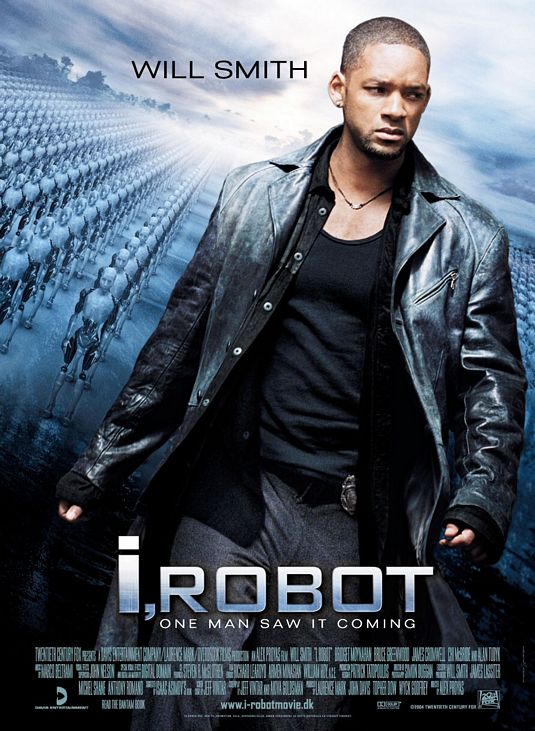
I, Robot (stylized as i, ROBOT) is a 2004 American science fiction action film directed by Alex Proyas. The screenplay by Jeff Vintar and Akiva Goldsman is from a screen story by Vintar, based on his screenplay Hardwired which was loosely based on Asimov’s robot stories. The film was inspired by and named after Isaac Asimov’s 1950 short-story collection. The film stars Will Smith, Bridget Moynahan, Bruce Greenwood, James Cromwell, Chi McBride, and Alan Tudyk, as the robot, Sonny.
Set in Chicago in 2035, highly intelligent robots fill public service positions throughout the world, operating under three laws to keep humans safe. Detective Del Spooner (Smith) investigates the alleged suicide of U.S. Robotics founder Alfred Lanning (Cromwell) and believes that a human-like robot called Sonny murdered him.
I, Robot was released in the United States on July 16, 2004. Produced with a budget of $120 million, the film grossed $346 million worldwide and received mixed reviews from critics, with praise for the visual effects and acting but criticism of the plot.
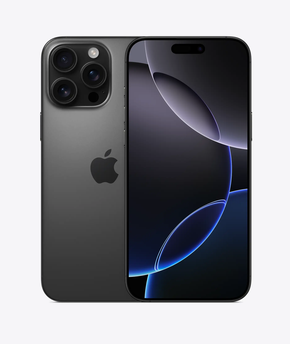
The iPhone is a line of smartphones developed and marketed by Apple that run iOS, the company’s own mobile operating system. The first-generation iPhone was announced by then–Apple CEO Steve Jobs on January 9, 2007, at Macworld 2007, and launched later that year. Since then, Apple has annually released new iPhone models and iOS versions; the most recent models being the iPhone 16 and 16 Plus, and the higher-end iPhone 16 Pro and 16 Pro Max. As of January 1, 2024, more than 2.3 billion iPhones have been sold, making Apple the largest vendor of mobile phones in 2023.
The iPhone, which operates using Apple’s proprietary iOS software, is one of the two major smartphone platforms in the world, alongside Android. The first-generation iPhone was described by Steve Jobs as a “revolution” for the mobile phone industry. The iPhone has been credited with popularizing the slate smartphone form factor, and with creating a large market for smartphone apps, or “app economy”, laying the foundation for the boom of the market for mobile devices. In addition to the apps that come pre-installed on iOS, there are nearly 2 million apps available for download from Apple’s mobile distribution marketplace, the App Store, as of August 2024.
Text has been borrowed from the listed urls
The current list of all the Lemuria references can be found here.
Eye Robot images are from Wizard101, and are (c) KingsIsle Entertainment, they are being used in a way that qualifies as fair use under US copyright law.
Cover of I, Robot is borrowed from Amazon.com and is copyright Ballantine Books
i,Robot 2004 movie poster is borrowed from the Imp Awards and is copyright 20th Century Fox.
iPhone 16 image is borrowed from Wikipedia. It is copyright Apple and is fair use.
 Vulcan Stev's Database
