Ichabod Crane – Ichabod Crane from the Legend of Sleepy Hollow
https://wiki.wizard101central.com/wiki/NPC:Ichabod_Crane
https://wiki.wizard101central.com/wiki/Spell:Headless_Horseman
https://en.wikipedia.org/wiki/The_Legend_of_Sleepy_Hollow

Ichabod Crane has been exiled from his village in the Night Forest for the egregious crime of misspelling ‘Hierarch.’ He prevails upon your wizard to seek out Lucien and plead his case. After you have ousted Lucien, you happen upon Ichabod once again. He has found a text, a litany of horrors. He begs you to return the wretched scribbling whence it came. He sends you to the Crypt of Tales.
“The Legend of Sleepy Hollow” is an 1820 short story by American author Washington Irving contained in his collection of 34 essays and short stories titled The Sketch Book of Geoffrey Crayon, Gent. Irving wrote the story while living in Birmingham, England.
Along with Irving’s companion piece “Rip Van Winkle”, “The Legend of Sleepy Hollow” is among the earliest examples of American fiction with enduring popularity, especially during Halloween. It has been adapted for the screen several times, including a 1922 silent film and in 1949, a Walt Disney animation as one of two segments in the package film The Adventures of Ichabod and Mr. Toad. It was also immortalized on a 10 cent US postage stamp in 1974.
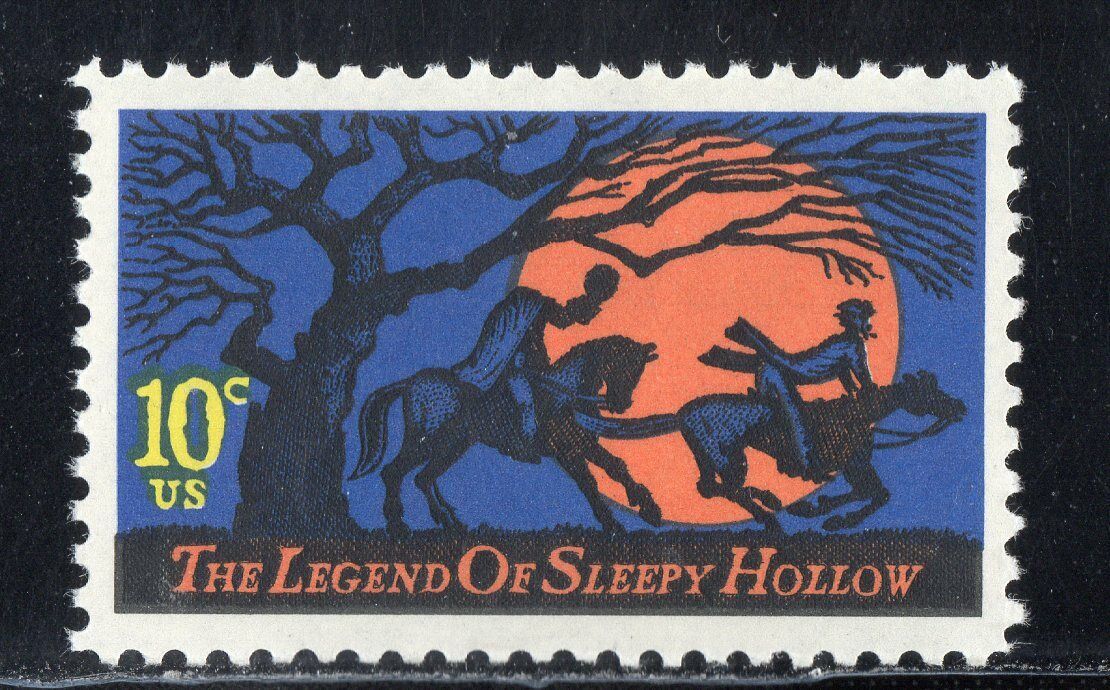
The story is set in 1790 in the countryside near the former Dutch settlement of Tarry Town, in a secluded glen known as Sleepy Hollow. It relates the tale of Ichabod Crane, a lean, lanky, superstitious schoolmaster from Connecticut. Ichabod intends to woo Katrina Van Tassel, the daughter of a wealthy farmer, in order to procure her family’s riches for himself.
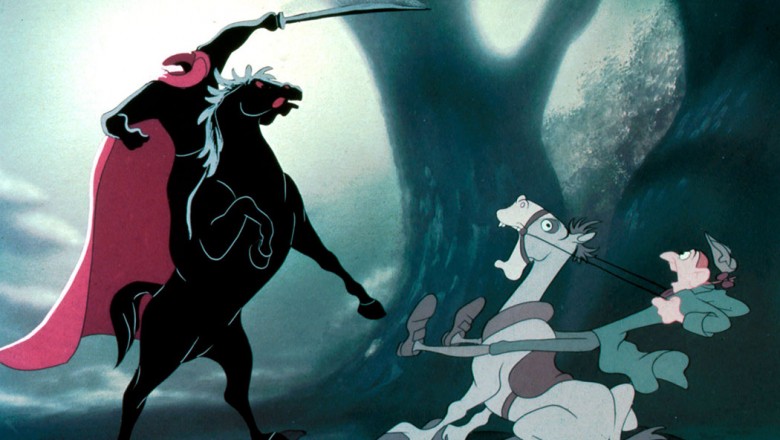
The story was the longest one published as part of The Sketch Book of Geoffrey Crayon, Gent. (commonly referred to as The Sketch Book), which Irving issued serially throughout 1819 and 1820, using the pseudonym “Geoffrey Crayon”. Irving wrote The Sketch Book during a tour of Europe, and parts of the tale may also be traced to European origins. Headless horsemen were staples of northern Europe storytelling, featured in German, Irish (e.g., Dullahan), Scandinavian (e.g., the Wild Hunt), and British legends, and included in Robert Burns’s Scots poem “Tam o’ Shanter” (1790) and Gottfried August Bürger’s Der Wilde Jäger (1778), translated as The Wild Huntsman (1796). Usually viewed as omens of ill fortune for those who chose to disregard their apparitions, these specters found their victims in proud, scheming persons and characters with hubris and arrogance. One particularly influential rendition of this folktale is the last of the “Legenden von Rübezahl” (‘Legends of Rübezahl’) from Johann Karl August Musäus’s literary retellings of German folktales, Volksmärchen der Deutschen (1783).
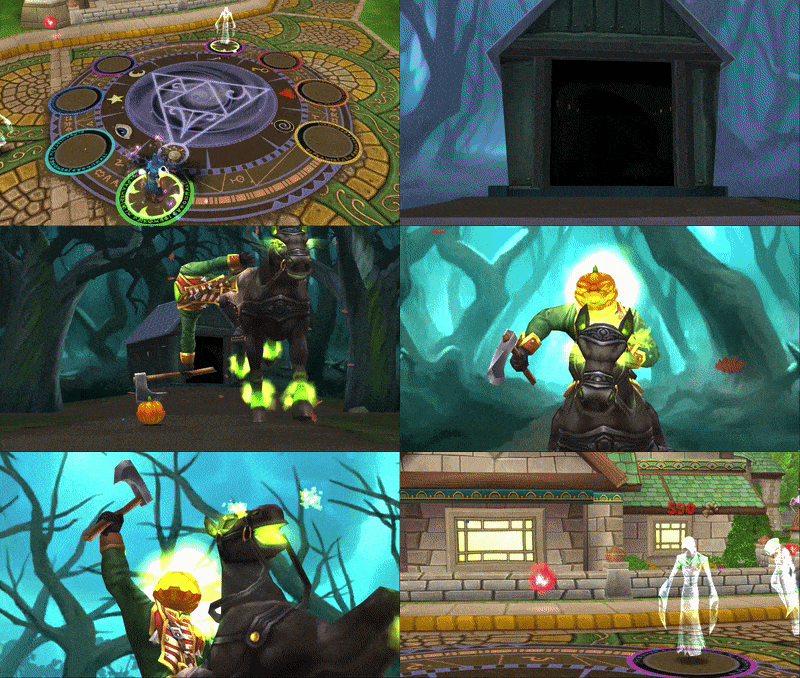
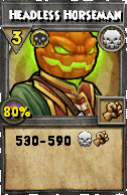
On a related note, the Death School spell “Headless Horseman” is also inspired by Irving’s short story.
Text has been borrowed from the listed urls
The current list of all the Lemuria references can be found here.
Icahbod Crane image, Headless Horseman Spell image and Headless Horseman animation are from Wizard101, and are (c) KingsIsle Entertainment, they are being used in a way that qualifies as fair use under US copyright law.
Ichabod Crane and the Headless Horseman still is borrowed from the D23 website and is copyright Walt Disney.
The Legend of Sleepy Hollow postage stamp is borrowed from eBay and is copyright the US Postal Service.
 Vulcan Stev's Database