The Unforgiving Tree and the Demanding Kid – Characters from The Giving Tree by Shel Silverstein
https://wiki.wizard101central.com/wiki/Quest:The_Unforgiving_Tree
https://wiki.wizard101central.com/wiki/Creature:Unforgiving_Tree
https://wiki.wizard101central.com/wiki/Creature:The_Writer
https://en.wikipedia.org/wiki/The_Giving_Tree
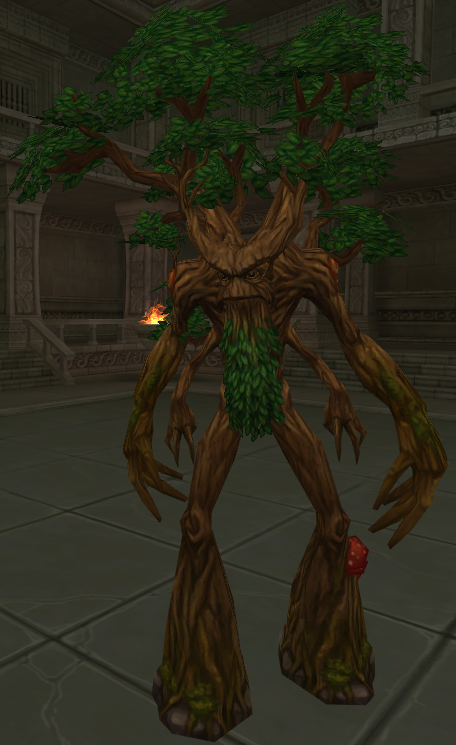
Ichabod Crane has found a text, a litany of horrors. He begs you to return the wretched scribbling whence it came. He sends you to the Crypt of Tales. Once inside the Crypt you encounter a fiendish ghoul, The Scriptkeeper. He enjoins you to peruse the fiendish fantasies contained within his script; The Snow Queen in “Let It Snow”, The Shark Principal in “Jaws Well That Ends Well”, and finally the Unforgiving Tree. The third and final Tale from the Script is “The Unforgiving Tree.” Your wizard will fight the Unforgiving Tree and the Boy who takes and takes.
As you enter the third tomb, the Scriptkeeper intones, “There once was a boy who said to a tree…”
“There’s so many things you can give to me!” states the Demanding Kid.

“Take my branches to keep cool, my fruits to keep fed. Take fallen sticks for play duels or maybe rafting instead?” the Unforgiving Tree replies.
As the boy grows older his needs become more and more demanding. The boy becomes a writer and the Tree having enough of the boys demands places a curse on the boy’s writings. It seems that the boy is The Writer of The Scriptkeeper’s scripts.
Monstrology Tome Description:
Just saying, a little appreciation goes a long way.
“Exposition! Exposition! It’s time to explain! All the crazy dark things that come out of my brain! My thoughts twist and they turn what used to be pure into hideous monstrosities that you must endure. I thought it was meta, I thought it was clever. But it’s just a pile of nonsense I’ll build up forever. It can never be over, nor I ever be stopped. Now come see what terrible futures for you I have wrought.” – The Writer
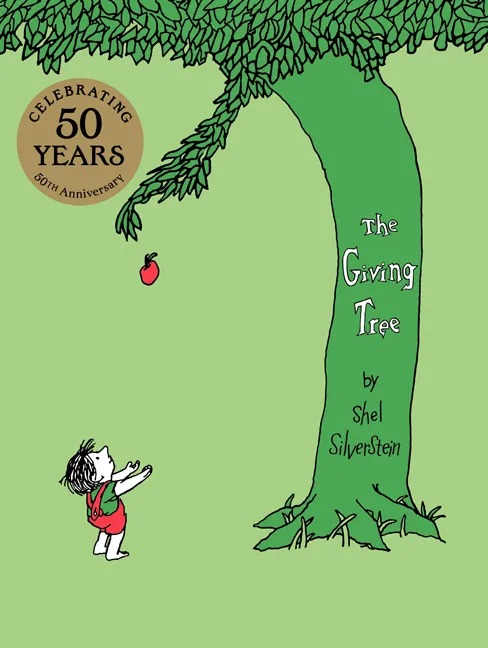
The Giving Tree is an American children’s picture book written and illustrated by Shel Silverstein. First published in 1964 by Harper & Row, it has become one of Silverstein’s best-known titles, and has been translated into numerous languages.
This book has been described as “one of the most divisive books in children’s literature”; the controversy stems from whether the relationship between the main characters (a boy and the eponymous tree) should be interpreted as positive (i.e., the tree gives the boy selfless love) or negative (i.e., the boy and the tree have an abusive relationship).
The book follows the lives of an apple tree and a boy, who develop a relationship with each other. The tree is very “giving” and the boy ages into a “taking” teenager, a young man, a middle-aged man, and finally an elderly man. Despite the fact that the boy ages in the story, the tree addresses the boy as “Boy” throughout his entire life.
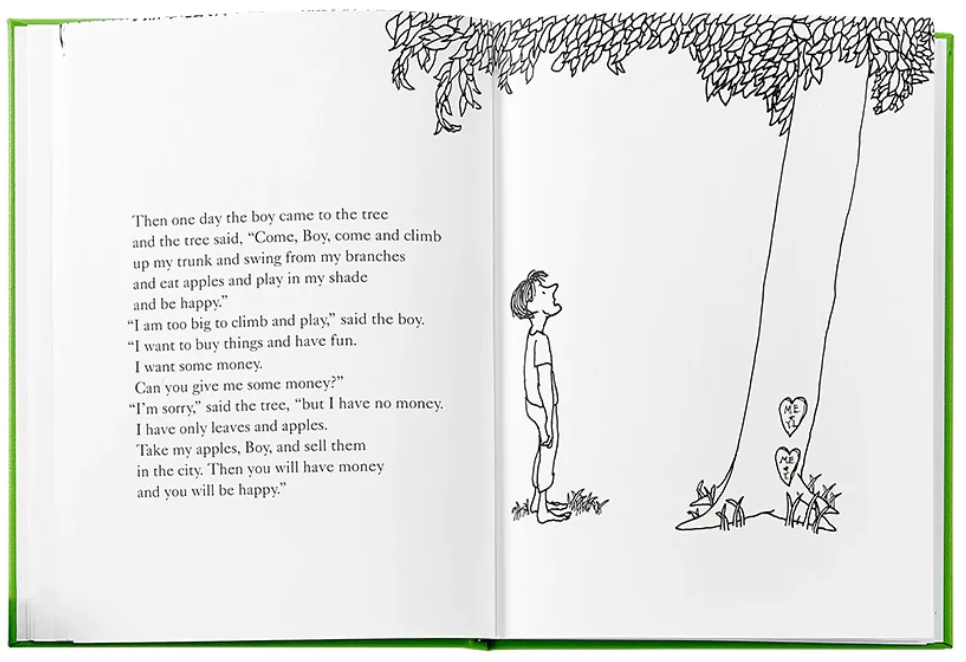
In his childhood, the boy enjoys playing with the tree, climbing her trunk, swinging from her branches, carving “Me + T (Tree)” into the bark, and eating her apples. However, as the boy grows older, he spends less time with the tree and tends to visit her only when he wants material items at various stages of his life, or not coming to the tree alone [such as bringing his girlfriend to the tree and carving “Me +Y.L.” (her initials, often assumed to be an initialism for “young love”)] into the tree. In an effort to make the boy happy at each of these stages, the tree gives him parts of herself, which he can transform into material items, such as money from her apples when the boy is a teenager, a house from her branches when the boy is a young man, and a boat from her trunk when the boy is a middle-aged man. With every stage of giving, “the Tree was happy”.

In the final pages, both the tree and the boy feel the sting of their respective “giving” and “taking” nature. When only a stump remains for the tree (including the carving “Me + T”), she is not happy, at least at that moment. The boy returns as a tired elderly man to meet the tree once more. She tells him she is sad because she cannot provide him shade, apples, or any materials like in the past. He tells her that all he wants is “a quiet place to sit and rest”, which the tree, who is weak being just a stump, could provide. With this final stage of giving, “the Tree was happy”.
Interest in the book increased by word of mouth; for example, in churches “it was hailed as a parable on the joys of giving”. As of 2001, over 5 million copies of the book had been sold, placing it 14th on a list of hardcover “All-Time Bestselling Children’s Books” from Publishers Weekly. By 2011, 8.5 million copies of the book had been sold.
In a 1999–2000, National Education Association online survey of children, the book was ranked 24th among the “Kids’ Top 100 Books”. In the 2007 online “Teachers’ Top 100 Books for Children” poll by the National Education Association, the book came in third. It was 85th of the “Top 100 Picture Books” of all time in a 2012 poll by School Library Journal. Scholastic Parent & Child magazine placed it #9 on its list of “100 Greatest Books for Kids” in 2012. As of 2013, it ranked third on a Goodreads list of “Best Children’s Books”.
Text has been borrowed from the listed urls
The current list of all the Lemuria references can be found here.
The Unforgiving Tree and The Writer images are from Wizard101, and are (c) KingsIsle Entertainment, they are being used in a way that qualifies as fair use under US copyright law.
All The Giving Tree images are copyright Shel Silverstein and Harper & Row
 Vulcan Stev's Database