General Benedict Brutus von Booth – Benedict Arnold, Brutus, and John Wilkes Booth
https://wiki.wizard101central.com/wiki/NPC:General_Benedict_Brutus_von_Booth
https://en.wikipedia.org/wiki/Benedict_Arnold
https://en.wikipedia.org/wiki/Marcus_Junius_Brutus
https://en.wikipedia.org/wiki/John_Wilkes_Booth
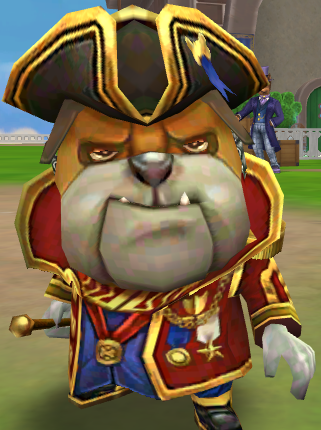
General Booth was introduced to Tung-Ak by the same people who supplied his rogue Dogs of War. General Booth’s only goal was to destroy Rottingham’s career.
Moo Bu: “Let’s be quick. What did you promise Tung-Ak? How did you know he was here?”
General Booth: “We were introduced by the same people who supplied me my Dogs of War. The deal is simple: I use Tunk-Ak’s monsters to drive everyone from Vicorgia… …Then I turn over my forces to him to invade MooShu. Which is fine by me. All I want is to destroy Rottingham’s career here. Yes, Wizard. I poisoned wells, hired gangsters, recruited monsters, created conflict with Puerto Nuovo all to destroy Rottingham’s enterprise.”
Moo Bu: “Why?”
General Booth: “He insulted me. He called me a “yipping papillon””
Moo Bu: “Is… is there more than that?”
General Booth: “More than that? More than impugning my honor, my breeding, my preferred mode of travel? It’s so rude, so mean, so UNCIVILIZED!”
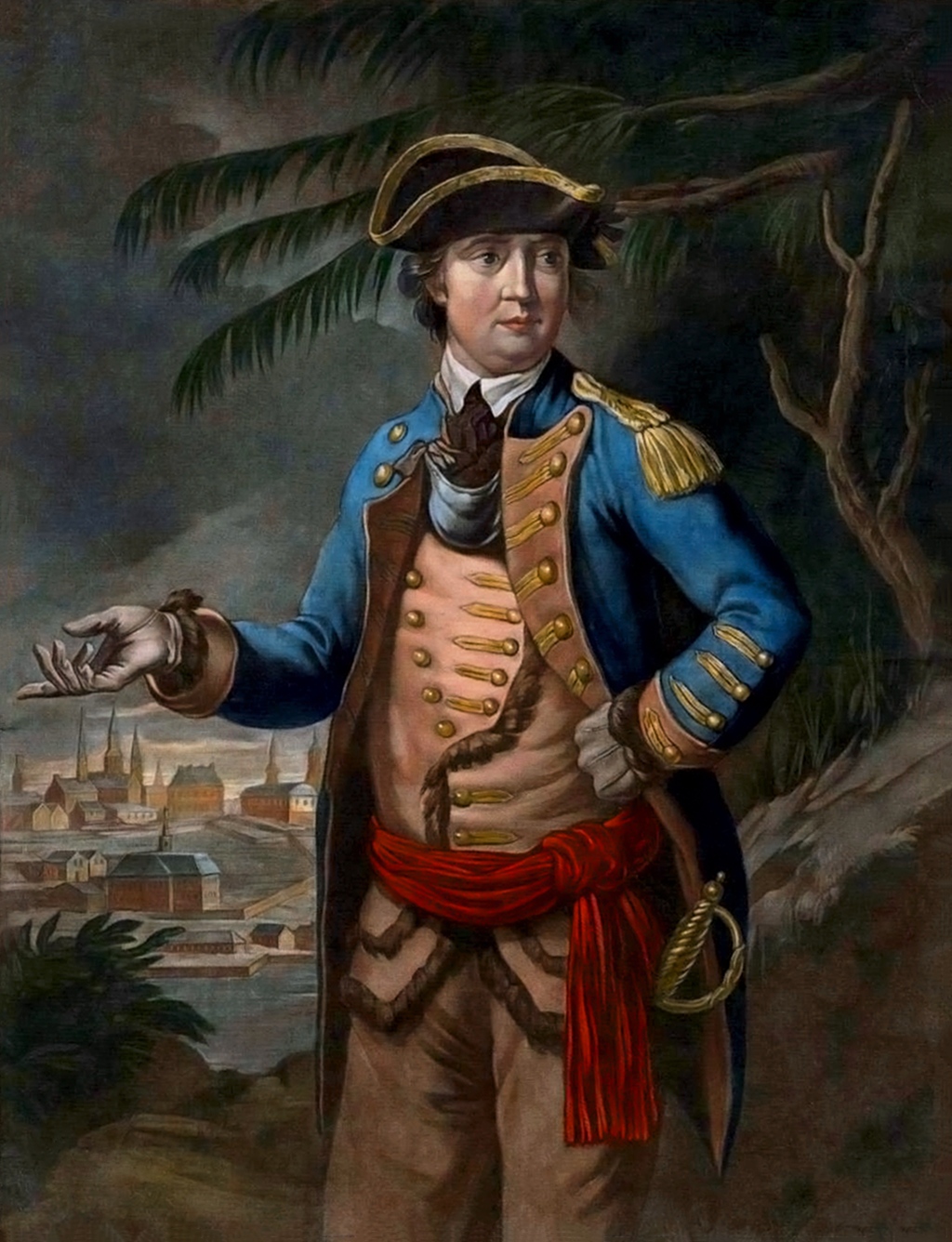
Benedict Arnold (January 14, 1741 – June 14, 1801) was an American-born British military officer who served during the American Revolutionary War. He fought with distinction for the American Continental Army and rose to the rank of major general before defecting to the British in 1780. General George Washington had given him his fullest trust and had placed him in command of West Point in New York. Arnold was planning to surrender the fort to British forces, but the plot was discovered in September 1780, whereupon he fled to the British lines. In the later part of the war, Arnold was commissioned as a brigadier general in the British Army and placed in command of the American Legion. He led British forces in battle against the army which he had once commanded, and his name became synonymous with treason and betrayal in the United States.
Marcus Junius Brutus (c. 85 BC – October 23, 42 BC) was a Roman politician, orator, and the most famous of the assassins of Julius Caesar. After being adopted by a relative, he used the name Quintus Servilius Caepio Brutus, which was retained as his legal name. He is often referred to simply as Brutus.
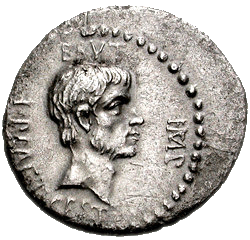
Early in his political career, Brutus opposed Pompey, who was responsible for Brutus’ father’s death. He also was close to Caesar. However, Caesar’s attempts to evade accountability in the law courts put him at greater odds with his opponents in the Roman elite and the senate. Brutus eventually came to oppose Caesar and sided with Pompey against Caesar’s forces during the ensuing civil war (49–45 BC). Pompey was defeated at the Battle of Pharsalus in 48, after which Brutus surrendered to Caesar, who granted him amnesty.
With Caesar’s increasingly monarchical and autocratic behavior after the civil war, several senators who later called themselves liberatores (liberators) plotted to assassinate him. Brutus took a leading role in the assassination, which was carried out successfully on the Ides of March (15 March) of 44 BC. In a settlement between the liberatores and the Caesarians, an amnesty was granted to the assassins while Caesar’s acts were upheld for two years.
Popular unrest forced Brutus and his brother-in-law, fellow assassin Gaius Cassius Longinus, to leave Rome in April 44. After a complex political realignment, Octavian – Caesar’s adopted son – made himself consul and, with his colleague, passed a law retroactively making Brutus and the other conspirators murderers. This led to a second civil war, in which Mark Antony and Octavian fought the liberatores led by Brutus and Cassius. The Caesarians decisively defeated the outnumbered armies of Brutus and Cassius at the two battles at Philippi in October 42. After the defeat Brutus took his own life.
His name has become a synonym and byword for “betrayal” or “traitor” in most languages of Europe. His condemnation for betrayal of Caesar, his friend and benefactor, is perhaps rivalled only by the name of Judas Iscariot, with whom he is portrayed in Dante Alighieri’s Inferno. He also has been praised in various narratives, both ancient and modern, as a virtuous and committed republican who fought – however futilely – for freedom and against tyranny.
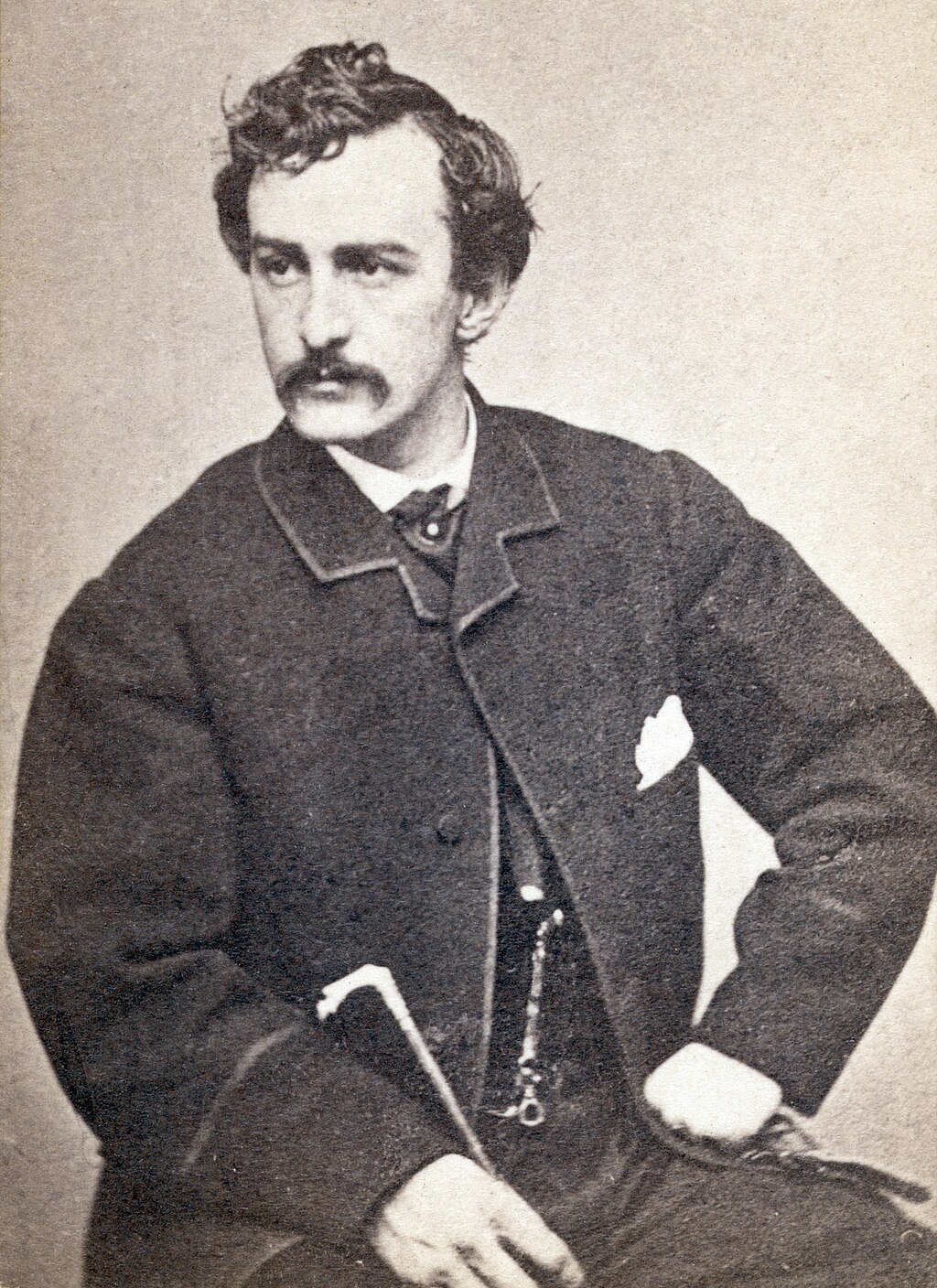
John Wilkes Booth (May 10, 1838 – April 26, 1865) was an American stage actor who assassinated United States President Abraham Lincoln at Ford’s Theatre in Washington, D.C., on April 14, 1865. A member of the prominent 19th-century Booth theatrical family from Maryland, he was a noted actor who was also a Confederate sympathizer; denouncing President Lincoln, he lamented the then-recent abolition of slavery in the United States.
Originally, Booth and his small group of conspirators had plotted to kidnap Lincoln to aid the Confederate cause. They later decided to murder him, as well as Vice President Andrew Johnson and Secretary of State William H. Seward. Although the Army of Northern Virginia, commanded by General Robert E. Lee, had surrendered to the Union Army four days earlier, Booth believed that the American Civil War remained unresolved because the Army of Tennessee of General Joseph E. Johnston continued fighting.
Booth shot President Lincoln once in the back of the head. Lincoln’s death the next morning completed Booth’s piece of the plot. Seward, severely wounded, recovered, whereas Vice President Johnson was never attacked. Booth fled on horseback to Southern Maryland; twelve days later, at a farm in rural Northern Virginia, he was tracked down sheltered in a barn. Booth’s companion David Herold surrendered, but Booth maintained a stand-off. After the authorities set the barn ablaze, Union soldier Boston Corbett fatally shot him in the neck. Paralyzed, he died a few hours later. Of the eight conspirators later convicted, four were soon hanged.
The current list of all the (known) Novus references are located here.
Although I am well versed in Pop Culture references but I do not claim to have caught them all. Let me know your favorites in the comments and if I’ve missed one you caught, let me know so I can add it to the list.
Text for this article is excerpted from the linked wiki pages
General Benedict Brutus von Booth image is from Wizard101, and is copyright of KingsIsle Entertainment.
Benedict Arnold image is borrowed from Wikipedia and is in the public domain.
Brutus Denarius image is borrowed from Wikipedia and is copyright Classical Numismatic Group, Inc. and is shared under the CC BY-SA 2.5 Creative Commons license.
John Wilkes Booth image is borrowed from Wikipedia and is in the public domain.
Image usage qualifies as fair use under US copyright law.
 Vulcan Stev's Database