Opal Bilburrow – The underground city of Coober Pedy famous for its opal mines and an Australian Bilby
https://wiki.wizard101central.com/wiki/NPC:Opal_Bilburrow
https://en.wikipedia.org/wiki/Coober_Pedy
https://en.wikipedia.org/wiki/Greater_bilby

Opal Bilburrow is Wallaru’s Prime Minister and leader of the Townie faction that built Hope Springs. Her only interest is Wallaru’s prosperity and her primary goal is to seize the dream. Prime Minister Bilburrow has heard of your wizard. Your reputation of bringing upheaval has preceded you. She is not going to allow the spoiler of Nana’s Olde Fashioned Karamelle Delights to ‘help’ the good citizens of Wallaru. Given your reputation for unfortunate entanglements, she thinks involving you in the troubles of the Emu Rider crisis is risky… but, your unique skillset could prove useful.
Opal’s name evokes the opal capital of the world, Coober Pedy. Residents of the town excavate burrows to live in due to the scorching heat outside during the summer months, when temperatures often exceed 40 °C (104 °F). (i.e. Opal Burrows) and the Bilby a small burrowing animal native to Australia.
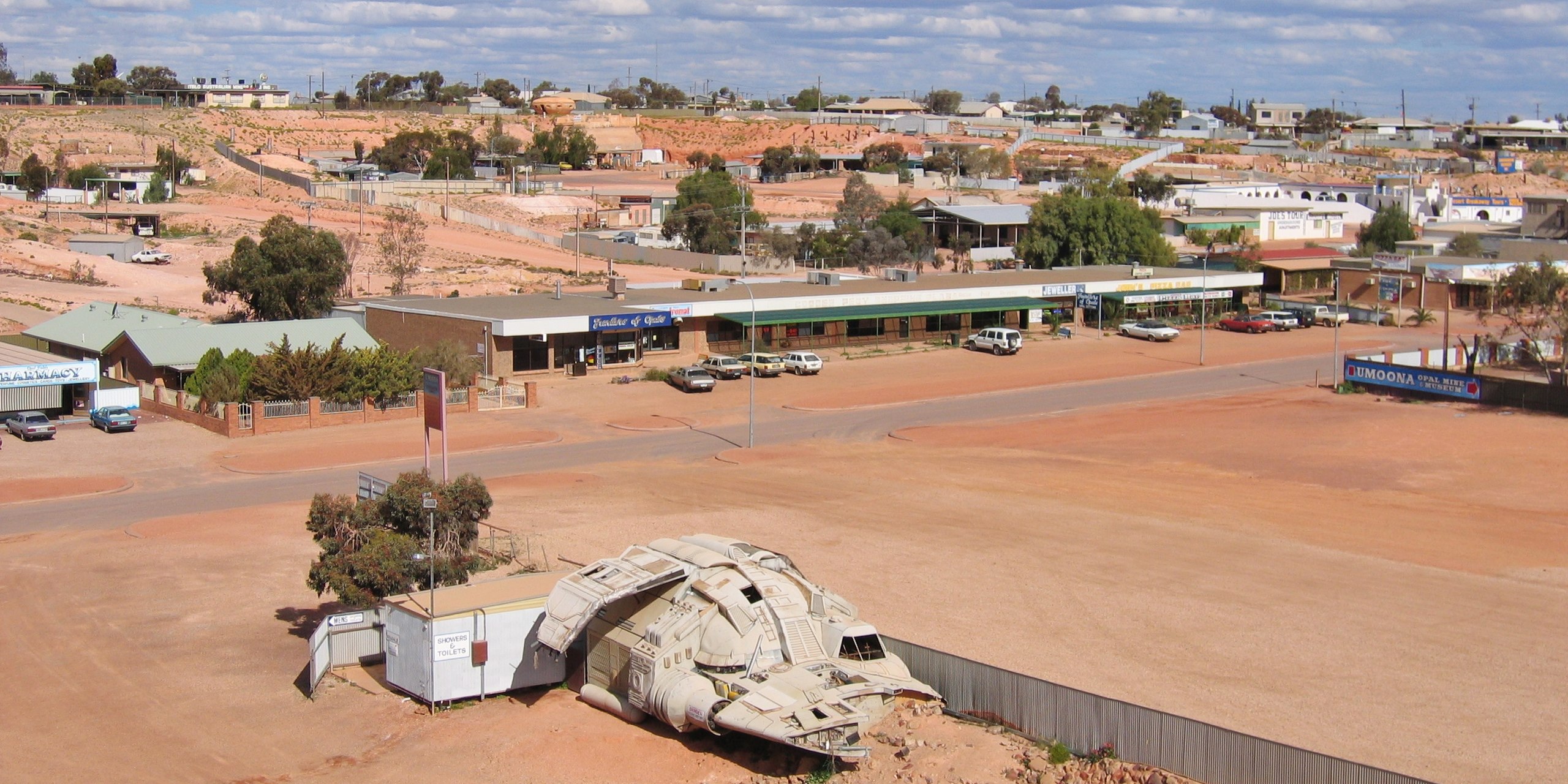
(note the exterior entrances to the ‘dugouts in the upper left of the photo)
Coober Pedy is a town in northern South Australia, 846 km (526 mi) north of Adelaide on the Stuart Highway. The town is sometimes referred to as the “opal capital of the world” because of the quantity of precious opals that are mined there. A blower truck is raised above the town sign, representing the importance of opal mining to the town’s history. Coober Pedy is also renowned for its below-ground dwellings, called “dugouts”, which are built in this fashion due to the scorching daytime heat.

Aboriginal people have a longstanding connection with the area, which is considered by the people of the Western Desert to be the traditional lands of the Arabana people, although Kokatha and Yankunytjatjara people are also closely attached to some ceremonial sites in the area. The origin of the name of the town (decided in 1920) is thought to derive from the words in the Kokatha language, kupa piti, usually translated as “whitefella” and “hole in the ground”, or guba bidi, “white man’s holes”, relating to white people’s mining activities. Further investigation into the words by linguists shows that kupa may have originated from the Parnkalla language and that piti may be the Kokatha word specifically created for “quarry” (a white man’s activity).
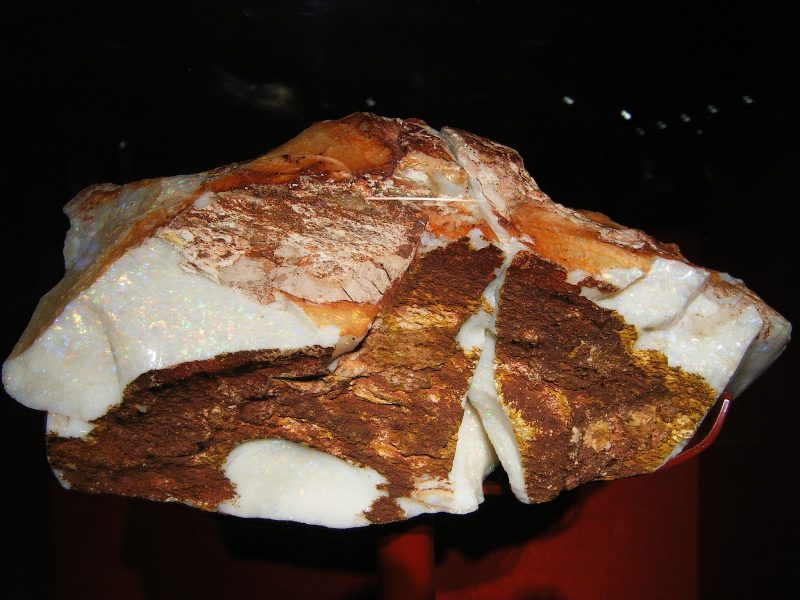
In August 1956 at the Eight Mile opal field, the Olympic Australis opal was found approximately 30 feet below the ground. It is the largest and one of the most valuable opals mined to date, consisting of 99 per cent gem opal (the other 1 per cent being soil). The Olympic Australis measures 280 by 120 by 115 millimeters (11.0 in × 4.7 in × 4.5 in) and weighs 17,000 carats (3,400 g). It was valued at AU$2,500,000 (roughly US$1,708,000) in both 1997 and 2005, and is currently held in the offices of Altmann & Cherny Ltd, one of Australia’s most prominent vendors and authorities on opals.
By 1999, there were more than 250,000 mine shaft entrances in the area. Fossicking and mining laws discouraged large-scale mining by allowing each prospector a 165-square-foot (15.3 m2) claim.

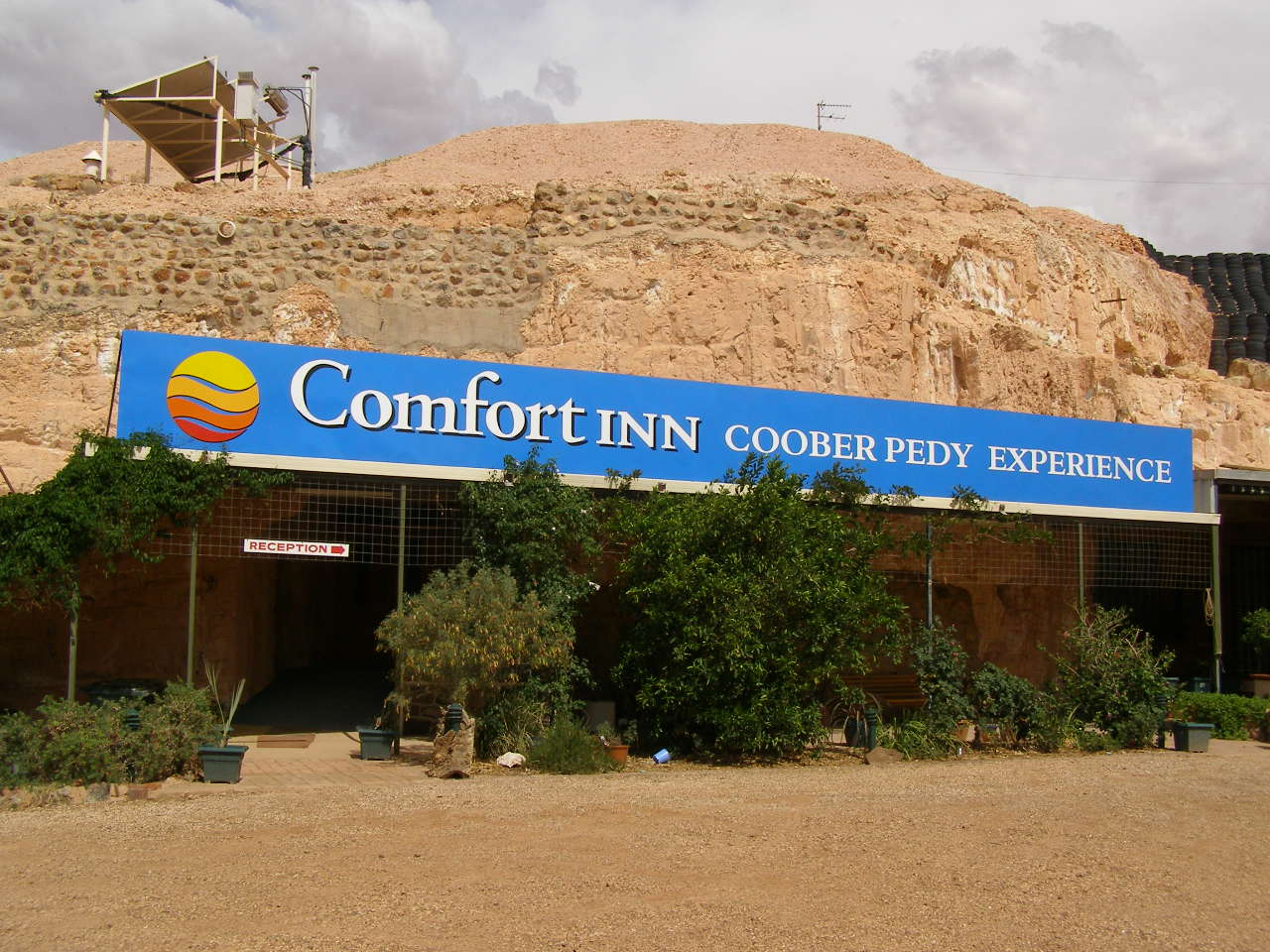
Coober Pedy is famous for its underground accommodation. The town has become a popular stopover point and tourist destination. Visitor attractions in Coober Pedy include the mines, the graveyard and the underground churches (the Serbian Orthodox Church and the Catholic Church). There are several motels offering underground accommodation, ranging from a few rooms to the entire motel being a dug-out.
The greater bilby (Macrotis lagotis), or simply the bilby, is a long-eared, rabbit-like mammal native to Australia. It lives in burrows and is active at night, feeding on insects, fruit, or fungi. The bilby is a marsupial and carries its young in a pouch. Threats include habitat loss, disease, and introduced predators such as foxes. Formerly widespread, bilbies are now restricted to arid parts of northwestern and central Australia.
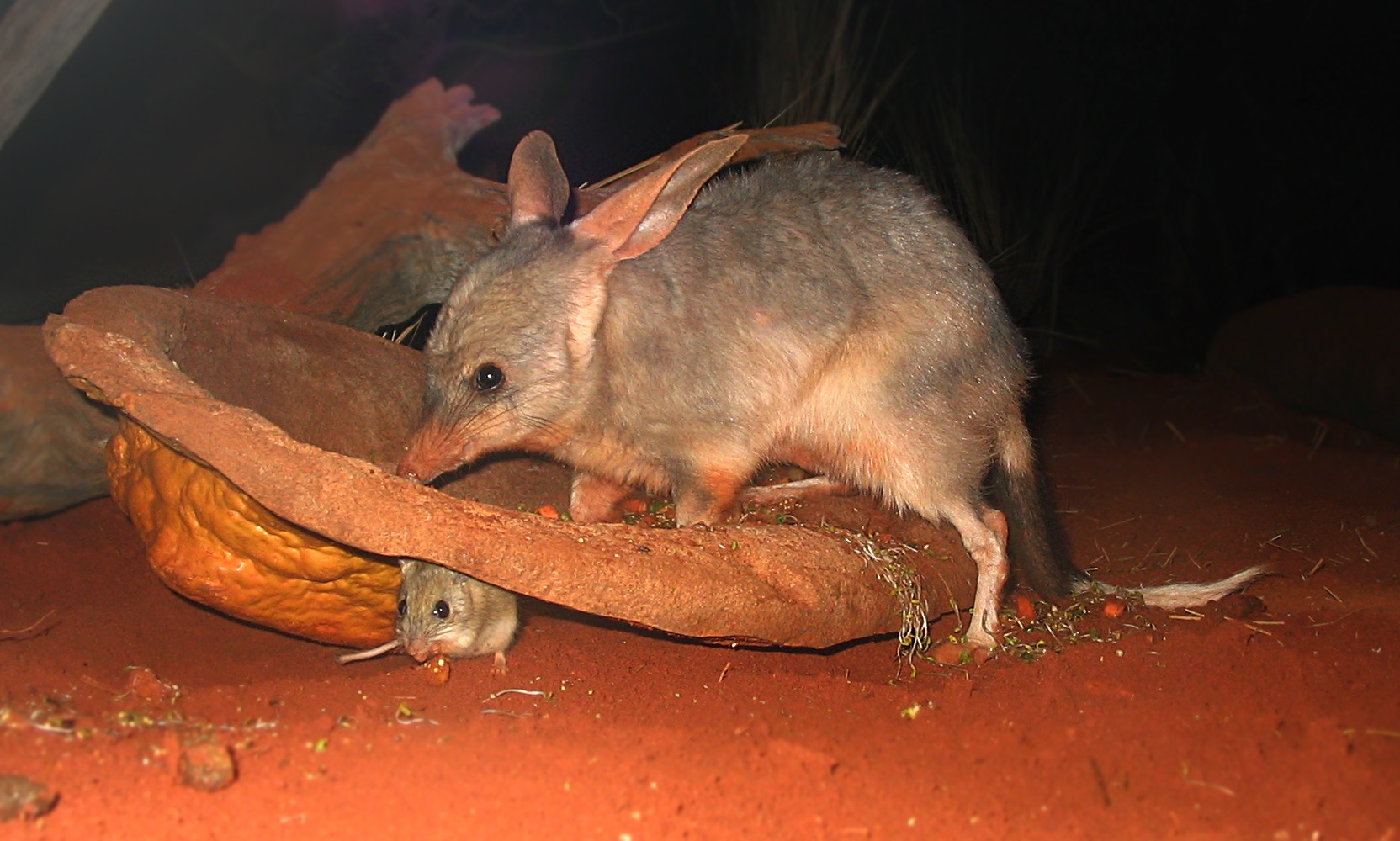
It is commonly called bilby after the lesser bilby (Macrotis leucura) became extinct in the 1950s. Other names include dalgyte, pinkie, or rabbit-eared bandicoot.
Greater bilbies have the characteristics of long bandicoot muzzle and very long ears. They are about 29–55 centimeters (11–22 in) in length. Compared to bandicoots, they have a longer tail, bigger ears, and softer, silky fur. The size of their ears allows them to have better hearing as well. At 1 to 2.4 kilograms (2.2 to 5.3 lb), the male is about the same size as a rabbit; although male animals in good condition have been known to grow up to 3.7 kilograms (8.2 lb) in captivity. The female is smaller, and weighs around 0.8 to 1.1 kilograms (1.8 to 2.4 lb). Bilbies have an excellent sense of smell and sharp hearing. Their fur is blue-grey with patches of tan and is very soft. The tail is black and white with a distinct crest.
The current list of all the (known) Wallaru references are located here.
Although I am well versed in Pop Culture references but I do not claim to have caught them all. Let me know your favorites in the comments and if I’ve missed one you caught, let me know so I can add it to the list.
Text for this article is excerpted from the linked wiki pages
Opal Bilburrow image is from Wizard101, and is copyright of KingsIsle Entertainment.
All other images are borrowed from Wikipedia.
Coober Pedy photo is borrowed from Wikipedia and copyright qwesy qwesy. It is shared under the CC BY 3.0 Creative Commons license.
Opal images are copyright Chroma Gems.
Church of St. Elijah photo is borrowed from Wikipedia and copyright Robert Link. It is shared under the CC BY-SA 2.0 Creative Commons license.
Comfort Inn photo is borrowed from Wikipedia and copyright Kerry Raymond. It is shared under the CC BY 4.0 Creative Commons license.
Bilby photo is borrowed from Wikipedia . It is in the public domain.
Image usage qualifies as fair use under US copyright law.
 Vulcan Stev's Database