Gem Pickett – Crash Bandicoot’s crystals and gems & Picket Fences
https://wiki.wizard101central.com/wiki/NPC:Gem_Pickett
https://en.wikipedia.org/wiki/Crash_Bandicoot
https://crashbandicoot.fandom.com/wiki/Gem
https://en.wikipedia.org/wiki/Fence_(criminal)
https://en.wikipedia.org/wiki/Picket_fence
https://en.wikipedia.org/wiki/Picket_Fences

Thank you to Dylan J. for pointing me in the right direction.
Lady Cortexia needs help. Her crystals and gems have been stolen by someone who left a weird Tiki Mask in their place. She has found that stolen items are often taken to a fence. Coincidentally, there is a fence at the Collie Ranch. She sends your Wizard to recover her crystals and gems.
Gem Pickett, purveyor of Gem Pickett’s Illegal Goods Surplus has what you need. She just procured some crystals and gems from her old buddy, Crash the Bandit Coot. She won’t mention Crash’s calling card of leaving Tiki Masks at his crime scenes and she certainly isn’t going to tell you that Crash is hiding in the Woebegone Territory.
Crash Bandicoot is a video game franchise originally developed by Naughty Dog as an exclusive for Sony’s PlayStation console. It has seen numerous installments created by various developers and published on multiple platforms. The series consists predominantly of platform games, but also includes spin-offs in the kart racing and party game genres. The series was originally produced by Universal Interactive, which later became known as Vivendi Games; in 2008, Vivendi merged with Activision, which currently owns and publishes the franchise.

The games are mostly set on the fictitious Wumpa Islands, an archipelago situated to the south of Australia where humans and mutant animals co-exist, although other locations are common. The protagonists of the series are a pair of genetically enhanced bandicoots named Crash and Coco, whose quiet lives on the Wumpa Islands are often interrupted by their creator and the games’ main antagonist, Doctor Neo Cortex, who attempts to eliminate Crash as a constant hindrance to his plots for world domination.
Gems are collectible stones that appear throughout the Crash Bandicoot series. Like crystals, they are powerful artifacts capable of harnessing planetary energy when collected (as stated by N. Brio in Crash Bandicoot 2: Cortex Strikes Back). They are usually collected by breaking all the crates or accessing alternative paths like Death Routes or Gem paths. In Crash Twinsanity, there are six gems hidden in each level for Crash to collect, which count towards 100% completion.

The gems appear in every main Crash Bandicoot console game to date. They are typically collected in every level that contains a crystal. The gems are different from crystals though. Crash is forced to collect the crystals in every level in order to advance in the game and plot, but gems are more optional for him to collect. However, they are still required to collect if the player wants to reach 100% completion.
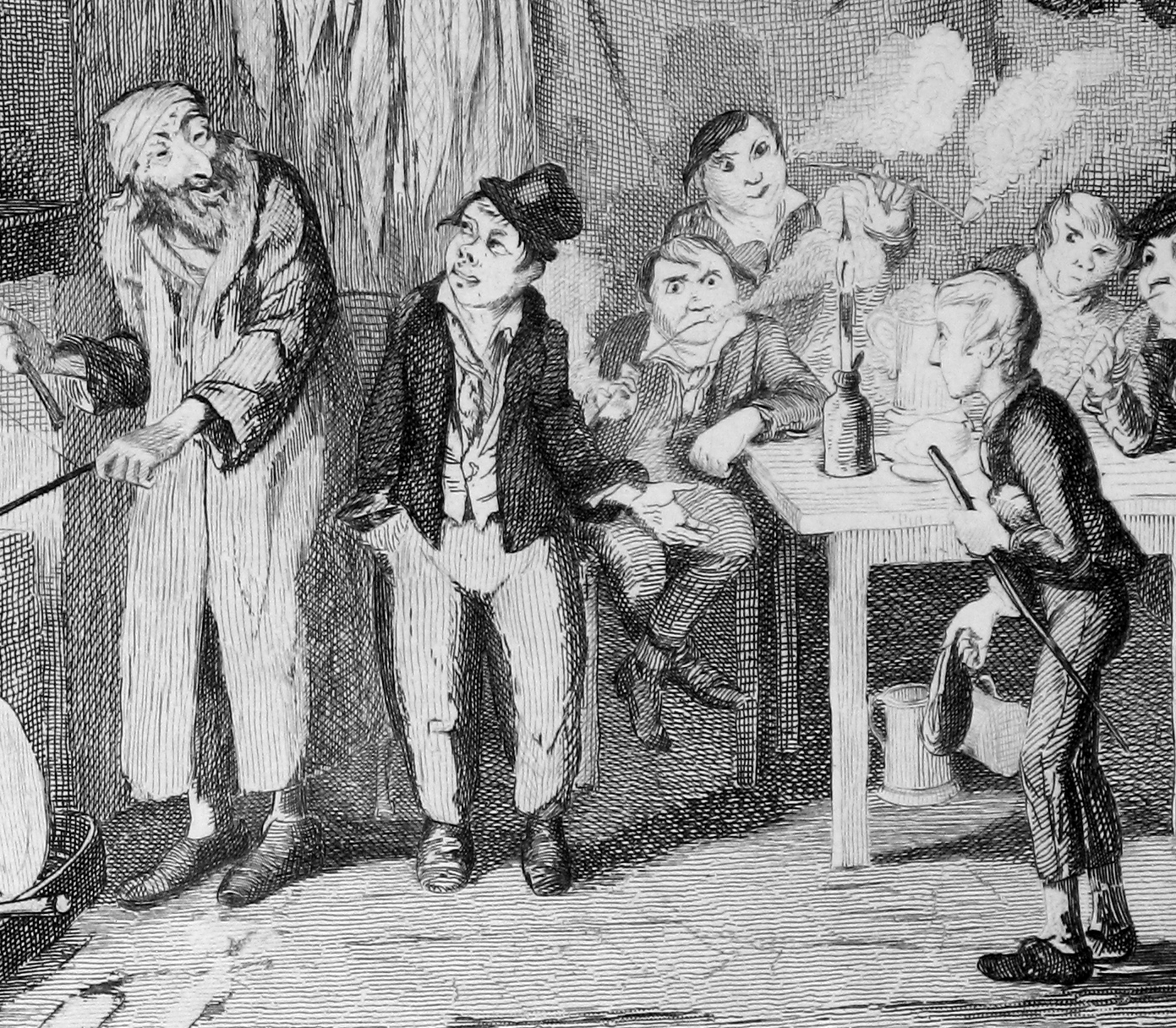
From this detail of an original George Cruikshank engraving showing the Artful Dodger introducing Oliver to Fagin.
A fence, also known as a receiver, mover, or moving man, is an individual who knowingly buys stolen goods in order to later resell them for profit. The fence acts as a middleman between thieves and the eventual buyers of stolen goods who may not be aware that the goods are stolen.
As a verb (e.g. “to fence stolen goods”), the word describes the behavior of the thief in the transaction with the fence.
As is the case with the word fence and its derivatives when used in its other common meanings (i.e. as a type of barrier or enclosure, and also as a sport), the word in this context is derived from the word defense. Among criminals, the fence originated in thieves’ slang tracing from the notion of such transactions providing a “defense” against being caught.
Thieves who patronize fences are willing to accept a low profit margin in order to reduce their risks by instantly “washing their hands” of illicitly gotten loot (such as black market goods) and disassociating from the criminal act that procured it. After sales, fences recoup their investment by disguising the stolen nature of the goods (via methods such as repackaging and altering/effacing serial numbers) and reselling the goods as near to the market price as possible without drawing suspicion. This process often relies on a legal business (such as a pawnshop, flea market, or street vendor) in order to “launder” the stolen goods by intermixing them with legally-obtained items of the same type.

Picket fences are a type of fence often used decoratively for domestic boundaries, distinguished by their evenly spaced vertical boards, the pickets, attached to horizontal rails. Picket fences are particularly popular in the United States, with the white picket fence coming to symbolize the ideal middle-class suburban life.
Picket fences are particularly popular in the United States, where the style has been used since America’s earliest colonial era and remains popular today. Pickets were historically sharpened logs used to defend positions and used as such by early colonists. Now they are a decorative way to contain pets and children without blocking views, and are used around both front and back yards. Traditionally picket fences were made out of wood and painted white (or whitewashed), but now picket fences are also widely available in low-maintenance polyvinyl chloride (PVC or Vinyl).

Picket Fences is an American family drama television series about the residents of the town of Rome, Wisconsin, created and produced by David E. Kelley. The show ran from September 18, 1992, to June 26, 1996, on CBS in the United States. It sometimes struggled to maintain a stable primetime audience and had fluctuating ratings, due in part to its Friday night death slot. In its first season on the air, it placed 63rd in prime-time Nielsen ratings and in its second season it moved to 61st. Nonetheless, the show won critical acclaim and was a major awards winner, winning 14 Primetime Emmy Awards during its run and is now regarded as a cult classic. The show’s exteriors were shot in the L.A. suburb of Monrovia, California.
The current list of all the (known) Wallaru references are located here.
Although I am well versed in Pop Culture references but I do not claim to have caught them all. Let me know your favorites in the comments and if I’ve missed one you caught, let me know so I can add it to the list.
Text for this article is excerpted from the linked wiki pages
Gem Pickett image is from Wizard101, and is copyright of KingsIsle Entertainment.
Crash Bandicoot game cover compilation is borrowed from this Reddit thread. It appears to be the work of @EsconditeRetro
Crash Bandicoot gems image is borrowed from the Crash Bandicoot wiki. Crash Bandicoot images are copyright Activision.
Etching from Oliver Twist is borrowed from Wikipedia. It is in the public domain.
Picket fence image is borrowed from Wikipedia. It is copyright TriviaKing and is shared under the CC BY-SA 3.0 Creative Commons license.
Cast of Picket Fences image is borrowed from WomensWorld.com It is copyright 20th Century Television.
Image usage qualifies as fair use under US copyright law.
 Vulcan Stev's Database