Khonsu – Khonsu, an ancient Egyptian god of the Moon and the patron deity of Marvel’s Moon Knight
https://wiki.wizard101central.com/wiki/Creature:Khonsu_(Standard)
https://en.wikipedia.org/wiki/Khonsu
https://en.wikipedia.org/wiki/Khonshu_(Marvel_Comics)
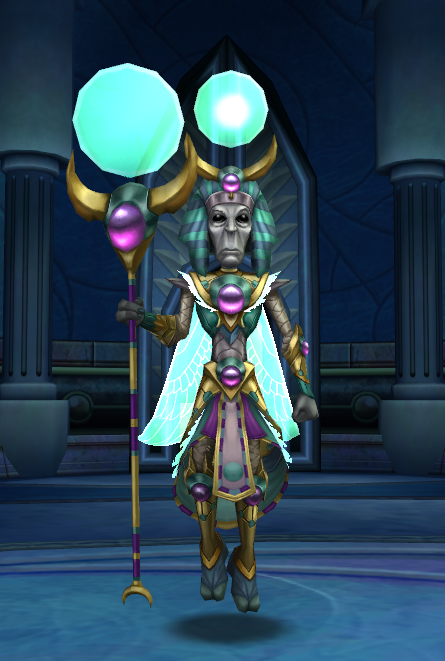
Khonsu is the Celestian who invented the Moon School of Magic. When Celestia was drowned by the Storm Titian, Khonsu was off world. He tried to fight back but his ship was hurled across the skies coming to rest on Krokotopia. Khonsu built a base in Selenopolis to study the Spiral. Is it a resource to be plundered or a threat to be contained? But that assessment cannot be made while the Spiral is intruded upon by outside variables. Khonsu has determined that Your Wizard cannot remain in the Spiral.
Khonsu: “At last you arrive. But I have been observing, measuring. My Avatars have watched you, tested you, questioned you, studied you. I know your tactics, your spells, your powers and motivations. I am unafraid.”
Mellori: “Says every disposable villain we’ve ever met.”
Khonsu: “True. And there have been many. The Tut remnants, various bovine warlords, servants of the one called Malistaire, Shadow Weavers…Arachna, executives of the Nana corporation, discharged soldiers of Marleybone, Monquista, Valencia, Polaris, numerous angry Qhats…The list goes on and on, Earthborn, of the power structures you broke. They followed legend and hearsay to find me and beg my aid. An outsider to crush an outsider. A Moon Wizard to transform THE Wizard into something more easily destroyed. And I agreed. You are a pebble that hits a pond like a meteor, sending ripples that turn into floods. And, like a meteor, you do not belong in this ecosystem. Thus, student of Ravenwood, it is finally time you were expelled.”
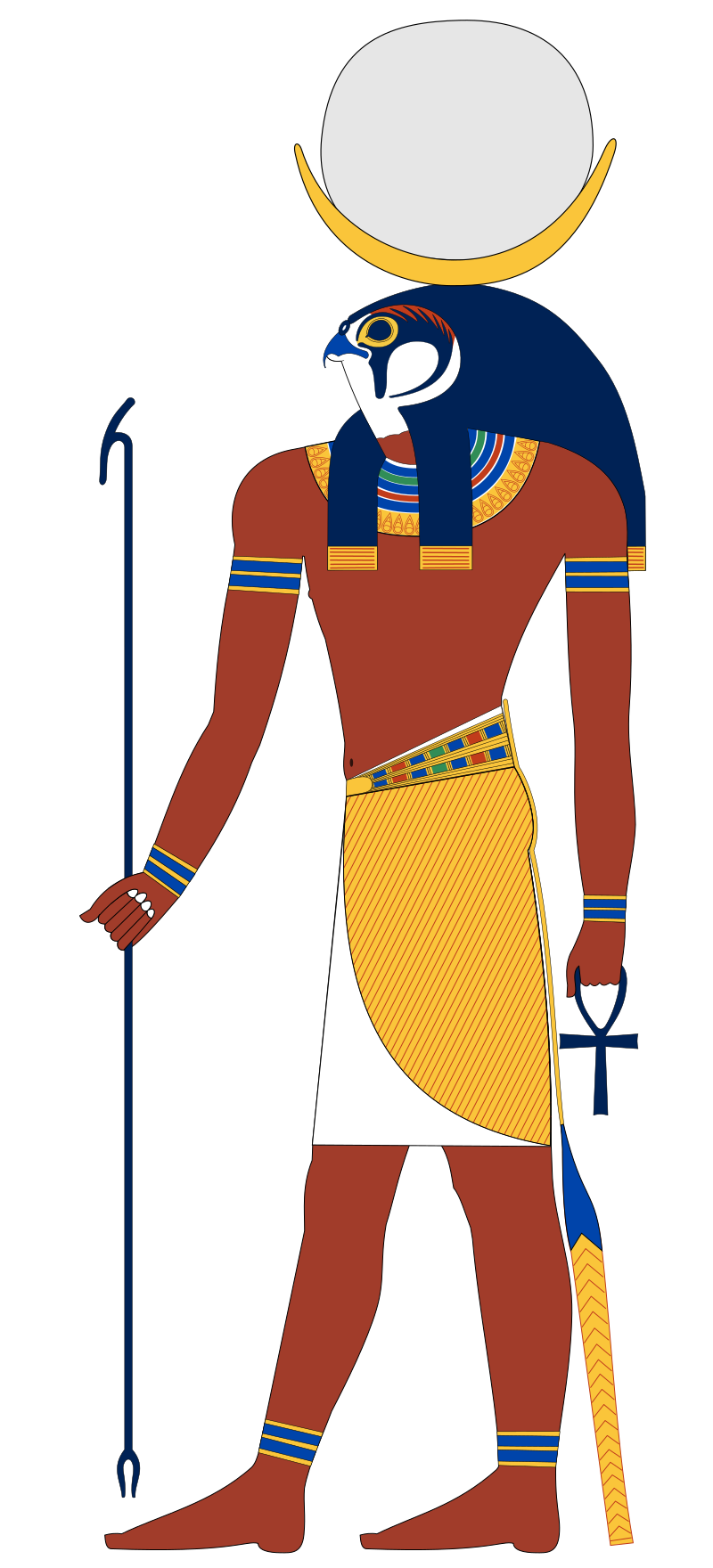
Khonsu (also transliterated Chonsu, Khensu, Khons, Chons, Khonshu, or Konshu) is an ancient Egyptian god of the Moon. His name means ‘traveler’, and this may relate to the perceived nightly travel of the Moon across the sky. Along with Thoth, he marked the passage of time and is associated with baboons. Khonsu was instrumental in the creation of new life in all living creatures. At Thebes, he formed part of a family triad (the “Theban Triad”) with Mut his mother and Amun his father.
Khonsu’s name means ‘traveler’ and therefore reflects the fact that the Moon (referred to as Iah in Egyptian) travels across the night sky. He was also referred to by the titles Embracer, Pathfinder, Defender, and Healer; and was thought to watch over those who travel at night. As the god of light in the night, Khonsu was invoked to protect against wild animals, and aid with healing. It was said that when Khonsu caused the crescent moon to shine, women conceived, cattle became fertile, and all nostrils and every throat were filled with fresh air.
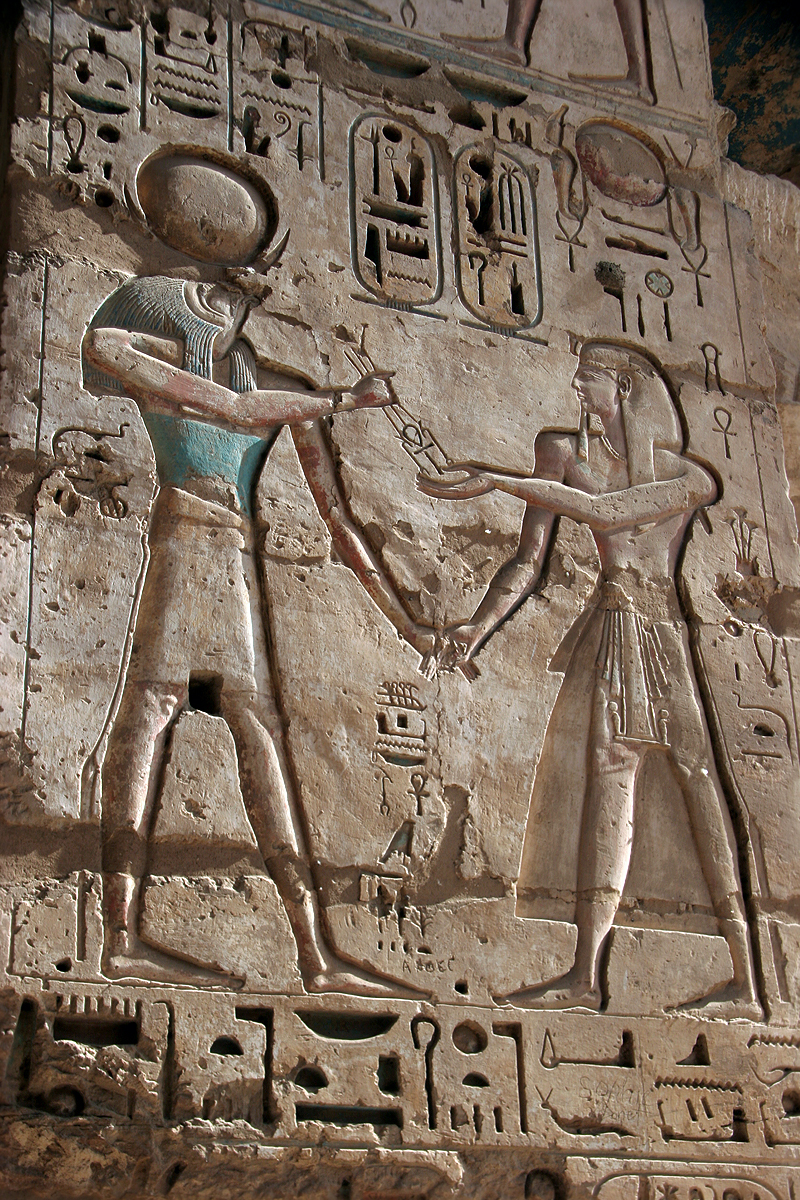
Khonsu’s connection to the moon traces back to the association of the crescent moon with the ancient Egyptian sickle sword, which Khonsu embodies as an instrument of justice, giving him the epithet “Khonsu the sharp.” The earliest indications of Khonsu’s lunar attributes appear in Coffin Texts Spells 197 and 195, where the deceased encounters Khonsu returning from Punt. The land of Punt symbolizes the east and the place of the sun’s and moon’s rising in ancient Egyptian literature.
In the New Kingdom period, the lunar cycle was associated with the phases of life. The crescent moon was also linked to the horns of a bull and became a masculine symbol of fertility. A Ptolemaic inscription from the Khonsu Temple in Thebes describes Khonsu and the sun god as bulls crossing the sky and meeting in the east as “the two illuminators of the heavens”. This meeting of the two bulls is theorized to either refer to the arrival of the full moon or the simultaneous presence of the sun and moon in the sky. Here, the crescent moon is portrayed as a young bull; while Khonsu ages into an old, castrated bull during the full before renewing himself at the beginning of the next lunar cycle.
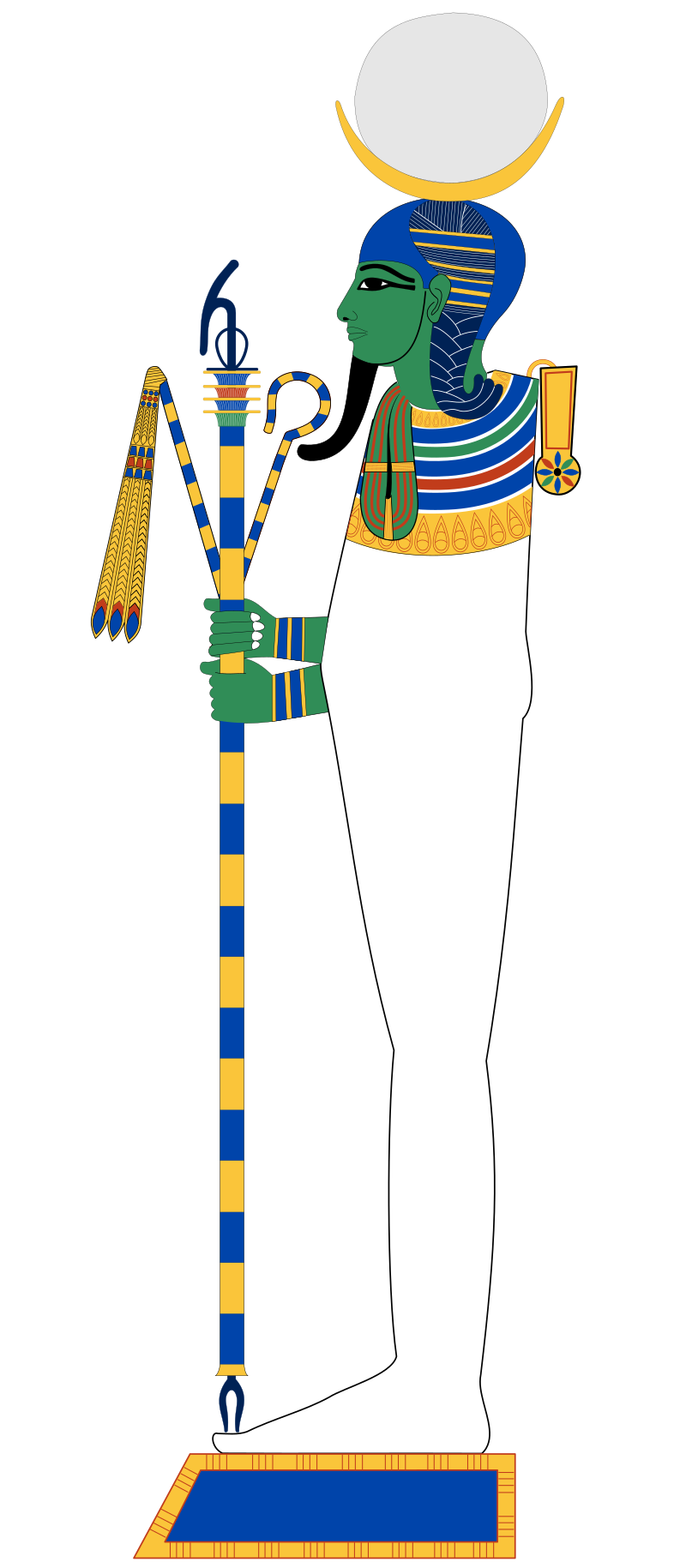
Depictions of Khonsu as a child, or young bull, symbolized the beginning of the lunar cycle and the month’s renewal. The rarer depiction of Khonsu as a two-faced child represents the time when the moon is not visible at night. His development from a child to an old man was also applied to the annual cycle, making Khonsu in his youthful manifestation (Khonsu-pa-khered) the bringer of spring and fertility. Inscriptions in his temple in Karnak refer to him as: “the first great [son] of Amun, the beautiful youth; who maketh himself young in Thebes in the form of Ra, the son of the goddess Nubit. A child in the morning, an old man in the evening, a youth at the beginning of the year; who cometh as a child after he had become infirm, and who reneweth his births like the Disk.”
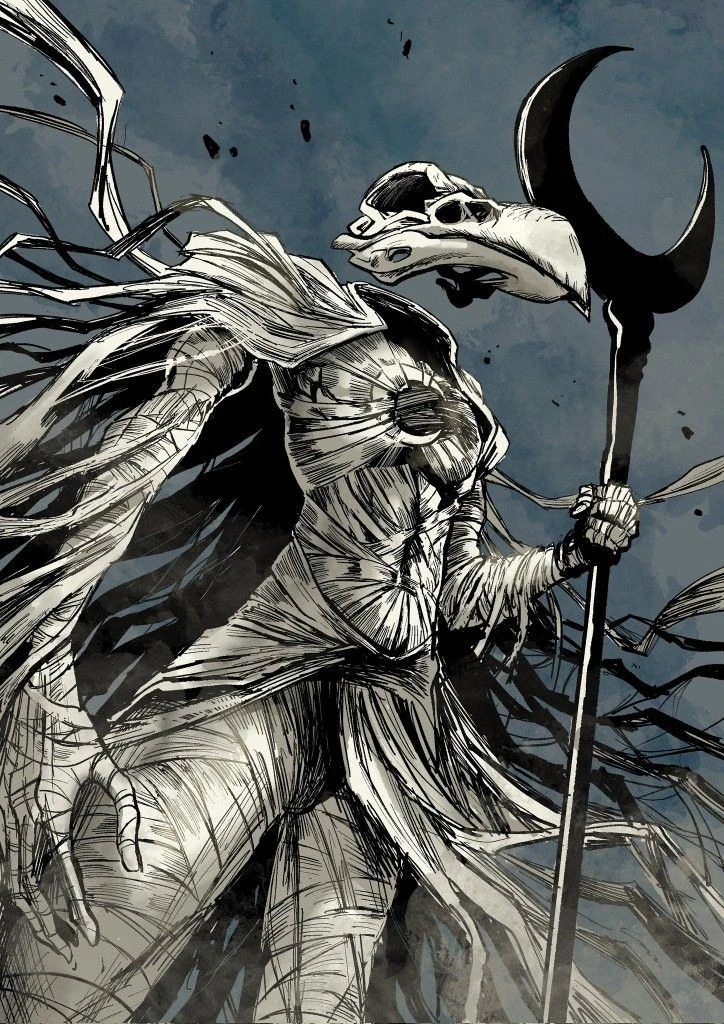
Khonsu appears as a character in Marvel Comics, where the spelling of his name was changed to ‘Khonshu’. In the comics, the character Moon Knight is the avatar of Khonshu and is also known as “The Fist of Khonshu”. Khonshu grants the protagonist Marc Spector supernatural abilities to fight evil in his name, enhancing his strength, endurance, and reflexes depending upon the phases of the moon; but also slowly drives him insane. Khonshu’s nature changes depending on the writer; Doug Moench portrays Khonshu as a neutral figure, but later writers make him more active and malicious. It is often implied that this Khonshu is not a supernatural being at all, but a mental construct of Marc Spector, a hallucination, an alternate or dissociative personality, or a malicious alien parasite. These lines are left intentionally blurred in the comics. During Volume 2, Moon Knight is given special weapons by the cult of Khonshu. Khonshu also appears in the Marvel Cinematic Universe (MCU) television series Moon Knight, voiced by F. Murray Abraham. In the show, Khonshu is shown to prey on Marc’s mental issues and his relationships in life to make it so that Marc Spector will fight for him.
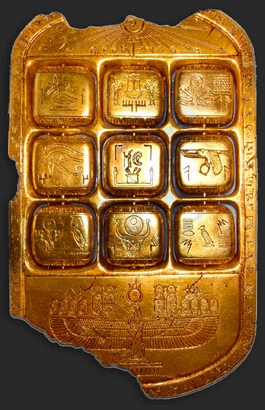
In the film series Night at the Museum, Khonsu is the source of the magical Tablet of Ahkmenrah, which brings the museum exhibits to life each night. In the story of Night at the Museum: Secret of the Tomb, the golden tablet was created by the high priest of the temple of Khonsu using Khonsu’s magic. The tomb of Ahkmenrah was designed to channel “Khonsu’s rays” (moonlight) down to the tablet, rejuvenating its powers every night. If the tablet is away from “Khonsu’s light [for] too long”, the exhibits that were brought to life will die.
The current list of all the (known) Krokotopia references can be found here.
Although I am well versed in Pop Culture references but I do not claim to have caught them all. Let me know your favorites in the comments and if I’ve missed one you caught, let me know so I can add it to the list.
Text for this article is excerpted from the linked wiki pages
Khonsu image is from Wizard101, and is copyright of KingsIsle Entertainment.
Khonsu as a falcon and Khonsu as a child images are borrowed from Wikipedia and are copyright Jeff Dahl. They are shared under the CC BY-SA 4.0 Creative Commons license.
Bas-relief from the mortuary temple of Ramesses III is borrowed from Wikipedia. It is in the Public Domain.
Khonshu image is borrowed from the Marvel Fandom wiki and is copyright Marvel Comics.
Tablet of Ahkmenrah image is copyright 20th Century Fox.
Image usage qualifies as fair use under US copyright law.
 Vulcan Stev's Database