The War Oni – An oni is a kind of demon from Japanese folklore
https://wiki.wizard101central.com/wiki/Creature:War_Oni
https://en.wikipedia.org/wiki/Oni
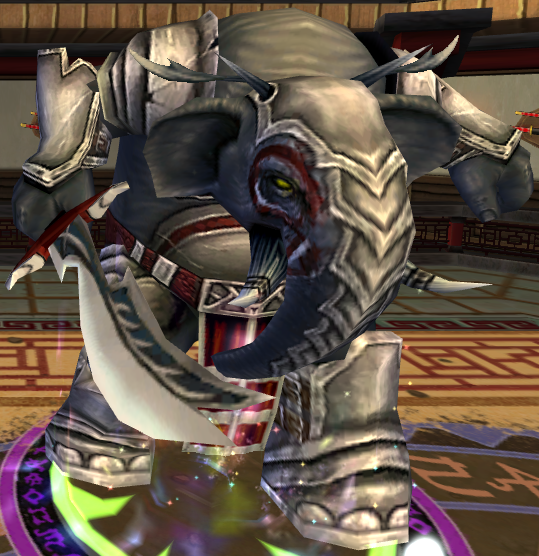
The War Oni is the final Boss in Crimson Fields. Katsumori turns into this Demon after being defeated.
(as Katsumori): “You might have beaten me as Katsumori, but can you defeat me as War Oni?”
(as the War Oni): “I will take you down with force you’ve never seen before.“
Monstrology Tome Description
As the Warlord Katsumori, he had a bit of a gambling problem. As the War Oni, this demon had a bit of losing problem.
An oni (鬼おに) is a kind of yōkai, demon, orc, ogre, or troll in Japanese folklore. They are believed to live in caves or deep in the mountains or in hell. Oni are known for their superhuman strength and have been associated with powers like thunder and lightning, along with their evil nature manifesting in their propensity for murder and cannibalism. They are typically portrayed as hulking figures with one or more horns growing out of their heads, massive teeth, and occasionally a third eye in the center of the forehead. They are typically depicted with red, blue, black, or yellow colored skin, wearing loincloths of tiger pelt, and carrying iron kanabō clubs. They also have three to six digits on each hand and foot tipped with claw-like nails. Oni are able to change their looks to fool their victims into trusting them. Oni can be male or female, but have been predominantly male throughout history. Female oni are sometimes referred to by the name Yamauba. When in disguise, oni are capable of appearing as a man or woman, regardless of their gender. As monstrous as oni are, they have been linked to bringing good fortune and wealth.

They are popular characters in Japanese art, literature, and theater and appear as stock villains in the well-known fairytales of Momotarō (Peach Boy), Issun-bōshi, and Kobutori Jīsan. Although oni have been described as frightening creatures, they have become tamer in modern culture as people tell less frightening stories about them like Oni Mask and Red Oni Who Cried.
Oni, written in kanji as 鬼, is read in China as guǐ (pinyin), meaning something invisible, formless, or unworldly, in other words, a ‘ghost’ or the ‘soul of the dead’. On the other hand, the Japanese dictionary Wamyō Ruijushō (和名類聚抄) written in Japan in the 10th century explained the origin of the word oni as a corruption of on/onu (隠), meaning ‘to hide’. The dictionary explained that oni is hidden and does not want to reveal itself. When the character for 鬼 was first introduced to Japan, it was pronounced as ki (キ) in the on’yomi reading.
The character 鬼 has changed over time in Japan to become its own entity, and there are significant differences between the Japanese oni (鬼) and the Chinese guǐ (鬼). The Chinese guǐ generally refers to the disembodied spirits of the dead and are not necessarily evil. They usually reside in the underworld, but those with a grudge sometimes appear in the human world to haunt, and Taoist priests and others have used their supernatural powers to exterminate them. Japanese oni (鬼), on the other hand, are evil beings that have substance, live in certain places in the human world, such as mountains, have red or blue bodies with horns and fangs, are armed with kanabō (metal clubs), and can be physically killed by cutting with Japanese swords.

Oni are supernatural creatures, often translated as demons or ogres. They are typically depicted with monstrous features like horns, wild hair, and sharp teeth.
Oni are associated with various aspects of Japanese folklore, including: War and enemies: In some contexts, oni are portrayed as enemies or figures of fear, particularly during wartime. Natural disasters: They are also linked to natural calamities and misfortune. Guardians and protectors: In some instances, oni are depicted as protectors against other harmful spirits. The image of oni has evolved throughout Japanese history, sometimes representing outsiders or figures of prejudice.
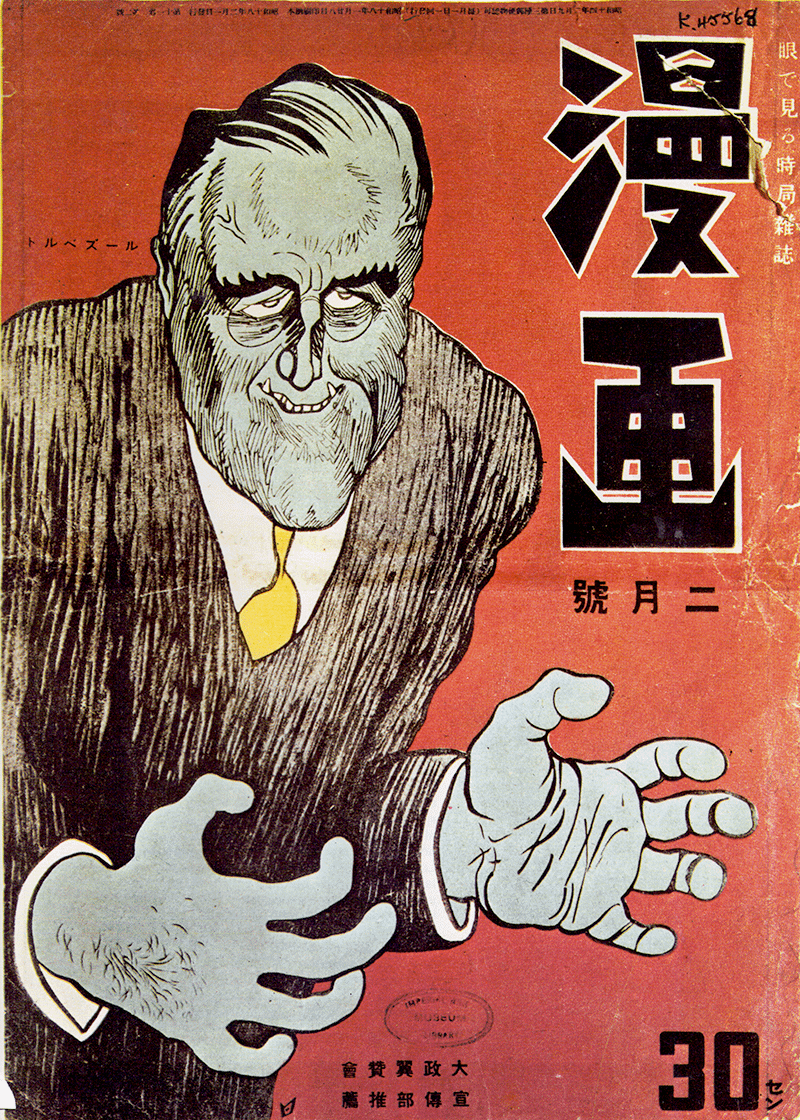
from this Japanese WWII propaganda poster
During World War II, the Japanese government and media used the term “oni” to refer to the Allied forces, particularly the Americans, British, and Russians. This usage was part of wartime propaganda, aiming to dehumanize the enemy and foster a sense of national unity and resolve. Cartoons and other media depicted Allied leaders like Roosevelt, Churchill, and Stalin as oni, demonizing them and reinforcing the narrative of a righteous war against evil.
The current list of all the (known) Mooshu references are located here.
Although I am well versed in Pop Culture references but I do not claim to have caught them all. Let me know your favorites in the comments and if I’ve missed one you caught, let me know so I can add it to the list.
Text for this article is excerpted from the linked wiki pages
War Oni image is from Wizard101, and is copyright of KingsIsle Entertainment.
Kukai (Kobo Daishi) Practicing the Tantra, with a Demon (Oni) and Wolf, by Katsushika Hokusai is borrowed from Wikipedia. It is in the Public Domain.
Samauri War Oni Mask image is borrowed from and copyright by paulbert-serpette.com
Roosevelt Oni Propaganda poster is borrowed from the r/Presidents thread at Reddit. It is in the Public Domain
 Vulcan Stev's Database