Hugo Chatterly – Hugo Cabret, The Pickwick Papers, and either Sir Clifford Chatterley or Lady Constance Chatterley
https://wiki.wizard101central.com/wiki/NPC:Hugo_Chatterly
https://wiki.wizard101central.com/wiki/Quest:The_Pigswick_Papers
https://en.wikipedia.org/wiki/The_Invention_of_Hugo_Cabret
https://en.wikipedia.org/wiki/Hugo_(film)
https://en.wikipedia.org/wiki/Lady_Chatterley%27s_Lover
https://en.wikipedia.org/wiki/The_Pickwick_Papers
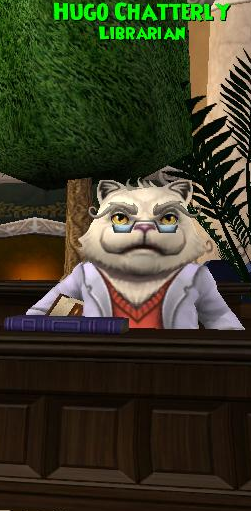
Hugo Chatterly is the Librarian of Pigswick Academy. He is a stickler for the rules and will not assist Your Wizard without permission. That said, he seems fond of your Wizard and sends you on a quest (among others) to find out more about Pigswick Academy by reading the Pigswick Papers which are scattered across Wysteria.
The Invention of Hugo Cabret is a children’s historical fiction book written and illustrated by Brian Selznick and published by Scholastic. The hardcover edition was released on January 30, 2007, and the paperback edition was released on June 2, 2008. With 284 pictures between the book’s 533 pages, the book depends as much on its pictures as it does on the words. Selznick himself has described the book as “not exactly a novel, not quite a picture book, not really a graphic novel, or a flip book or a movie, but a combination of all these things”.
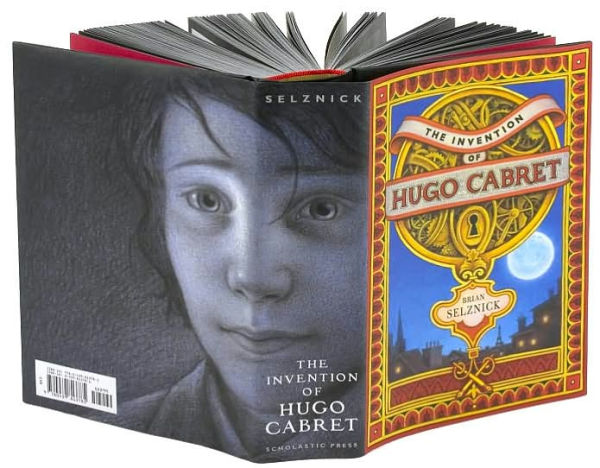
The Invention of Hugo Cabret cover from January 30, 2007 (Scholastic Press, an Imprint of Scholastic Inc.)
The book’s primary inspiration is the true story of turn-of-the-century French pioneer filmmaker Georges Méliès, his surviving films, and his collection of mechanical, wind-up figures called automata. Selznick decided to add an Automaton to the storyline after reading Gaby Wood’s 2003 book Edison’s Eve, which tells the story of Edison’s attempt to create a talking wind-up doll. Méliès owned a set of automata, which were sold to a museum but lay forgotten in an attic for decades. Eventually, when someone re-discovered them, they had been ruined by rainwater. At the end of his life, Méliès was destitute, even as his films were screening widely in the United States. He sold toys from a booth in a Paris railway station, which provides the setting of the story. Selznick drew Méliès’s real door in the book, as well as real columns and other details from the Montparnasse railway station in Paris, France.
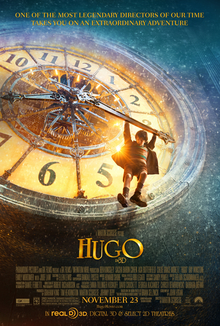
Hugo is a 2011 American adventure drama film directed and produced by Martin Scorsese, and adapted for the screen by John Logan. Based on Brian Selznick’s 2007 book The Invention of Hugo Cabret, it tells the story of a boy who lives alone in the Gare Montparnasse railway station in Paris in the 1930s, only to become embroiled in a mystery surrounding his late father’s automaton and the pioneering filmmaker Georges Méliès.
Lady Chatterley’s Lover is the final novel by the English author D. H. Lawrence, first published privately in 1928, in Florence, and in 1929, in Paris. An unexpurgated edition was not published openly in the United Kingdom until 1960, when it was the subject of a watershed obscenity trial against the publisher Penguin Books, which won the case and quickly sold three million copies. The book was also banned for obscenity in the United States, Canada, Australia, India and Japan. The book soon became notorious for its story of the physical (and emotional) relationship between a working-class man and an upper-class woman, its explicit descriptions of sex and its use of then-unprintable profane words.
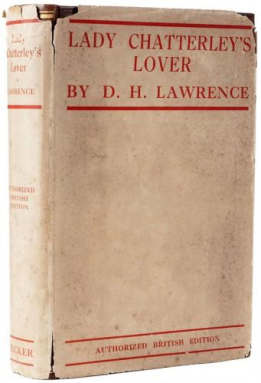
The story concerns a young married woman, the former Constance Reid (Lady Chatterley), whose upper-class baronet husband, Sir Clifford Chatterley, described as a handsome, well-built man, is paralyzed from the waist down because of a Great War injury. Constance has an affair with the gamekeeper, Oliver Mellors. The class difference between the couple highlights a major motif of the novel. The central theme is Constance’s realization that she cannot live with the mind alone. That realization stems from a heightened sexual experience that Constance has felt only with Mellors, suggesting that love requires the elements of both body and mind.
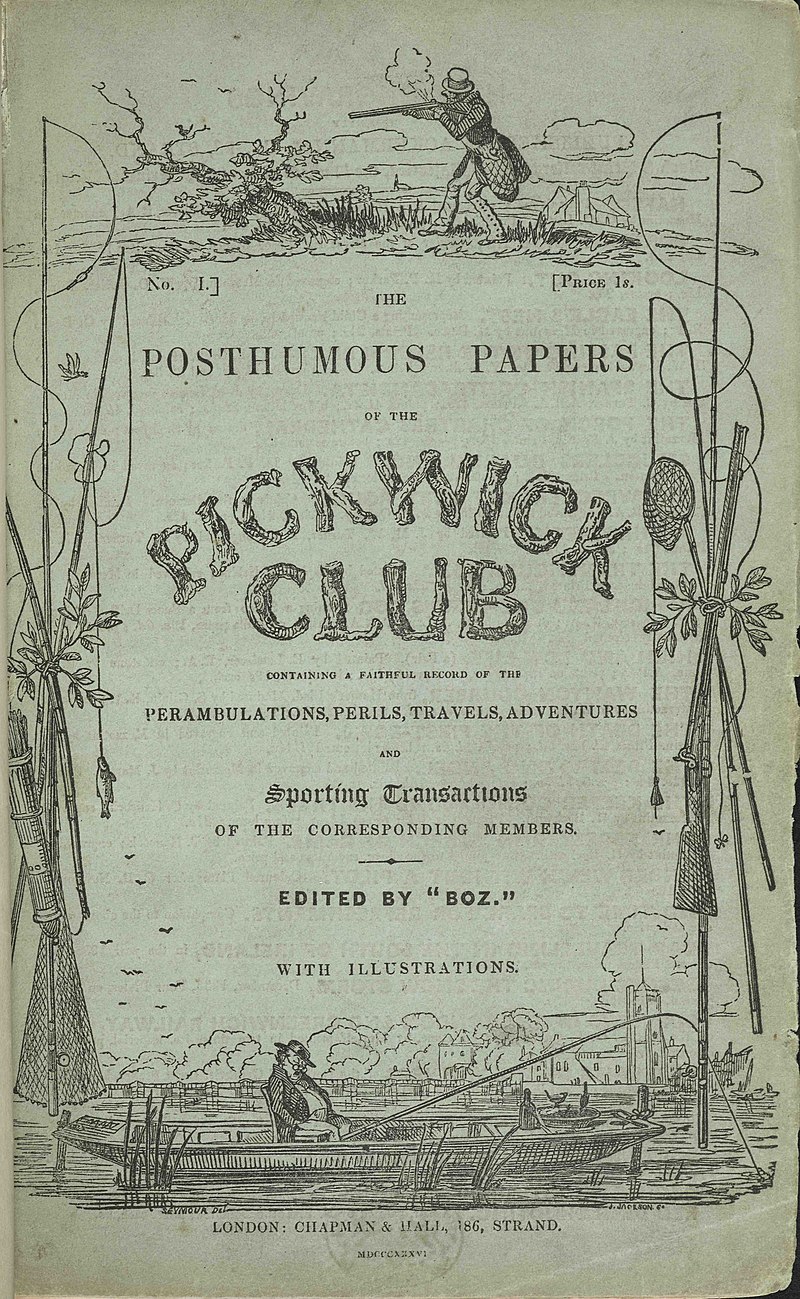
The Posthumous Papers of the Pickwick Club (also known as The Pickwick Papers) was the first novel serialized from March 1836 to November 1837 by English author Charles Dickens. Because of his success with Sketches by Boz published in 1836, Dickens was asked by the publisher Chapman & Hall to supply descriptions to explain a series of comic “cockney sporting plates” by illustrator Robert Seymour, and to connect them into a novel. The book became a publishing phenomenon, with bootleg copies, theatrical performances, Sam Weller joke books, and other merchandise. On its cultural impact, Nicholas Dames in The Atlantic writes, “‘Literature’ is not a big enough category for Pickwick. It defined its own, a new one that we have learned to call ‘entertainment’.” Published in 19 issues over 20 months, the success of The Pickwick Papers popularized serialized fiction and cliffhanger endings.
The current list of all the (known) Wysteria references are located here.
Although I am well versed in Pop Culture references, I do not claim to have caught them all. Let me know your favorites in the comments and if I’ve missed one you caught, let me know so I can add it to the list.
Text for this article is excerpted from the linked wiki pages
Hugo Chatterly image is from Wizard101, and is copyright of KingsIsle Entertainment.
The Invention of Hugo Cabret cover is borrowed from Amazon.com and is copyright Scholastic Press.
Hugo movie poster is borrowed from Wikipedia and is copyright Paramount Pictures
Lady Chatterley’s Lover is borrowed from Wikipedia it is (c)1932 UK (Secker)
Pickwick Papers cover is borrowed from Wikipedia. It is in the public domain.
Image usage qualifies as fair use under US copyright law.
 Vulcan Stev's Database