Nergal the Burned Lion – Scar and Nergal the Mesopotamian god of war, death, and disease
https://wiki.wizard101central.com/wiki/Creature:Nergal_the_Burned_Lion
https://en.wikipedia.org/wiki/Scar_(The_Lion_King)
https://en.wikipedia.org/wiki/Nergal
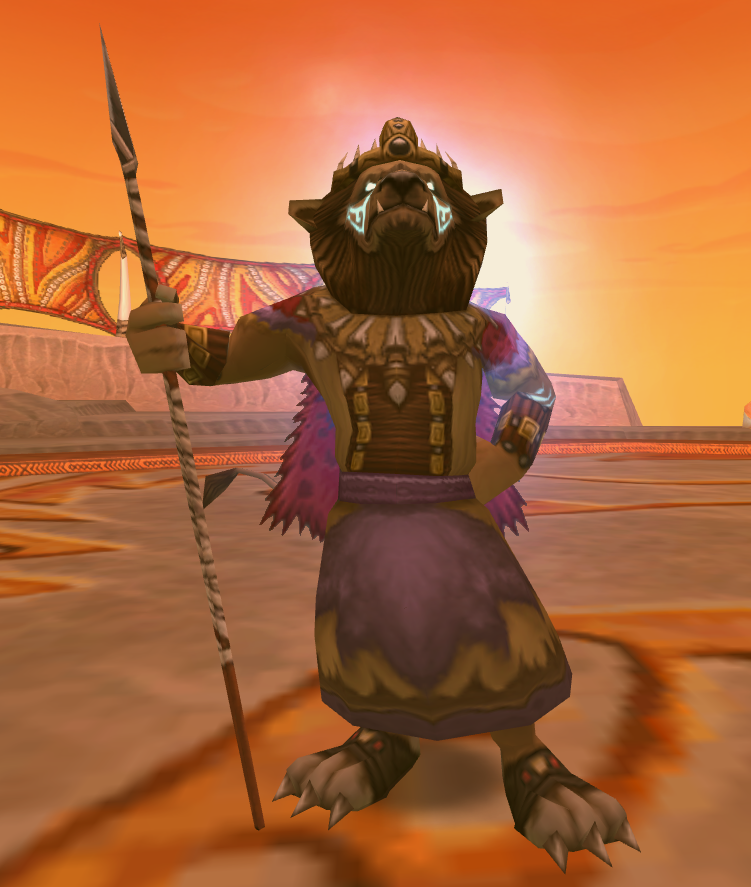
Negral has captured Mansa the Lion King. He has taken the Golden Crown from Mansa and given it to the Umbra Queen. Negral has one of the Ravenwood students held as a prisoner.
“What’s this! My pets were gifts from the great Umbra Queen. She gave them to me in exchange for Mansa’s Golden Crown. But you are just more meat! I’ll roast you up and gobble you down. Then I’ll eat this other calf for dessert! Hah! My Shadow Fire will dispel your petty magics, and make you weak!” – Negral the Burned Lion
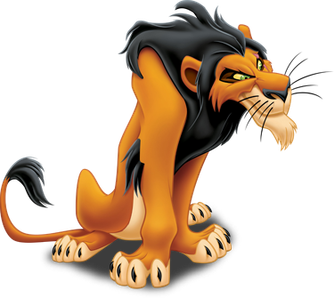
Scar is a fictional character and the main antagonist of Disney’s The Lion King franchise. He is introduced in the 1994 animated film as the younger, envious brother of Mufasa, the ruler of the Pride Lands. Originally first in line to the throne, Scar is abruptly replaced by Mufasa’s newborn son, Simba. Enraged, he devises a plot to usurp the throne by leading an army of hyenas and betraying both Mufasa and Simba. After killing Mufasa, Scar manipulates Simba into believing he is to blame, prompting Simba to flee into exile.
Created by screenwriters Irene Mecchi, Jonathan Roberts, and Linda Woolverton, and animated by Andreas Deja, Scar is loosely based on King Claudius, the main antagonist in William Shakespeare’s Hamlet. His villainy was further inspired by German dictator Adolf Hitler, as well as by lions’ natural behavior of pride takeovers. As the character’s supervising animator, Deja modeled Scar’s appearance on the original voice actor Jeremy Irons, drawing particularly from Irons’s performance as Claus von Bülow in Reversal of Fortune.
As a character, Scar has garnered widespread acclaim from film critics, with Irons’s vocal performance receiving equal praise. However, his violence, dark color palette and allegedly effeminate mannerisms initially sparked mild controversy. Nevertheless, Scar remains celebrated as one of Disney’s greatest villains by various media outlets—topping HuffPost’s list and ranking within the top ten of similar lists published by Yahoo! Movies, the Orlando Sentinel, E! and CNN. He has also been recognized among the greatest villains in film history by Digital Spy and Entertainment Weekly.
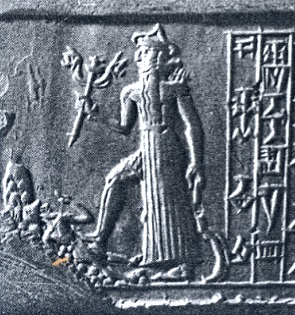
Nergal was a Mesopotamian god worshiped through all periods of Mesopotamian history, from Early Dynastic to Neo-Babylonian times, with a few attestations indicating that his cult survived into the period of Achaemenid domination. He was primarily associated with war, death, and disease, and has been described as the “god of inflicted death”. He reigned over Kur, the Mesopotamian underworld, depending on the myth either on behalf of his parents Enlil and Ninlil, or in later periods as a result of his marriage with the goddess Ereshkigal. Originally either Mammitum, a goddess possibly connected to frost, or Laṣ, sometimes assumed to be a minor medicine goddess, were regarded as his wife, though other traditions existed, too.
His primary cult center was Kutha, located in the north of historical Babylonia. His main temple bore the ceremonial name E-Meslam and he was also known by the name Meslamtaea, “he who comes out of Meslam”. Initially he was only worshiped in the north, with a notable exception being Girsu during the reign of Gudea of Lagash, but starting with the Ur III period he became a major deity in the south too. He remained prominent in both Babylonia and Assyria in later periods, and in the Neo-Babylonian state pantheon he was regarded as the third most important god, after Marduk and Nabu.
Nergal was associated with a large number of local or foreign deities. The Akkadian god Erra was syncretised with him at an early date, and especially in literary texts they functioned as synonyms of each other. Other major deities frequently compared to or syncretised with him include the western god Resheph, best attested in Ebla and Ugarit, who was also a god of war, plague and death, and Elamite Simut, who was likely a warrior god and shared Nergal’s association with the planet Mars. It has also been proposed that his name was used to represent a Hurrian god, possibly Kumarbi or Aštabi, in early inscriptions from Urkesh, but there is also evidence that he was worshiped by the Hurrians under his own name as one of the Mesopotamian deities they incorporated into their own pantheon.
Two well known myths focus on Nergal, Nergal and Ereshkigal and Epic of Erra. The former describes the circumstances of his marriage of Ereshkigal, the Mesopotamian goddess of the dead, while the latter describes his rampages and efforts of his sukkal (attendant deity) Ishum to stop them. He also appears in a number of other, less well-preserved compositions.
The current list of all the (known) Zafaria references are located here.
Although I am well versed in Pop Culture references, I do not claim to have caught them all. Let me know your favorites in the comments and if I’ve missed one you caught, let me know so I can add it to the list.
Text for this article is excerpted from the linked wiki pages.
Negral the Burned Lion image is from Wizard101 and is copyright of KingsIsle Entertainment.
Scar from the Lion King image is borrowed from Wikipedia and is copyright Walt Disney.
Nergal impression is borrowed from Wikipedia. It is copyright Umbisaĝ and is shared under the CC BY-SA 4.0 Creative Commons license.
Image usage qualifies as fair use under US copyright law.
 Vulcan Stev's Database