King Mansa, Nemean Rock, Tsavo Door, and the ancestral prayer – King Mufasa, Mansa Musa, the Nemean Lion, Tsavo Man-Eaters, and The Lion Sleeps Tonight
https://wiki.wizard101central.com/wiki/NPC:King_Mansa
https://wiki.wizard101central.com/wiki/Location:Nemean_Rock
https://en.wikipedia.org/wiki/Mufasa
https://en.wikipedia.org/wiki/Mansa_(title)
https://en.wikipedia.org/wiki/Mansa_Musa
https://en.wikipedia.org/wiki/Nemean_lion
https://en.wikipedia.org/wiki/Tsavo_Man-Eaters
https://www.youtube.com/watch?v=OQlByoPdG6c
https://en.wikipedia.org/wiki/The_Lion_Sleeps_Tonight
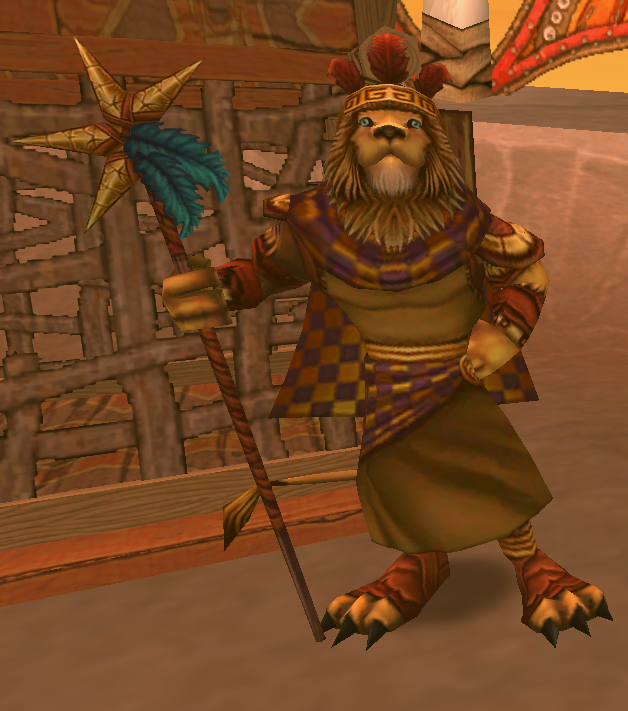
Thank you to Ashley D. for her help with this article. There’s a lot to unpack here.
King Mansa is the rightful king of the Lions in the Savannah, Mansa has been turned into a baby giraffe by his evil brother Nergal and Morganthe the Umbra Queen. He makes peace with the Zebras after being freed by Your Wizard.
Your Wizard enters Nemean Rock during the quest Top of the Rock and instance quest Pride in the Name, in order to save the King of the Lions from his evil brother, who has usurped the throne and cursed the area. And to rescue a missing Ravenwood student.
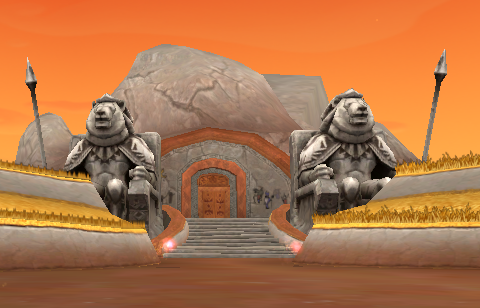
The door leading into Nemean Rock is known as the “Tsavo Door.” The ancestral prayer to open the Tsavo Door is “Ah. Wee. Mo. Wah. Ah. Wee. Mo. Wah.”
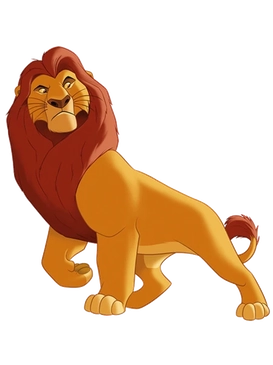
Mufasa is a fictional character in Disney’s The Lion King franchise. A wise and benevolent lion, he first appears in the 1994 animated film as the King of the Pride Lands and devoted father to Simba, whom he is raising to inherit the kingdom. Mufasa is killed by his younger brother, Scar, who murders him to usurp the throne. Mufasa’s death forces Simba into exile, but his spirit later appears to an adult Simba, urging him to return home and confront his responsibilities as the rightful heir. Mufasa was voiced by actor James Earl Jones.
Created by screenwriters Irene Mecchi, Jonathan Roberts, and Linda Woolverton, Mufasa underwent several changes during production of The Lion King. Notably, the decision to make Mufasa and Scar brothers was intended to strengthen the plot, and Mufasa was reintroduced as a spirit to give Simba a compelling reason to return to Pride Rock. The filmmakers extensively debated whether showing Mufasa’s death on-screen was suitable for a children’s film. Some writers suggested it should occur off-screen, but director Rob Minkoff insisted on depicting it explicitly, an unprecedented choice for an animated film. Mufasa’s animation, supervised by Tony Fucile, drew inspiration from Jones’s mannerisms and smile.
Jones received widespread acclaim for his performance. While some critics and audiences initially debated whether Mufasa’s death was too frightening for children—many comparing it to the death of Bambi’s mother in Bambi (1942)—the scene is retrospectively regarded as one of the most memorable deaths in film history, particularly resonating with millennials. Several publications have also celebrated Mufasa as one of the greatest fictional fathers in popular culture.
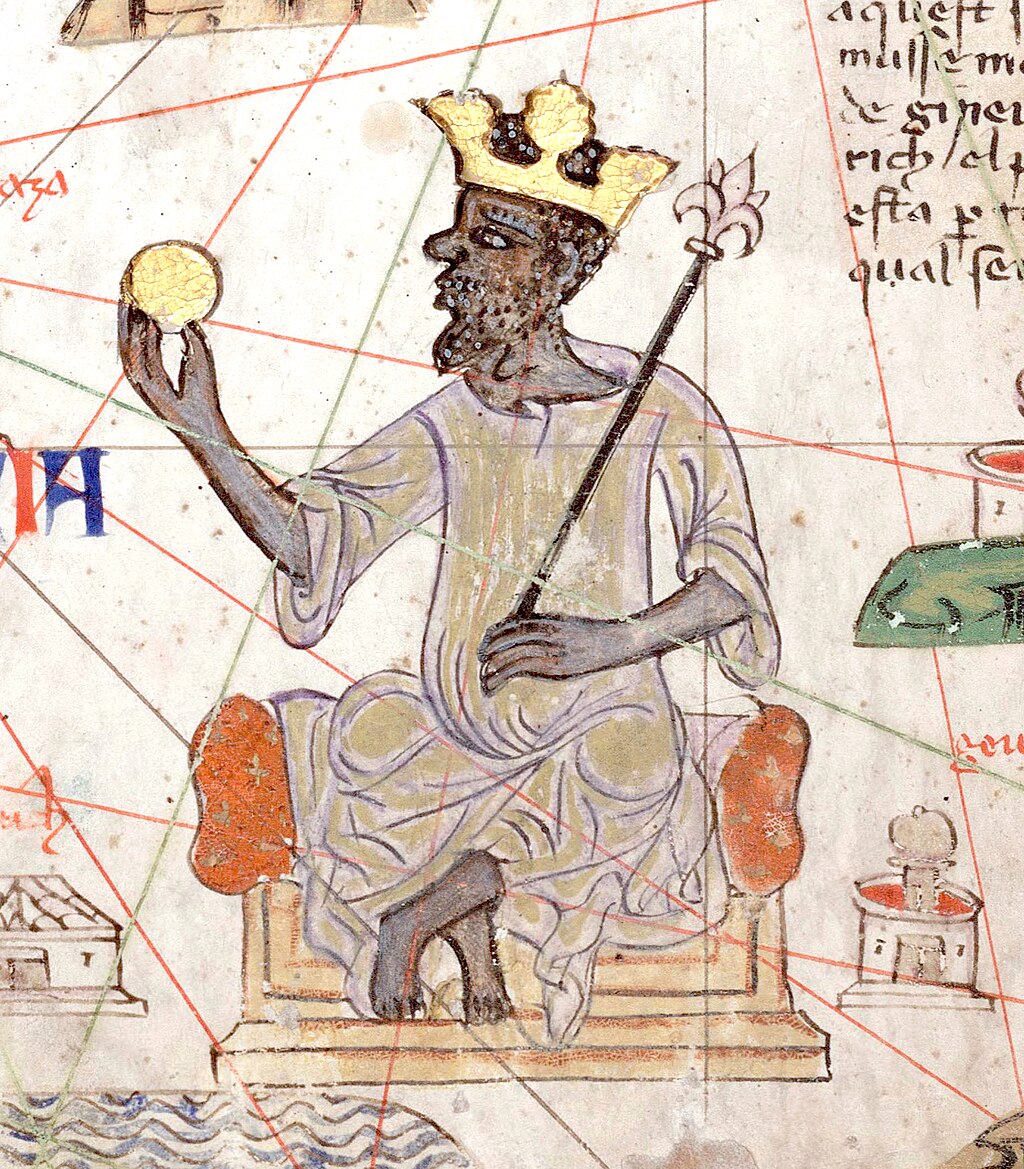
Mansa is a Maninka and Mandinka word for a hereditary ruler, commonly translated as “king”. It is particularly known as the title of the rulers of the Mali Empire, such as Mansa Musa, and in this context is sometimes translated as “emperor”. It is also a title held by traditional village rulers, and in this context is translated as “chief”.
Mansa Musa (reigned c. 1312 – c. 1337) was the ninth Mansa of the Mali Empire, which reached its territorial peak during his reign. Musa’s reign is often regarded as the zenith of Mali’s power and prestige, although he features less in Mandinka oral traditions than his predecessors.
Musa was exceptionally wealthy, to an extent that contemporaries described him as inconceivably rich; Time magazine reported: “There’s really no way to put an accurate number on his wealth.” It is known from local manuscripts and travelers’ accounts that Mansa Musa’s wealth came principally from the Mali Empire’s control and taxing of the trade in salt from northern regions and especially from gold panned and mined in Bambuk and Bure to the south. Over a very long period Mali had amassed a large reserve of gold. Mali is also believed to have been involved in the trade in many goods such as ivory, slaves, spices, silks, and ceramics. At the time of Musa’s ascension to the throne, Mali consisted largely of the territory of the former Ghana Empire, which had become a vassal of Mali. The Mali Empire comprised land that is now part of Guinea, Senegal, Mauritania, the Gambia, and the modern state of Mali.
The Nemean lion was a mythical lion in Greek mythology that lived at Nemea. Famously one of the mythical beasts killed by Heracles (Hercules) in his 12 labors. Because its golden fur was impervious to attack, it could not be killed with mortals’ weapons. Its claws were sharper than mortals’ swords and could cut through any strong armor. After Heracles killed the lion, its pelt would come to symbolize Heracles and his strength, being used in art to both recognize the myth itself and to draw connections between Heracles’ heroism to others.
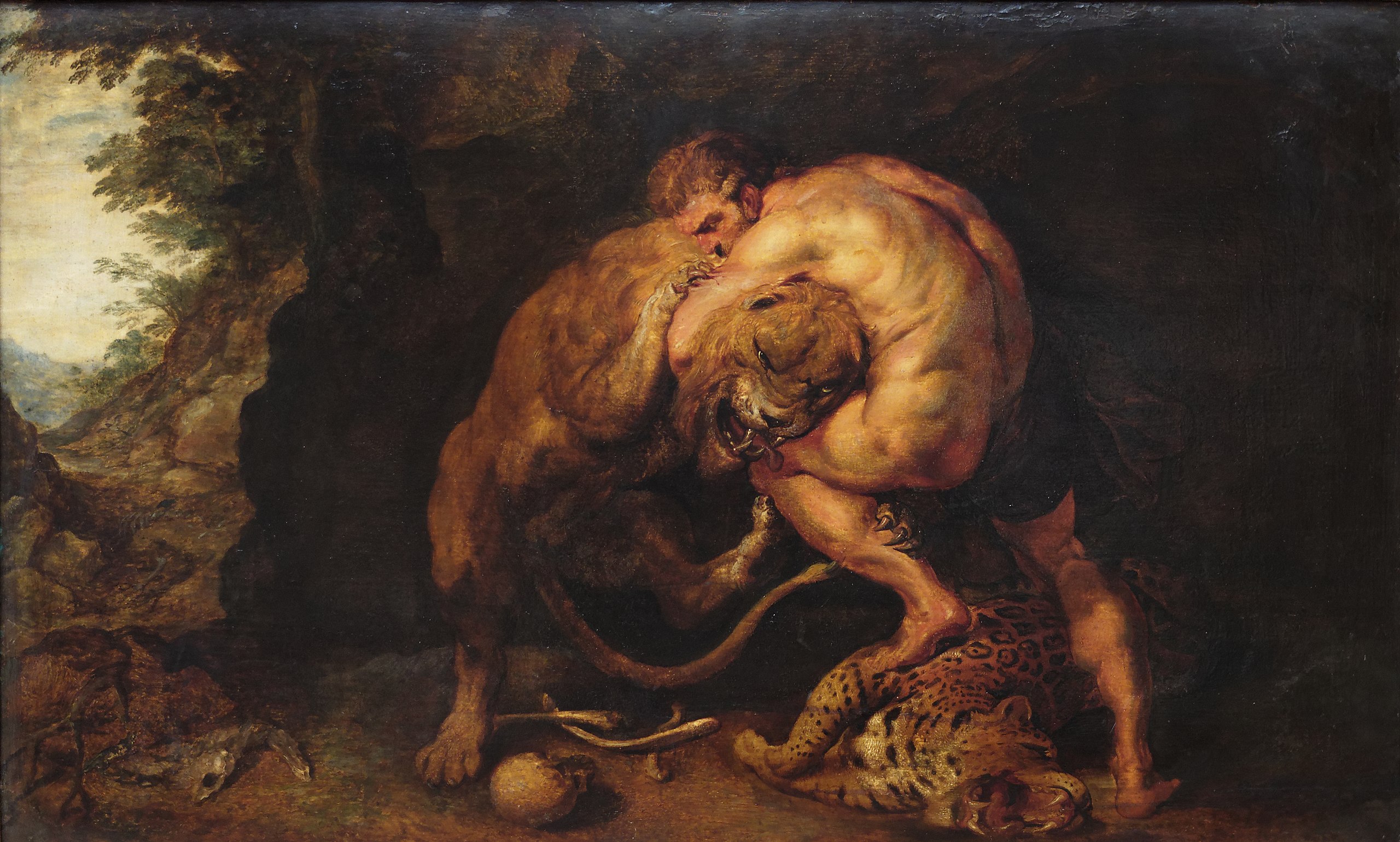
Currently held in National Museum of Art of Romania
While searching for the lion, Heracles fetched some arrows to use against it, not knowing that its golden fur was impenetrable. When he found the lion and shot at it with his bow, he discovered the fur’s protective property after the arrow bounced harmlessly off the creature’s thigh. Sometime after this first encounter, Heracles made the lion return to his cave. The cave had two entrances, one of which Heracles blocked, the other he then entered through making sure the lion had no way to escape. In the dark and close quarters, Heracles stunned the beast with his club. He eventually killed it by strangling it with his bare hands.
The Tsavo Man-Eaters were a pair of large man-eating male lions in the Tsavo region of Kenya, which were responsible for the deaths of many construction workers on the Kenya-Uganda Railway between March and December 1898. The lion pair was said to have killed dozens of people, with some early estimates reaching over a hundred deaths. While the terrors of man-eating lions were not new in the British public perception, the Tsavo Man-Eaters became one of the most notorious instances of dangers posed to Indian and native African workers of the Uganda Railway. They were eventually killed by Lieutenant-Colonel John Henry Patterson, who wrote his account of his hunting experience in a semi-biography The Man-eaters of Tsavo.
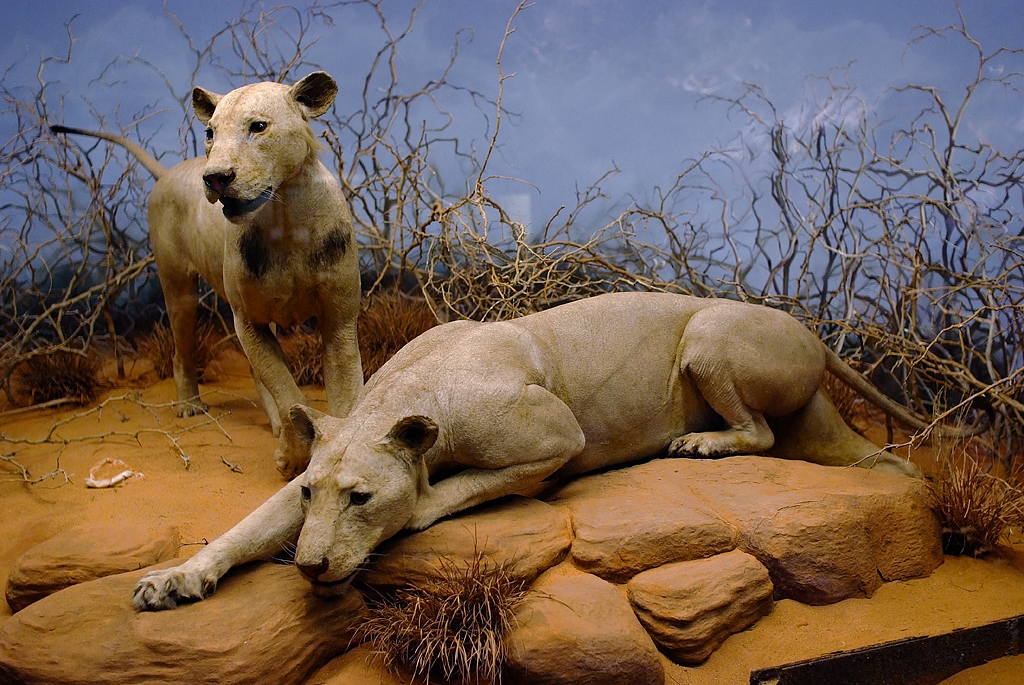
Today, the Tsavo Man-Eaters are the most widely studied man-eating pantherine cats given their behavior of hunting humans as a pair and dental injuries reported in one of the lions, a cause commonly attributed to big cats turning to humans as prey.
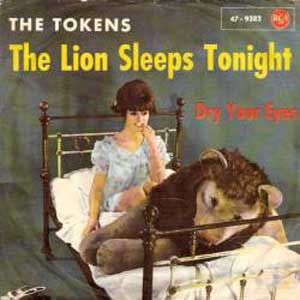
“The Lion Sleeps Tonight” is a popular song from 1961 as recorded by The Tokens. The first words of the song are:
A-weema-weh, a-weema-weh, a-weema-weh, a-weema-weh
A-weema-weh, a-weema-weh, a-weema-weh, a-weema-weh
A-weema-weh, a-weema-weh, a-weema-weh, a-weema-weh
A-weema-weh, a-weema-weh, a-weema-weh, a-weema-weh
In the jungle, the mighty jungle
The lion sleeps tonight
In the jungle, the quiet jungle
The lion sleeps tonight (ho, ho)
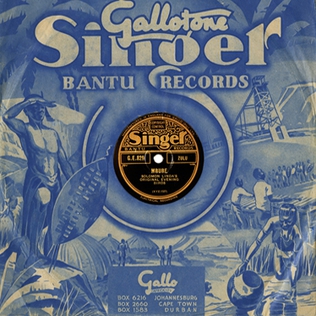
Originally written and composed by the South African musician Solomon Linda in 1939, it was first published as “Mbube”. It made its way to the United States a decade later. In 1961, the Tokens, a doo-wop group, adapted the melody and added English lyrics to produce “The Lion Sleeps Tonight”. Their version rose spawned many covers and featured in major films; during the 2000s, it became the subject of publicized legal conflict between Linda’s family and entertainment corporations over royalty payments.
A Zulu migrant worker, Linda led the acapella group the Evening Birds. In 1939, without rehearsal, they recorded “Mbube”, which fused traditional Zulu musical elements with Western influences. The recording was then released in South Africa to widespread popularity. It made Linda a local celebrity and shaped the development of the isicathamiya genre. He later sold his rights to “Mbube” to the owner of his parent record company for ten shillings, unaware of what the transaction implied. The recording of “Mbube” was then sent to a record label in the U.S., and upon being unearthed, it passed onto Pete Seeger of the folk group the Weavers. They covered the song in 1951 as “Wimoweh”.
A decade later, the Tokens encountered “Wimoweh” and decided to record their own version. After adapting the melody and adding English lyrics, they released “The Lion Sleeps Tonight”, although Linda did not receive any credit. It topped the U.S. charts. By the mid-2000s, around 150 artists across the world had covered the song, and it had been included in the 1994 Disney film The Lion King, earning an estimated $15 million in royalties. Linda, then long deceased, was yet unrecognized for his contributions to “The Lion Sleeps Tonight”. His descendants had earned very little and were left destitute. Emboldened, they filed a lawsuit against Disney for copyright violation in 2004. Within two years, they reached an out-of-court settlement with Abilene Music Company, in which the firm agreed to pay the family a lump sum for past royalties and offer them a share of future revenue.
The current list of all the (known) Zafaria references are located here.
Although I am well versed in Pop Culture references, I do not claim to have caught them all. Let me know your favorites in the comments and if I’ve missed one you caught, let me know so I can add it to the list.
Text for this article is excerpted from the linked wiki pages.
King Mansa and Nemean Rock images are from Wizard101 and are copyright of KingsIsle Entertainment.
Mufasa from the Lion King image is borrowed from Wikipedia and is copyright Walt Disney.
Detail of Mansa Musa is borrowed from Wikipedia and is in the public domain
Hercules’ fight with the Nemean lion by Pieter Paul Rubens is borrowed from Wikipedia and is in the public domain
Tsavo Man-eaters image is borrowed from Wikipedia. It is copyright Superx308 Jeffrey Jung and is shared under the CC BY-SA 3.0 Creative Commons license.
The Lion Sleeps Tonight single is borrowed from Wikipedia and is copyright RCA Victor
“Mbube” single is borrowed from Wikipedia and is copyright Gallo Records
Image usage qualifies as fair use under US copyright law.
 Vulcan Stev's Database