Lyla Thornpaw – Androcles and the Lion, attributed to Aesop
https://wiki.wizard101central.com/wiki/NPC:Lyla_Thornpaw
https://en.wikipedia.org/wiki/Aesop%27s_Fables
https://en.wikipedia.org/wiki/Androcles
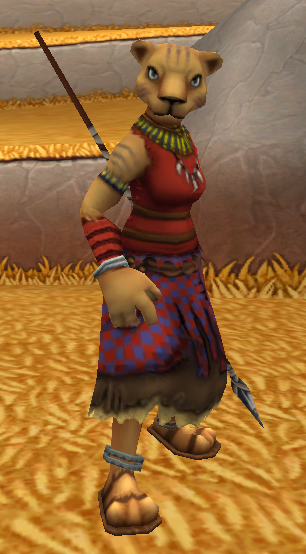
Lyla Thornpaw is an agent of the arcanum who lives in Zafaria. She feeds the Arcanum modern information in exchange for arcane knowledge. Knowledge she needs to exact revenge on the Raiders of Darkmane.
Ignus Ferric has sent your Fire Wizard to the Savannah to ask Lyla for the fur of a lion to help you craft a new spell. She will gladly give you a cutting of her fur if you help her retrieve her thorn, a ceremonial adornment to her people. She must retrieve it, even if it costs her life.
It is unclear if Lyla is related to Esop Thornpaw or not.
Aesop’s Fables, or the Aesopica, is a collection of fables credited to Aesop, a slave and storyteller who lived in ancient Greece between 620 and 564 BCE. Of diverse origins, the stories associated with his name have descended to modern times through a number of sources and continue to be reinterpreted in different verbal registers and in popular as well as artistic media. Some of the more popular fables are “The Goose Who Laid the Golden Eggs,” “The Mouse and the Frog,” and the one and only “The Tortoise and the Hare.”
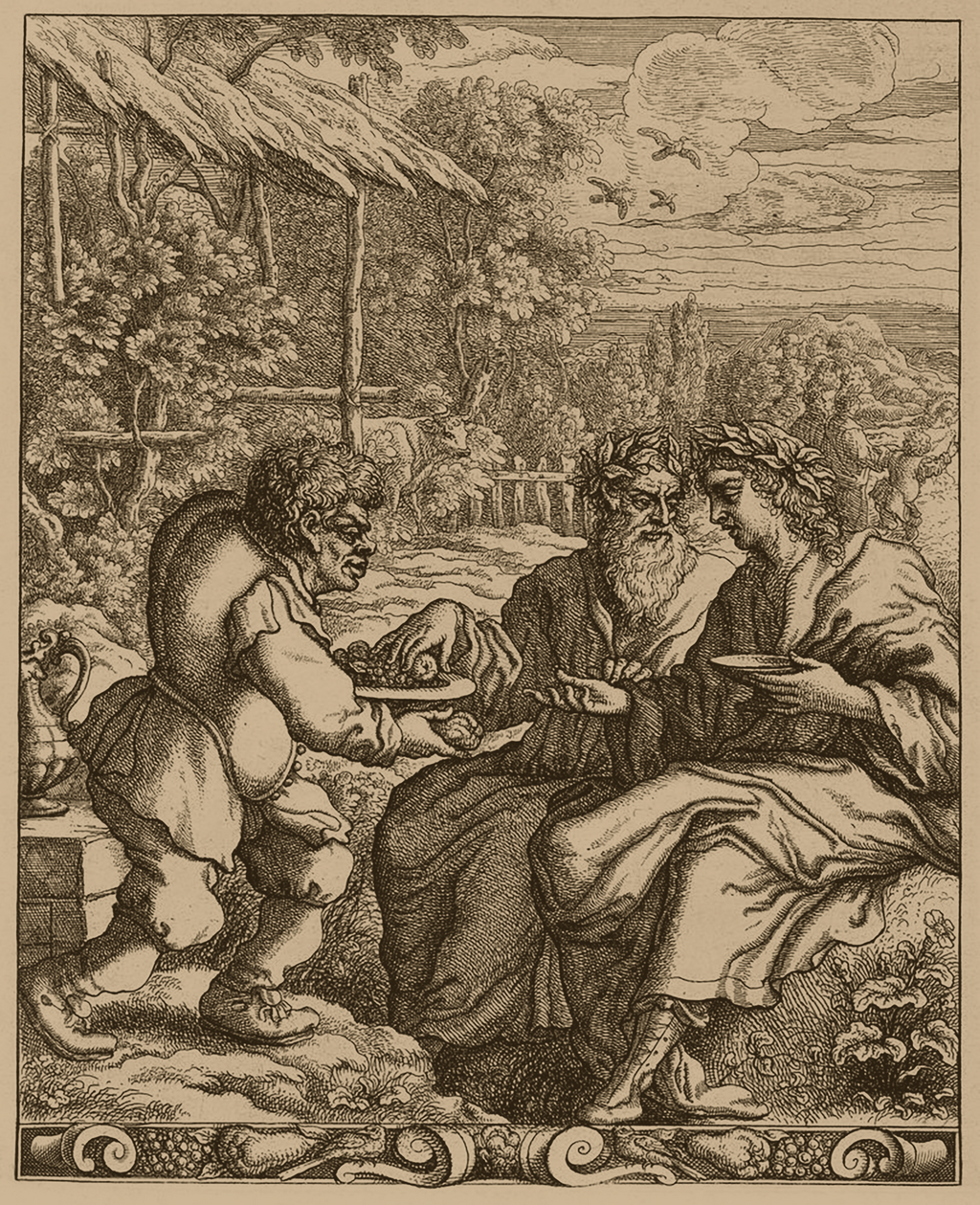
The fables originally belonged to oral tradition and were not collected for some three centuries after Aesop’s death. By that time, a variety of other stories, jokes and proverbs were being ascribed to him, although some of that material was from sources earlier than him or came from beyond the Greek cultural sphere. The process of inclusion has continued until the present, with some of the fables unrecorded before the Late Middle Ages and others arriving from outside Europe. The process is continuous and new stories are still being added to the Aesop corpus, even when they are demonstrably more recent work and sometimes from known authors.
Androcles is the main character of a common folk tale about a man befriending a lion.
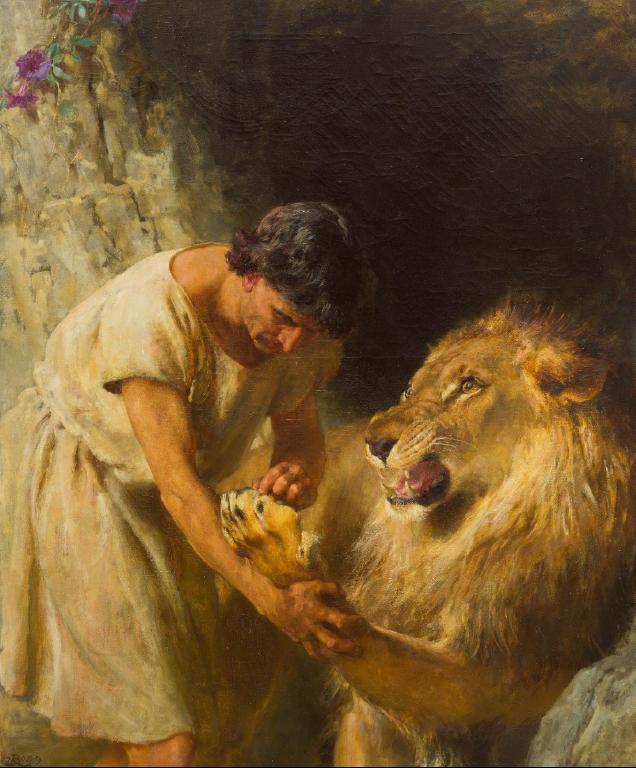
The tale is included in the Aarne–Thompson classification system as type 156. The story reappeared in the Middle Ages as “The Shepherd and the Lion” and was then ascribed to Aesop’s Fables. It is numbered 563 in the Perry Index and can be compared to Aesop’s The Lion and the Mouse in both its general trend and in its moral of the reciprocal nature of mercy.
The earliest surviving account of the Androcles episode is found in Aulus Gellius’s 2nd century Attic Nights. The author relates there a story told by Apion in his lost work Aegyptiaca/Αἰγυπτιακά (Wonders of Egypt), the events of which Apion claimed to have personally witnessed in Rome. In this version, Androclus (going by the Latin variation of the name) is a runaway slave of a former Roman consul administering a part of Rome. He takes shelter in a cave, which turns out to be the den of a wounded lion, from whose paw he removes a large thorn. In gratitude, the lion becomes tame towards him and henceforward shares his catch with the slave.
After three years, Androclus craves a return to civilization but is soon imprisoned as a fugitive slave and sent to Rome. There, he is condemned to be devoured by wild animals in the Circus Maximus in the presence of an emperor who is named in the account as Gaius Caesar, presumably Caligula. The most imposing of the beasts turns out to be the same lion, which again displays its affection toward Androclus. After questioning him, the emperor pardons the slave in recognition of this testimony to the power of friendship, and he is left in possession of the lion. Apion, who claimed to have been a spectator on this occasion, is then quoted as relating:
Afterwards we used to see Androclus with the lion attached to a slender leash, making the rounds of the tabernae throughout the city; Androclus was given money, the lion was sprinkled with flowers, and everyone who met them anywhere exclaimed, “This is the lion, a man’s friend; this is the man, a lion’s doctor”.
The current list of all the (known) Zafaria references are located here.
Although I am well versed in Pop Culture references, I do not claim to have caught them all. Let me know your favorites in the comments and if I’ve missed one you caught, let me know so I can add it to the list.
Text for this article is excerpted from the linked wiki pages.
Lyla Thornpaw image is from Wizard101 and is copyright of KingsIsle Entertainment.
Aesop image is borrowed from Wikipedia and is in the public domain.
Androcles and the lion image is borrowed from Wikipedia and is in the public domain.
Image usage qualifies as fair use under US copyright law.
 Vulcan Stev's Database