The Old One – Abraham Lincoln and Cthulhu
https://wiki.wizard101central.com/wiki/NPC:Old_One
https://en.wikipedia.org/wiki/Abraham_Lincoln
https://en.wikipedia.org/wiki/Cthulhu
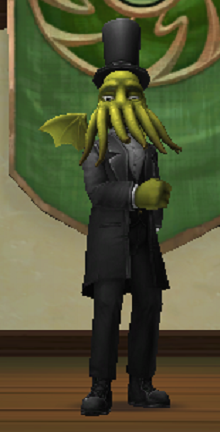
Hoping to put an end to the hostilities between the Cabal and the Arcanum, the Old One has summoned various representatives to attend a Summit Meeting in Karamelle. In the middle of his stirring speech, the Old One is swallowed up by something. Quake Charmer, Judge Veg, and Copy Qhat send your wizard out to find the Old One somewhere in Karamelle.
After completing their tasks in Karamelle, Wizards encounter the Old One in The Arcanum with a new request.
Abraham Lincoln (February 12, 1809 – April 15, 1865) was an American lawyer, politician, and statesman who served as the 16th president of the United States from 1861 until his assassination in 1865. He led the United States through the American Civil War, defending the nation as a constitutional union, defeating the insurgent Confederacy, playing a major role in the abolition of slavery, expanding the power of the federal government, and modernizing the U.S. economy.
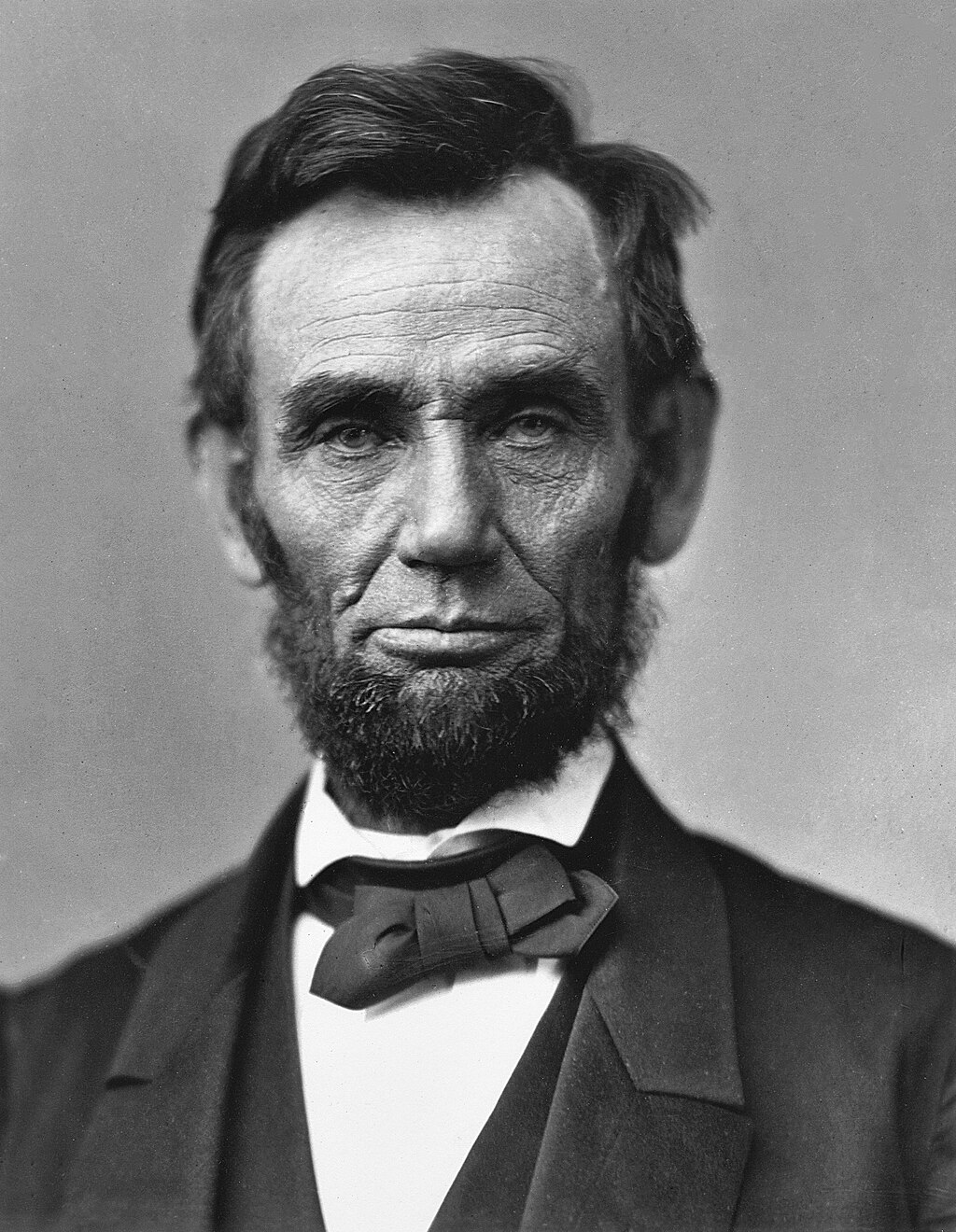
Lincoln was born into poverty in a log cabin in Kentucky and was raised on the frontier, mainly in Indiana. He was self-educated and became a lawyer, Whig Party leader, Illinois state legislator, and U.S. representative from Illinois. In 1849, he returned to his successful law practice in Springfield, Illinois. In 1854, angered by the Kansas–Nebraska Act, which opened the territories to slavery, he re-entered politics. He soon became a leader of the new Republican Party. He reached a national audience in the 1858 Senate campaign debates against Stephen A. Douglas. Lincoln ran for president in 1860, sweeping the North to gain victory. Pro-slavery elements in the South viewed his election as a threat to slavery, and Southern states began seceding from the nation. They formed the Confederate States of America, which began seizing federal military bases in the South. A little over one month after Lincoln assumed the presidency, Confederate forces attacked Fort Sumter, a U.S. fort in South Carolina. Following the bombardment, Lincoln mobilized forces to suppress the rebellion and restore the union.
Lincoln, a moderate Republican, had to navigate a contentious array of factions with friends and opponents from both the Democratic and Republican parties. His allies, the War Democrats and the Radical Republicans, demanded harsh treatment of the Southern Confederates. He managed the factions by exploiting their mutual enmity, carefully distributing political patronage, and by appealing to the American people. Anti-war Democrats (called “Copperheads”) despised Lincoln, and some irreconcilable pro-Confederate elements went so far as to plot his assassination. His Gettysburg Address came to be seen as one of the greatest and most influential statements of American national purpose. Lincoln closely supervised the strategy and tactics in the war effort, including the selection of generals, and implemented a naval blockade of the South’s trade. He suspended habeas corpus in Maryland and elsewhere, and he averted war with Britain by defusing the Trent Affair. In 1863, he issued the Emancipation Proclamation, which declared the slaves in the states “in rebellion” to be free. It also directed the Army and Navy to “recognize and maintain the freedom of said persons” and to receive them “into the armed service of the United States.” Lincoln unsuccessfully pressured border states to outlaw slavery, and he promoted the Thirteenth Amendment to the U.S. Constitution, which abolished slavery, except as punishment for a crime. Lincoln managed his own successful re-election campaign. He sought to heal the war-torn nation through reconciliation. On April 14, 1865, just five days after the Confederate surrender at Appomattox, he was attending a play at Ford’s Theatre in Washington, D.C., with his wife, Mary, when he was fatally shot by Confederate sympathizer John Wilkes Booth.
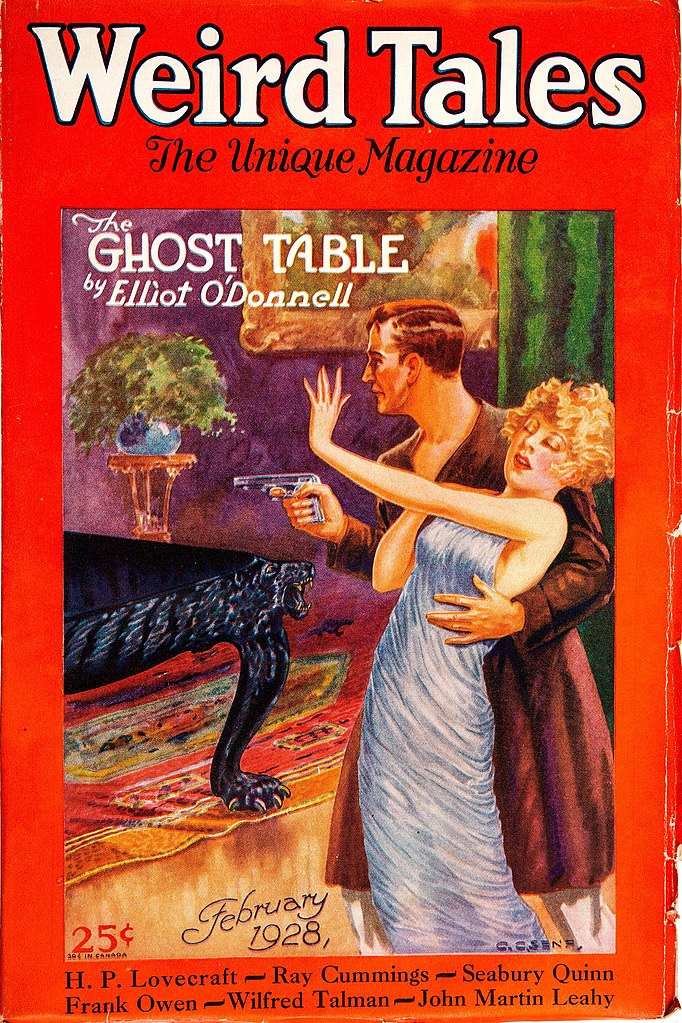
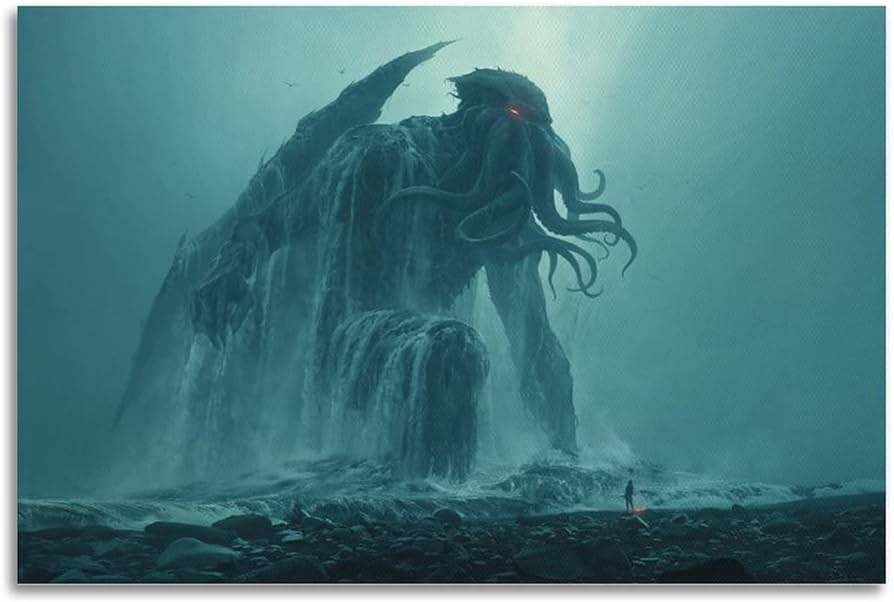
Cthulhu is a fictional cosmic entity created by writer H. P. Lovecraft. It was introduced in his short story “The Call of Cthulhu”, published by the American pulp magazine Weird Tales in February 1928. Considered a Great Old One within the pantheon of Lovecraftian cosmic entities, this creature has since been featured in numerous pop culture references. Lovecraft depicts it as a gigantic entity worshipped by cultists, in the shape of a green octopus, dragon, and a caricature of human form. The Lovecraft-inspired universe, the Cthulhu Mythos, where it exists with its fellow entities, is named after it.
Lovecraft transcribed the pronunciation of Cthulhu as Khlûl′-hloo, and said, “the first syllable pronounced gutturally and very thickly. The ‘u’ is about like that in ‘full’, and the first syllable is not unlike ‘klul’ in sound, hence the ‘h’ represents the guttural thickness” yielding something akin to /ˈq(χ)lʊlˌhluː/.[original research?] S. T. Joshi points out, however, that Lovecraft gave different pronunciations on different occasions. According to Lovecraft, this is merely the closest that the human vocal apparatus can come to reproducing the syllables of an alien language.
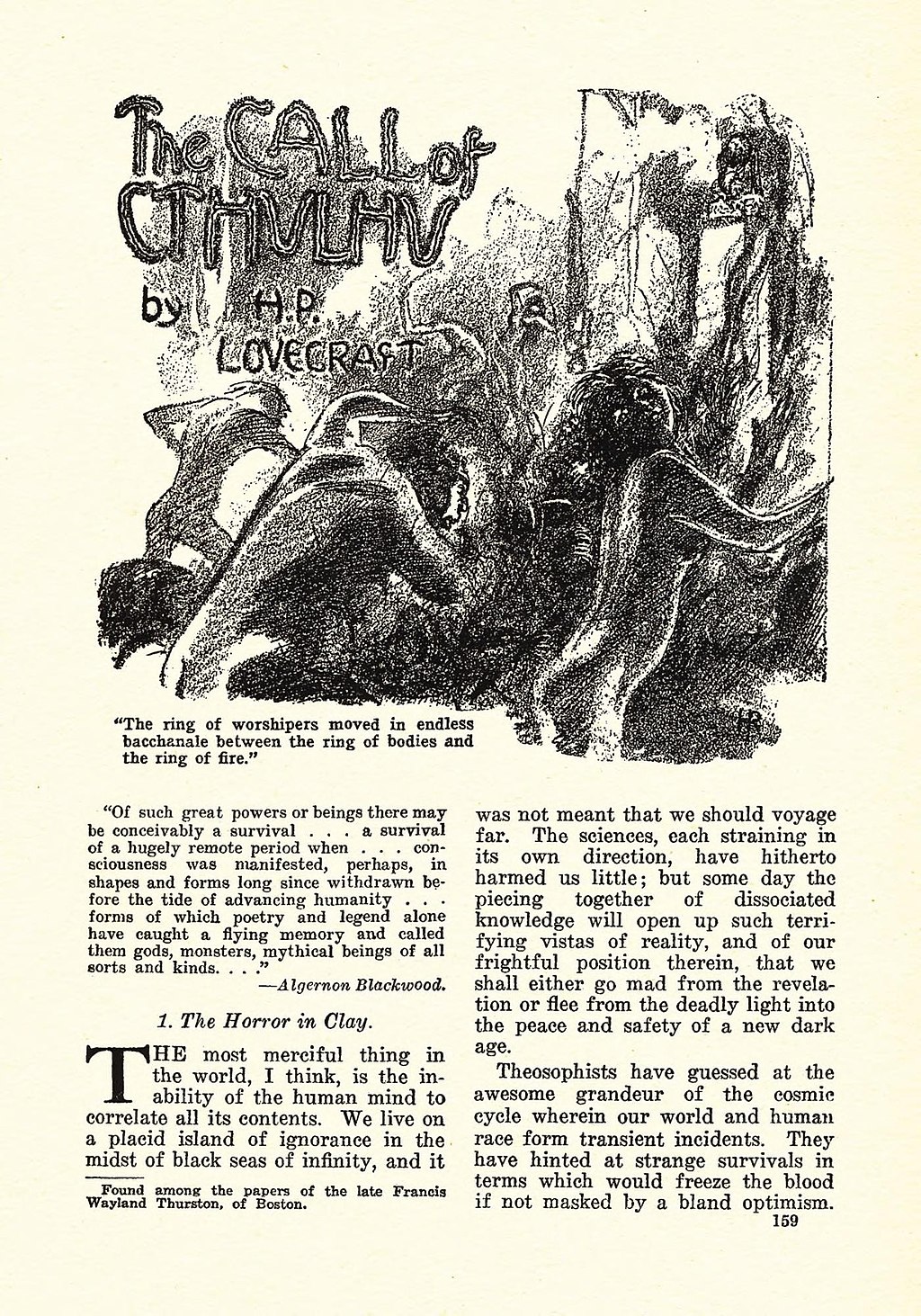
In “The Call of Cthulhu”, H. P. Lovecraft describes a statue of Cthulhu as: “A monster of vaguely anthropoid outline, but with an octopus-like head whose face was a mass of feelers, a scaly, rubbery-looking body, prodigious claws on hind and fore feet, and long, narrow wings behind.” A carving of Cthulhu is described thusly: “It seemed to be a sort of monster, or symbol representing a monster, of a form which only a diseased fancy could conceive. If I say that my somewhat extravagant imagination yielded simultaneous pictures of an octopus, a dragon, and a human caricature, I shall not be unfaithful to the spirit of the thing. A pulpy, tentacled head surmounted a grotesque and scaly body with rudimentary wings.
The current list of all the Karamelle references can be found here.
The Old One image is from Wizard101, and is (c) KingsIsle Entertainment.
It is being used in a way that qualifies as fair use under US copyright law.
Abraham Lincoln image is borrowed from Wikipedia and is in the public domain.
Weird Tales images are borrowed from Wikipedia and are in the public domain.
Cthulhu image is borrowed from Amazon.com and seems to copyright by putianlichengrunyidianzishangwuyouxiangongsi
Text for this article is excerpted from the linked wiki pages
 Vulcan Stev's Database