Dasein – Dasein, Martin Heidegger’s term for “being-in-the-world”
https://wiki.wizard101central.com/wiki/NPC:Dasein
https://101universe.fandom.com/wiki/Dasein
https://en.wikipedia.org/wiki/Martin_Heidegger
https://en.wikipedia.org/wiki/Dasein
https://eternalisedofficial.com/2021/01/28/dasein-being-in-the-world/

Dasein, originally referred to as the Nothing, was a mysterious sentient void originating from outside the Spiral that was brought to the Spiral when the Wizard pierced reality as the Divine Paradox. They were once studied by the Celestians, who called them Anti-Reality. During the Cabal’s Grand Summit at the Von Trap Estate organized by the Old One, Dasein opened up a Cavity while searching for the Wizard that inadvertently swallowed the Old One. This Cavity was followed by several more in Sweetzburg, the Nibbleheim Mines, and the Black Licorice Forest. When the final Cavity opened up within the Executive Dining Room at Nana’s Headquarters in Karamelle City, Dasein first encountered the Wizard and took the form of their Divine Paradox avatar, becoming the Aberrant Paradox and attacking them. Dasein was dispelled by the Wizard, who saved the Grand Nana in the process.
Sometime later, Dasein emerged from the Cavity and took on the physical form of the Old One as projection, whom they had absorbed into themself. Dasein had pangs to find Lemuria, and after unsuccessfully trying to get information from Sybil they traveled with the Wizard to Mirage to find proof of the world, which was found in the form of a mosaic that had been stolen by the Serpent Social Club. The quest for proof of Lemuria continued, with Dasein and the Wizard going to the Royal Museum in Marleybone City, where they would be directed to the museum’s Storage Warehouse and find two more mosaics there. One of the mosaics had been discovered by Stallion Quartermane, causing Dasein to see the Old One’s memory of a secret lab in the mountains of Polaris. They traveled there and found the lab with the help of Zoot, uncovering the mystery of Quartermane’s lost expedition and finding the man himself frozen cryogenically in the lab after many years. With Quartermane by their side, the quest to find Lemuria continued as he found his old map to the world from the Quartermane Tower, directing them to the Warded Door to the Forbidden Wing in the Arcanum.
Using the Key to the Cage from the Arcanum’s Dead Archive, the Warded Door was opened and the Old One’s Office was finally accessed, containing the miniaturized world of Lemuria in an orb. The Wizard used a console to reverse the miniaturization, putting it into the Spiral and allowing the Spiral to provide Lemuria’s Mana and Lifeforce rather than the failing World Synthesizer. Once inside Lemuria, Dasein had no further drive or impulse, as his need to save it was salved. But this also gave Dasein a newfound emptiness. However, being in Lemuria somehow stopped Dasein’s negative effect on others, with Stallion Quartermane losing his headache. Dasein also felt different, though didn’t know why. Dasein soon decided they wanted to exist as the Wizard does, and they agreed to help the Wizard find the World Synthesizer. Together, they collected the six Attunement Stones from the Old One’s Monitoring Stations in the Wildlands, Ursai Village, Night Forest, Mandoria, Sky City, and Heap, unlocking the Harmonic Gates in Telos. After the Old One’s Scion was defeated and the World Synthesizer was taken back to the Hall of Heroes, the Heroes turned on Dasein and the Wizard, not wanting the Synthesizer to be destroyed because of its power to create a better Lemuria. Once they were defeated, Dasein sacrificed himself by absorbing his projection into the World Synthesizer itself. The Synthesizer was taken back to the Arcanum and broken by Maulwurf von Trap, releasing something into the Spiral that resembles Dasein.
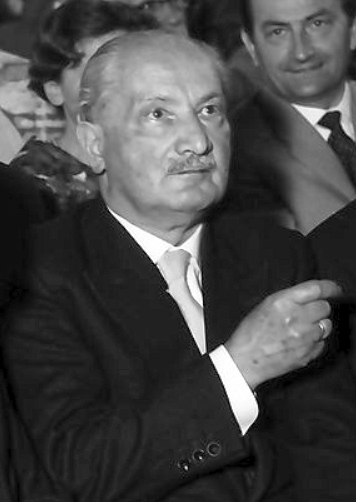
Martin Heidegger (September 26, 1889 – May 26, 1976) was a German philosopher best known for contributions to phenomenology, hermeneutics, and existentialism. His work covers a wide range of topics including ontology, technology, art, metaphysics, humanism, language and history of philosophy. He is often considered to be among the most important and influential philosophers of the 20th century, especially in the continental tradition.
In Heidegger’s first major text, Being and Time (1927), Dasein is introduced as a term for the type of being that humans possess. Heidegger believed that Dasein already has a “pre-ontological” and concrete understanding that shapes how it lives, which he analyzed in terms of the unitary structure of “being-in-the-world”. Heidegger used this analysis to approach the question of the meaning of being; that is, the question of how entities appear as the specific entities they are. In other words, Heidegger’s governing “question of being” is concerned with what makes beings intelligible as beings.
In German, Dasein is the vernacular term for “existence”. It is derived from da-sein, which literally means “being-there” or “there-being”. In a philosophical context, it was first used by Leibniz and Wolff in the 17th century, as well as by Kant and Hegel in the 18th and 19th; however, Heidegger’s later association of the word with human existence was uncommon and not of special philosophical significance during this period.
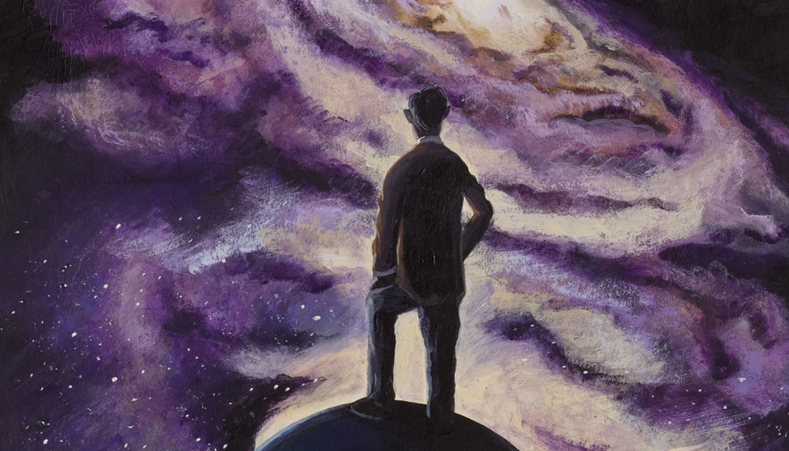
Dasein for Heidegger is a mode of being involved with and caring for the immediate world in which one lives, while always remaining aware of the contingent element of that involvement, of the priority of the world to the self, and of the evolving nature of the self itself.

The opposite of this authentic self is everyday and inauthentic Dasein, the forfeiture of one’s individual meaning, destiny and lifespan, in favor of an (escapist) immersion in the public everyday world—the anonymous, identical world of the They and the Them.: (Heidegger, trans. 1927/1962, pp 64–81)
In harmony with Nietzsche’s critique of the subject, as something definable in terms of consciousness, Heidegger distinguished Dasein from consciousness in order to emphasize the way that “Being” shapes our entire understanding and interpretation of the world.
“This entity which each of us is himself…we shall denote by the term ‘Dasein'” (Heidegger, trans. 1927/1962, p.27).
“[Dasein is] that entity which in its Being has this very Being as an issue…” (Heidegger, trans. 1927/1962, p.68).
Text has been borrowed from the listed urls
The current list of all the Lemuria references can be found here.
Dasein image is from Wizard101, and is (c) KingsIsle Entertainment, it is being used in a way that qualifies as fair use under US copyright law.
Photo of Martin Heidegger is copyright Willy Pragher – Landesarchiv Baden-Württenberg and borrowed from Wikipedia. It is shared under the CC BY-SA 3.0 Creative Commons license.
Image of “Being and Time” cover is borrowed from Wikipedia. It is in the public domain.
Artwork entitled “Being There” is borrowed from the Eternalised blog. No attribution is given at the webpage. It is being used under Fair Use.
 Vulcan Stev's Database