Morp – Morpheus, the Greek god of Dreams, Morpheus aka Dream the Endless, and Morpheus from The Matrix
https://wiki.wizard101central.com/wiki/NPC:Morp
https://en.wikipedia.org/wiki/Morpheus
https://en.wikipedia.org/wiki/Dream_(character)
https://en.wikipedia.org/wiki/Morpheus_(The_Matrix)
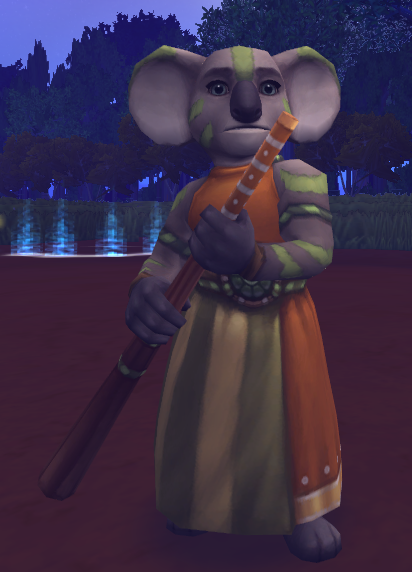
Morp is the Guardian of the Dreaming. She is also the Thought-Leader of the Peoples of the Forest. It is her scared duty to protect the Dreaming from the Townies who would hawk it, from the Riders who would unleash it and from Drop Bears.
Morp’s ancestors constructed the Great Barrier to protect the Dreaming, altering the ecosystem of Wallaru.
Joan Locke: “Morp, please, we can sort this out. I don’t know what happened in the past or why you did what you did, but-“
Morp: “Not me. My ancestors. They built the Great Barrier because strangers came here, right up to the Dreamer itself, and made something horrible. An engine of evil, it was, that could reshape the Spiral. Even the Great Tree could not perceive it. We could not allow another such creation. I thought you understood, Joan Locke, but your business partner steals our dreams even now. He will make another grand evil. And I won’t let him!”
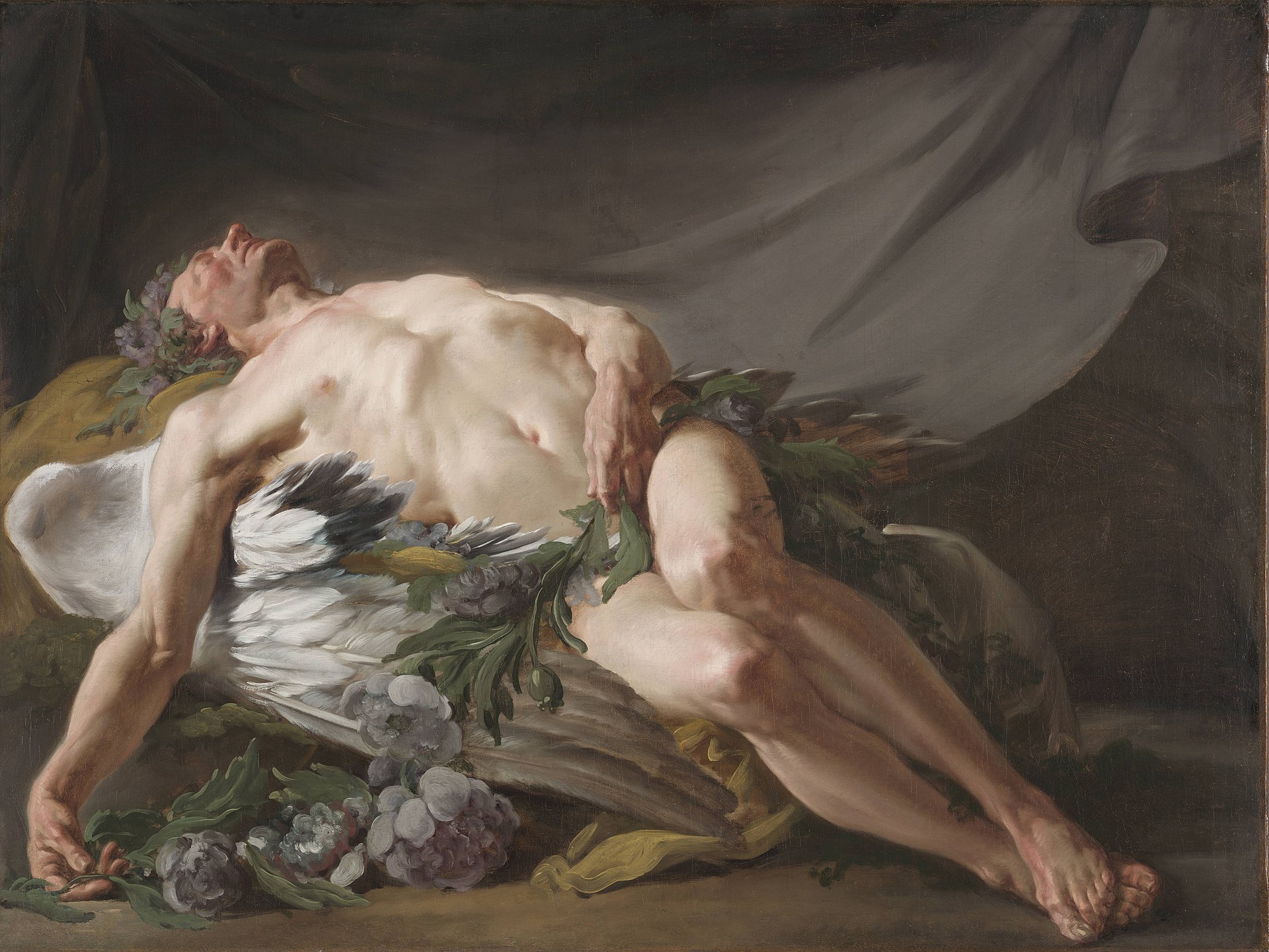
Morpheus (‘Fashioner’, derived from the Ancient Greek: μορφή meaning ‘form, shape’) is a god associated with sleep and dreams. In Ovid’s Metamorphoses he is the son of Somnus (Sleep, the Roman counterpart of Hypnos) and appears in dreams in human form. From the Middle Ages, the name began to stand more generally for the god of dreams, or of sleep.
The only ancient mention of Morpheus occurs in Ovid’s Metamorphoses, where Ovid tells of the story of Ceyx and his wife Alcyone who were transformed into birds. In Ovid’s account, Juno (via the messenger goddess Iris) sends Morpheus to appear to Alcyone in a dream, as her husband Ceyx, to tell her of his death.
Ovid makes Morpheus one of the thousand sons of Somnus (Sleep). His name derives from the Greek word for form (μορφή), and his function was apparently to appear in dreams in human guise. According to Ovid “no other is more skilled than he in representing the gait, the features, and the speech of men; the clothing also and the accustomed words of each he represents.” As with other gods associated with sleep, Ovid presents Morpheus as winged.
Ovid called Morpheus and his brothers, the other sons of Somnus, the Somnia (“dream shapes”), saying that they appear in dreams “mimicking many forms”. Ovid gives names to two more of these sons of Sleep. One called Icelos (‘Like’), by the gods, but Phobetor (‘Frightener’) by men, “takes the form of beast or bird or the long serpent”, and Phantasos (‘Fantasy’), who “puts on deceptive shapes of earth, rocks, water, trees, all lifeless things”.

Dream of the Endless is a fictional character, an anthropomorphic personification who first appeared in the first issue of The Sandman, written by Neil Gaiman and published by DC Comics. One of the seven Endless, who are inconceivably powerful beings older and greater than gods, Dream is both lord and personification of all dreams and stories, and all that is not in reality (which, in turn, Dream may define by his existence). He has taken many names, including Morpheus, Oneiros, Kai’ckul, and the Sandman, and his appearance can change depending on the person who is seeing him.

Morpheus is a fictional character in The Matrix franchise. He is portrayed by Laurence Fishburne in the first three films, and in the video game The Matrix: Path of Neo, where he was the only original actor to reprise his character’s voice. In The Matrix Resurrections, an AI program based on him is portrayed by Yahya Abdul-Mateen II.
The name Morpheus is that of the god of dreams in Greek mythology, which is consistent with the character’s involvement with the “dreaming” of the Matrix. The mythical Morpheus and his family, including two brothers (Phobetor and Phantasos), lived in a dream world protected by the Gates of Morpheus with two monsters standing guard. Beyond the gates were the River of Forgetfulness, beside which Morpheus once carried his father to hide in a cave, and the River of Oblivion. This theme of duality carries over to Morpheus in The Matrix, who offers Neo either a blue pill (to forget about the Matrix and continue to live in the world of illusion) or a red pill (to enter the painful world of reality). The Wachowskis, the creators of The Matrix franchise, instructed Fishburne to base his performance on Morpheus, a character in Neil Gaiman’s comic book series The Sandman.
The current list of all the (known) Wallaru references are located here.
Although I am well versed in Pop Culture references but I do not claim to have caught them all. Let me know your favorites in the comments and if I’ve missed one you caught, let me know so I can add it to the list.
Text for this article is excerpted from the linked wiki pages
Morp image is from Wizard101, and is copyright of KingsIsle Entertainment.
Morpheus image is borrowed from Wikipedia. It is in the public domain.
Dream the Endless (aka Morpheus) image is copyright DC Comics
Morpheus image is copyright Warner Bros.
Image usage qualifies as fair use under US copyright law.
 Vulcan Stev's Database