Joan Locke – John Locke from Lost and John Locke the English philosopher
https://wiki.wizard101central.com/wiki/NPC:Joan_Locke
https://en.wikipedia.org/wiki/John_Locke_(Lost)
https://en.wikipedia.org/wiki/John_Locke
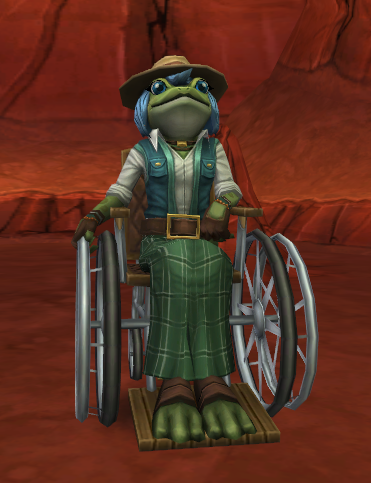
Thank you to Crystal L. for pointing me in the right direction.
Joan Locke is a former Townie turned Drover. She came to Wallaru with the Royal Marleybone Cane Resort Expedition to build a resort. She wanted the authentic Wallaru experience so she went Walkabout. She traveled the wastes, dug for the drops of dream water and prepared herself to pass the Great Barrier and enter the Dreaming.
She dreamt. She lived her hopes in an instant and made them true. The reality… disappointed. Her priorities have changed. She now helps the Drovers protect the Dream instead of seizing it. She protects the Pink Lake, the last of the Dream Water not trapped beyond the Great Barrier.
She becomes a valuable ally in your Wizard’s quest to defeat Freddie Kroaker.
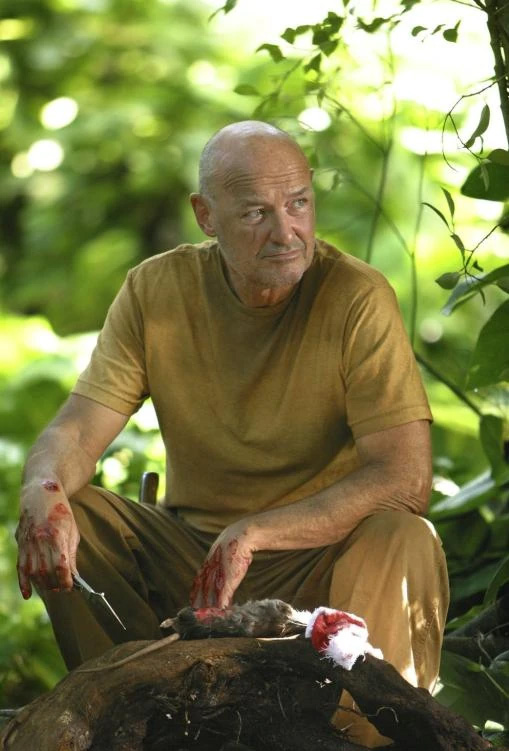
John Locke is a fictional character played by Terry O’Quinn on the ABC television series Lost. He is named after the English philosopher of the same name. In 2007, O’Quinn won the Primetime Emmy Award for Outstanding Supporting Actor in a Drama Series for his portrayal of Locke.
Locke is introduced in the first season as a mysterious, intellectual and stoic character with an affinity for living out in the wild and a penchant for hunting and tracking. He believes in mystical and spiritual explanations for why things happen on the island due to an objective “miracle” happening to him after the crash of Oceanic 815. His stoicism and mystical outlook dominate his character and are the basis for many of his relationships and interactions on the show.
Locke is a very intelligent individual. He was raised in various foster homes as a ward of the state. He was bullied and tormented during his formative years.
As an adult, Locke retreated into a life of solitude until he was visited one day by a young man named Peter Talbot. Peter came asking for information about “Adam Seward,” who intended to marry Peter’s wealthy mother. Locke realized it was Cooper and met with him, ordering him to not marry Peter’s mother. It is strongly implied Cooper killed Peter, although he denied it when Locke confronted him. After a struggle, he pushed Locke out of a window eight stories high. Locke hit the ground, where he was soon touched by the mysterious island inhabitant Jacob. Locke survived the fall but suffered a broken back, an injury that left him in a wheelchair.
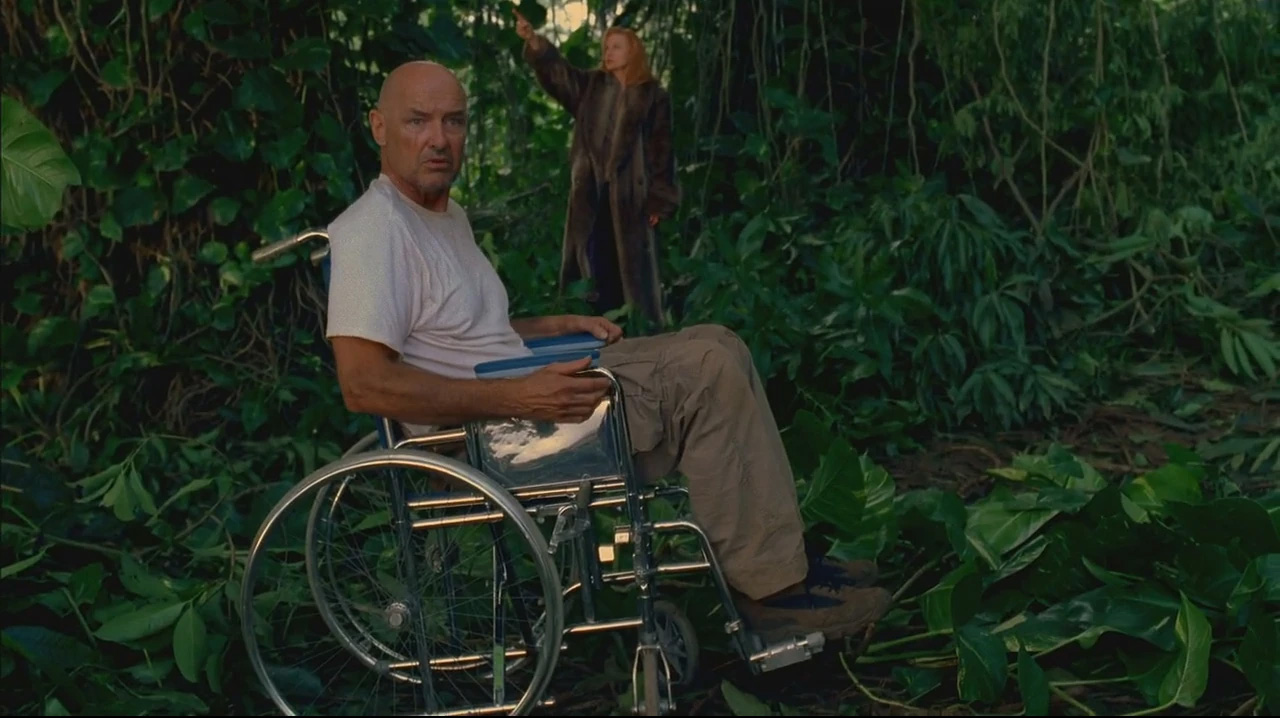
While Locke recovered in the hospital, a presumed orderly named Matthew Abaddon visited him and told him to go on a walkabout for a period of self-discovery. Once out of the hospital, Locke started working at a box company where he was constantly insulted by his boss, Randy. Locke then flew to Australia, where he was denied admission on the walkabout because of his paraplegic state. He boarded Oceanic Flight 815 to return home.
After crashing on the Island in the fuselage section, Locke miraculously regains the use of the lower portion of his body below his waist. Locke becomes the most attuned toward the Island and has no intention of leaving it. It is then revealed that Locke is an expert at hunting and tracking. On a hunt he encounters the smoke monster, describing it as a “bright light”.

by Godfrey Kneller (1697)
John Locke (August 29, 1632 – October 28, 1704 ) was an English philosopher and physician, widely regarded as one of the most influential of the Enlightenment thinkers and commonly known as the “father of liberalism”. Considered one of the first of the British empiricists, following the tradition of Francis Bacon, Locke is equally important to social contract theory. His work greatly affected the development of epistemology and political philosophy. His writings influenced Voltaire and Jean-Jacques Rousseau, and many Scottish Enlightenment thinkers, as well as the American Revolutionaries. His contributions to classical republicanism and liberal theory are reflected in the United States Declaration of Independence. Internationally, Locke’s political-legal principles continue to have a profound influence on the theory and practice of limited representative government and the protection of basic rights and freedoms under the rule of law.
Locke’s philosophy of mind is often cited as the origin of modern conceptions of personal identity and the psychology of self, figuring prominently in the work of later philosophers, such as Rousseau, David Hume, and Immanuel Kant. He postulated that, at birth, the mind was a blank slate, or tabula rasa. Contrary to Cartesian philosophy based on pre-existing concepts, he maintained that we are born without innate ideas, and that knowledge is instead determined only by experience derived from sense perception, a concept now known as empiricism. Locke is often credited for describing private property as a natural right, arguing that when a person—metaphorically—mixes their labor with nature, resources can be removed from the common state of nature.
The current list of all the (known) Wallaru references are located here.
Although I am well versed in Pop Culture references but I do not claim to have caught them all. Let me know your favorites in the comments and if I’ve missed one you caught, let me know so I can add it to the list.
Text for this article is excerpted from the linked wiki pages
Joan Locke image is from Wizard101, and is copyright of KingsIsle Entertainment.
John Locke images are borrowed from the Lostpedia and are copyright Bad Robot Productions and ABC Studios
John Locke portrait is borrowed from Wikipedia. It is in the public domain.
Image usage qualifies as fair use under US copyright law.
 Vulcan Stev's Database