Ammut Statue – Ammit, in Egyptian mythology the “Devourer of the Dead”
https://wiki.wizard101central.com/wiki/NPC:Ammut_Statue
https://en.wikipedia.org/wiki/Ammit

“Soul Retriever” is a Side Quest in Wizard101 and the Fire Spell Quest for the Selenopolis and Spell Weaving expansion. It is given by Ignus Ferric in the Arcanum and unlocked after the completion of the Selenopolis Mainline Quest “Dark Gripe of the Moon.” The Spell “Ammut” is given upon completion.
After completing the stages of the quest as given by Ignus Ferric, this is the exchange your Wizard has with the Ammut Statue in Selenopolis.
Unknown: RUMBLING
Ammut Statue: GROOWWWLLL I am Khonsu’s error, his mistake, his weakness, lionized here as a symbol of his ability to reshape the world. I am a living lie.
Ammut Statue: I would like nothing more than to scorch his soul to cinders. Join me, Wizard, and we will show the Moon King true vengeance.
The Ammut Statue bears a more striking resemblance to the mythological appearance of Ammit than does Amit the Destroyer, who is also inspired by the same Egyptian myth.
Ammit (Ancient Egyptian: ꜥm-mwt, “Devourer of the Dead”; also rendered Ammut or Ahemait) was an ancient Egyptian goddess with the forequarters of a lion, the hindquarters of a hippopotamus, and the head of a crocodile—the three largest “man-eating” animals known to ancient Egyptians. In ancient Egyptian religion, Ammit played an important role during the funerary ritual, the Judgment of the Dead.
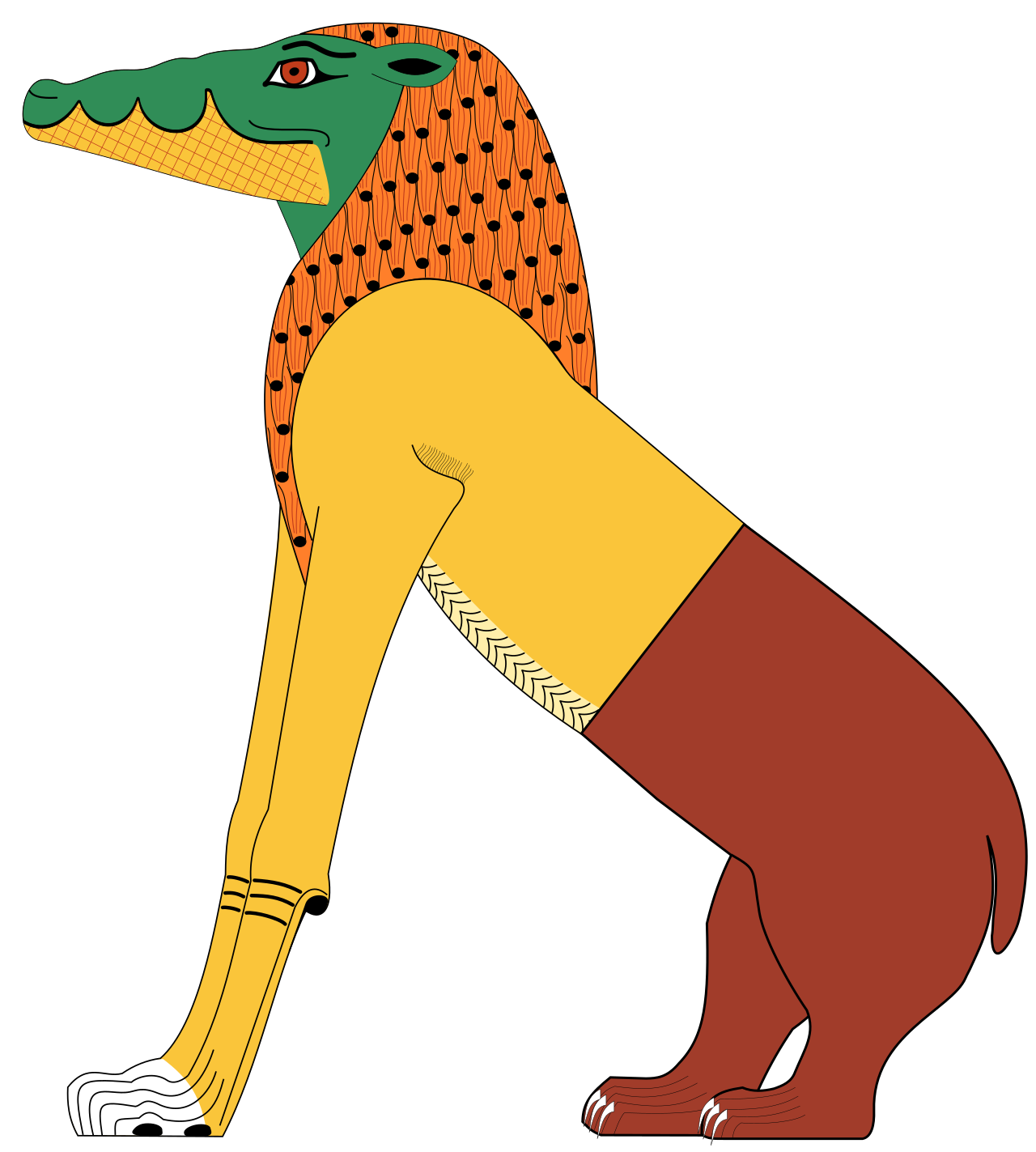
Ammit means “devourer of the dead” (“devoureress of the dead” or “swallower of the dead”), more specifically the dead who had been adjudged not to belong to the akhu (“blessed dead”) who abided by the code of truth (Ma’at).
Ammit is denoted as a female entity, commonly depicted with the head of a crocodile, the forelegs and upper body of a lion (or leopard), and the hind legs and lower body of a hippopotamus. The combination of three deadly animals of the Nile: crocodile, lion, and hippopotamus, suggests that no one can escape annihilation, even in the afterlife.
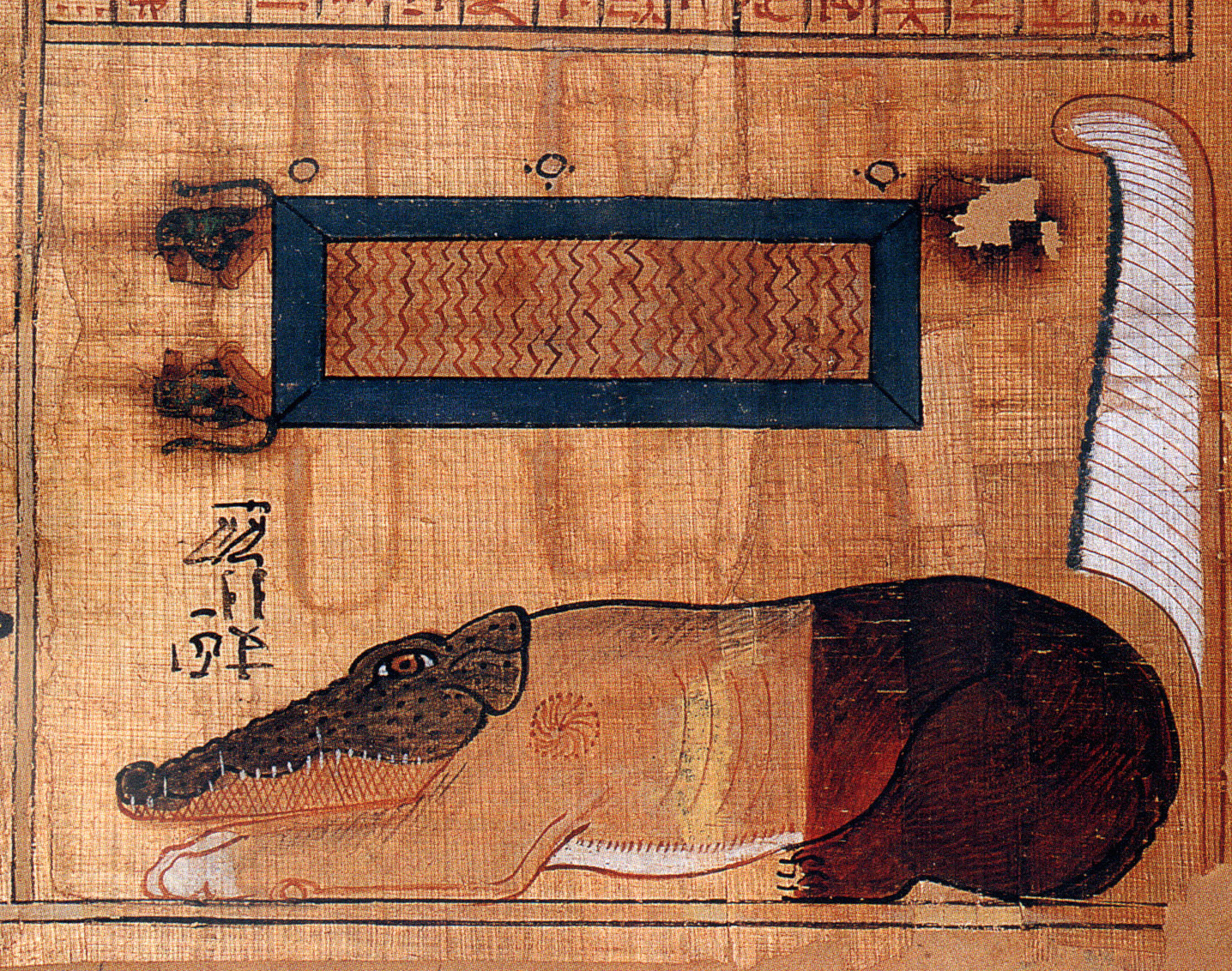
c. 1391–1353 BCE, late Eighteenth Dynasty.
Unlike other gods featured in ancient Egyptian religion, Ammit was not worshipped. Instead, Ammit was feared and believed to be a demon rather than a deity, due to her role as the ‘devourer of the dead’. During the New Kingdom, deities and demons were differentiated by having a cult or center of worship. Demons in ancient Egyptian religion had supernatural powers and roles, but were ranked below the gods and did not have a place of worship. In the case of Ammit, she was a guardian demon. A guardian demon was tied to a specific place, such as Duat. Their appearance was based on a hybrid of an animal or a human and was denoted so the dead could recognize them. Guardian demons that appeared as a hybrid of animals were an amalgamation of traits meant to be feared and to differentiate them from deities associated with humanity.
The current list of all the (known) Krokotopia references can be found here.
Although I am well versed in Pop Culture references but I do not claim to have caught them all. Let me know your favorites in the comments and if I’ve missed one you caught, let me know so I can add it to the list.
Text for this article is excerpted from the linked wiki pages
Ammut Statue image is Wizard101, and is copyright of KingsIsle Entertainment.
Ammit drawing is borrowed from Wikipedia. It is copyright Jeff Dahl and is shared under the CC BY-SA 4.0 Creative Commons license.
Ammit Book of the Dead Scanned from Gods, Rites, Rituals, and Religion of Ancient Egypt by Lucia Gahlin, 2008 and borrowed from Wikipedia. The image is in the public domain.
Image usage qualifies as fair use under US copyright law.
 Vulcan Stev's Database