Haint Nick – Saint Nicholas and Santa Claus
https://wiki.wizard101central.com/wiki/Creature:Haint_Nick
https://en.wikipedia.org/wiki/Saint_Nicholas
https://en.wikipedia.org/wiki/Santa_Claus
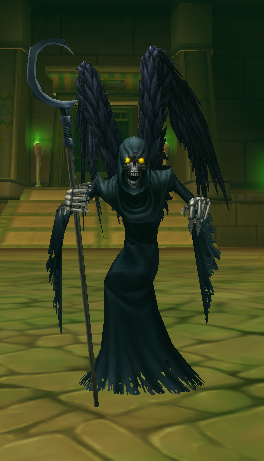
Aren Treebow, the Life Icon used to work for Haint Nick making toy trains (your wizard may have one on display in a house). But he couldn’t take it anymore and used the toymaking tools to make arrows.
Haint Nick: “Have you brought me offerings, little elf? Toys for Death, so it can release my soul from this, the place of my Slaying?”
Aren Treebow: “And if I did release you, what would you do?”
Haint Nick: “Whatever I wanted. And what I want more than anything… is fear. It seasons the soul… and how I hunger for the souls. I dream of scared children desperately hiding under trees to escape my wrath, offerings of toys and treats to blunt my fury. And none of it will work, nothing could possibly sate my appetite, but I will gorge myself all the same on soul after soul… Each basted in the terror of the doomed. Until, finally, the Spiral has been culled and there is nothing left to eat.”
Aren Treebow: “Thought you might say that. That’s what all the stories say about you, the Yuletide Ghost. But it’s not death that drives you; it’s infamy, it’s legend. Time you had a dose of reality.”
Aren escaped Haint Nick and his Paindeer, thus saving the Spiral from Haint Nick’s nefarious plan.
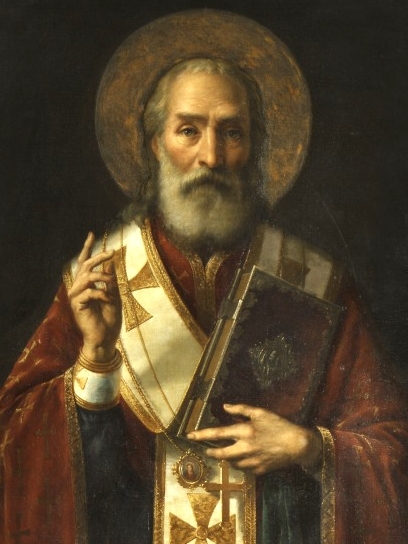
Defender of the Faith, Wonderworker, Holy Hierarch, Bishop of Myra, Venerable
Saint Nicholas of Myra (traditionally March 15, 270 – December 6, 343), also known as Nicholas of Bari, was an early Christian bishop of Greek descent from the maritime city of Patara in Anatolia (in modern-day Antalya Province, Turkey) during the time of the Roman Empire. Because of the many miracles attributed to his intercession, he is also known as Nicholas the Wonderworker. Saint Nicholas is the patron saint of sailors, merchants, archers, repentant thieves, children, brewers, pawnbrokers, toymakers, unmarried people, and students in various cities and countries around Europe. His reputation evolved among the pious, as was common for early Christian saints, and his legendary habit of secret gift-giving gave rise to the folklore of Santa Claus (“Saint Nick”) through Sinterklaas.
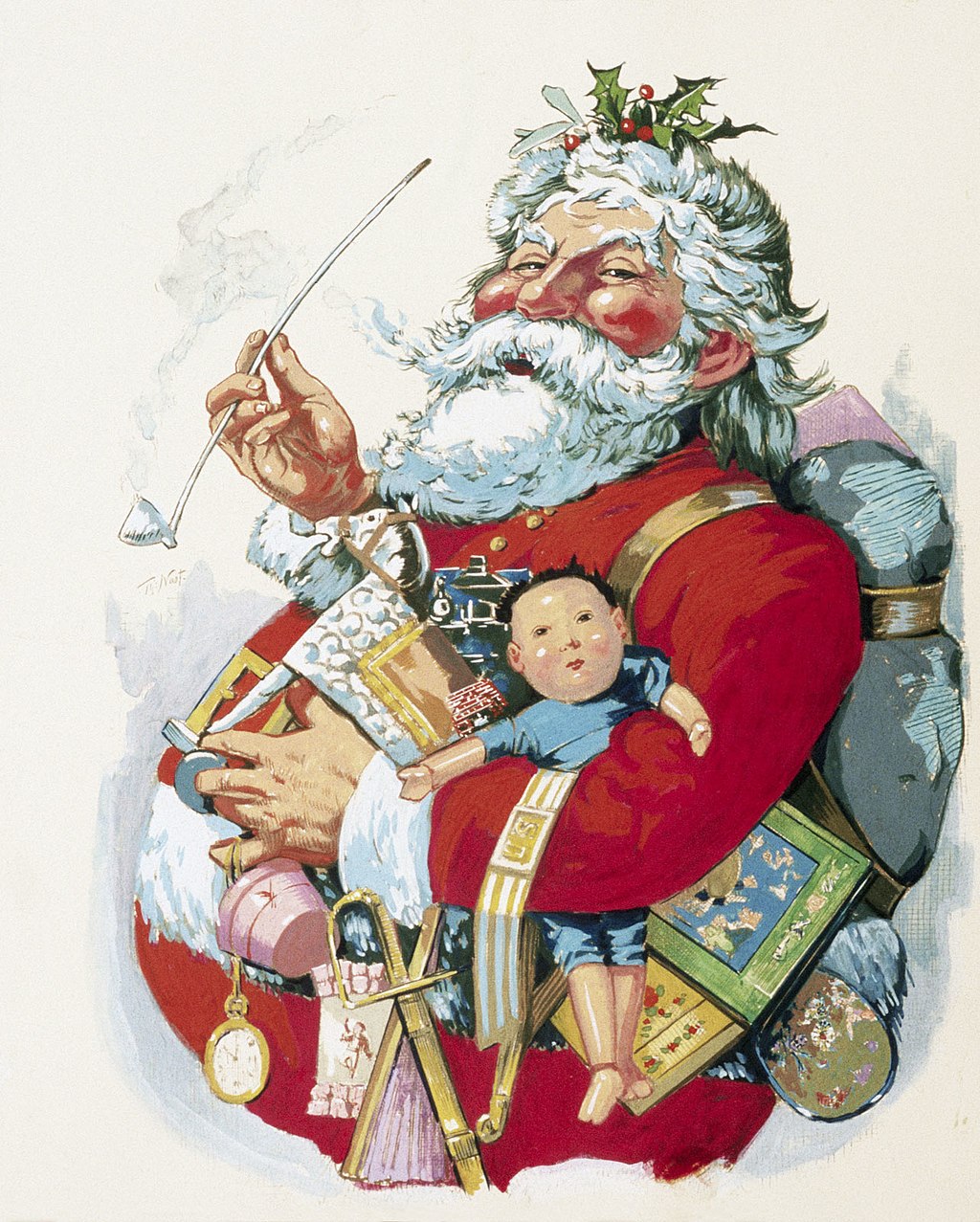
Santa Claus (also known as Saint Nicholas, Saint Nick, Father Christmas, Kris Kringle or Santa) is a legendary figure originating in Western Christian culture who is said to bring gifts during the late evening and overnight hours on Christmas Eve. Christmas elves are said to make the gifts in Santa’s workshop, while flying reindeer pull his sleigh through the air.
The popular conception of Santa Claus originates from folklore traditions surrounding the 4th-century Christian bishop Saint Nicholas, the patron saint of children. Saint Nicholas became renowned for his reported generosity and secret gift-giving. The image of Santa Claus shares similarities with the English figure of Father Christmas, and they are both now popularly regarded as the same person.
Santa is generally depicted as a portly, jolly, white-bearded man, often with glasses, wearing a red coat with white fur collar and cuffs, white-fur-cuffed red trousers, a red hat trimmed with white fur, a black leather belt and boots, carrying a bag full of gifts for children. He is popularly associated with a deep, hearty laugh, frequently rendered in Christmas literature as “ho, ho, ho!”
This image originated in the United States during the 19th century, after Dutch settlers brought the legend of Sinterklaas (“Saint Nicholas”) to 17th-century New Amsterdam (present-day New York City). The 1823 American poem “A Visit from St. Nicholas”, written by an anonymous author, recounts Saint Nicholas arriving at the author’s home on Christmas Eve in a sleigh pulled by flying reindeer. The poem laid the foundation for modern depictions of Santa Claus, strengthening the association between Santa Claus and Christmas. Over time, this connection has been maintained and reinforced through song, radio, television, children’s books, family Christmas traditions, films, and advertising.
The current list of all the (known) Krokotopia references can be found here.
Although I am well versed in Pop Culture references, I do not claim to have caught them all. Let me know your favorites in the comments and if I’ve missed one you caught, let me know so I can add it to the list.
Text for this article is excerpted from the linked wiki pages
Haint Nick image is from Wizard101, and is copyright of KingsIsle Entertainment.
Saint Nicholas image is borrowed from Wikipedia. It is in the Public Domain.
Santa Claus image is borrowed from Wikipedia. It is in the Public Domain.
Image usage qualifies as fair use under US copyright law.
 Vulcan Stev's Database