Melchiah – Ammit, the Egyptian demon “Devourer of the Dead” and Melchiah from the Legacy of Kain video game series
https://wiki.wizard101central.com/wiki/NPC:Melchiah
https://en.wikipedia.org/wiki/Ammit
https://legacyofkain.fandom.com/wiki/Melchiah
Umma has asked your wizard to fight the Street Players. They are preforming “The Circling of Life” and don’t want to stop. While your wizard is discussing the problem with them, Melchiah approaches, it looks like a cross between a lion, hippo, and a krok. The Street Player thinks it looks a surge of Myth Energy entangled with Moon Magic.
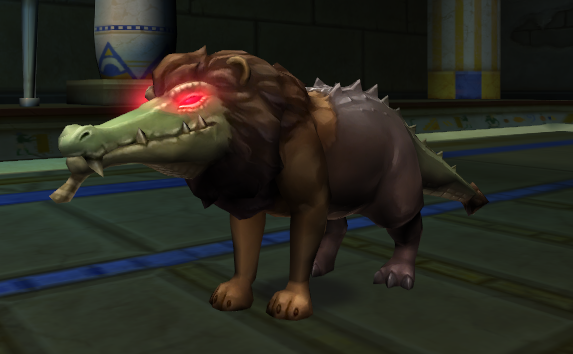
Melchiah is a fire-breathing mass of mangled magic. The Street Player leaves you to deal with it.
Melchiah looks exactly like the Earth-born Ancient Egyptian demon Ammit.
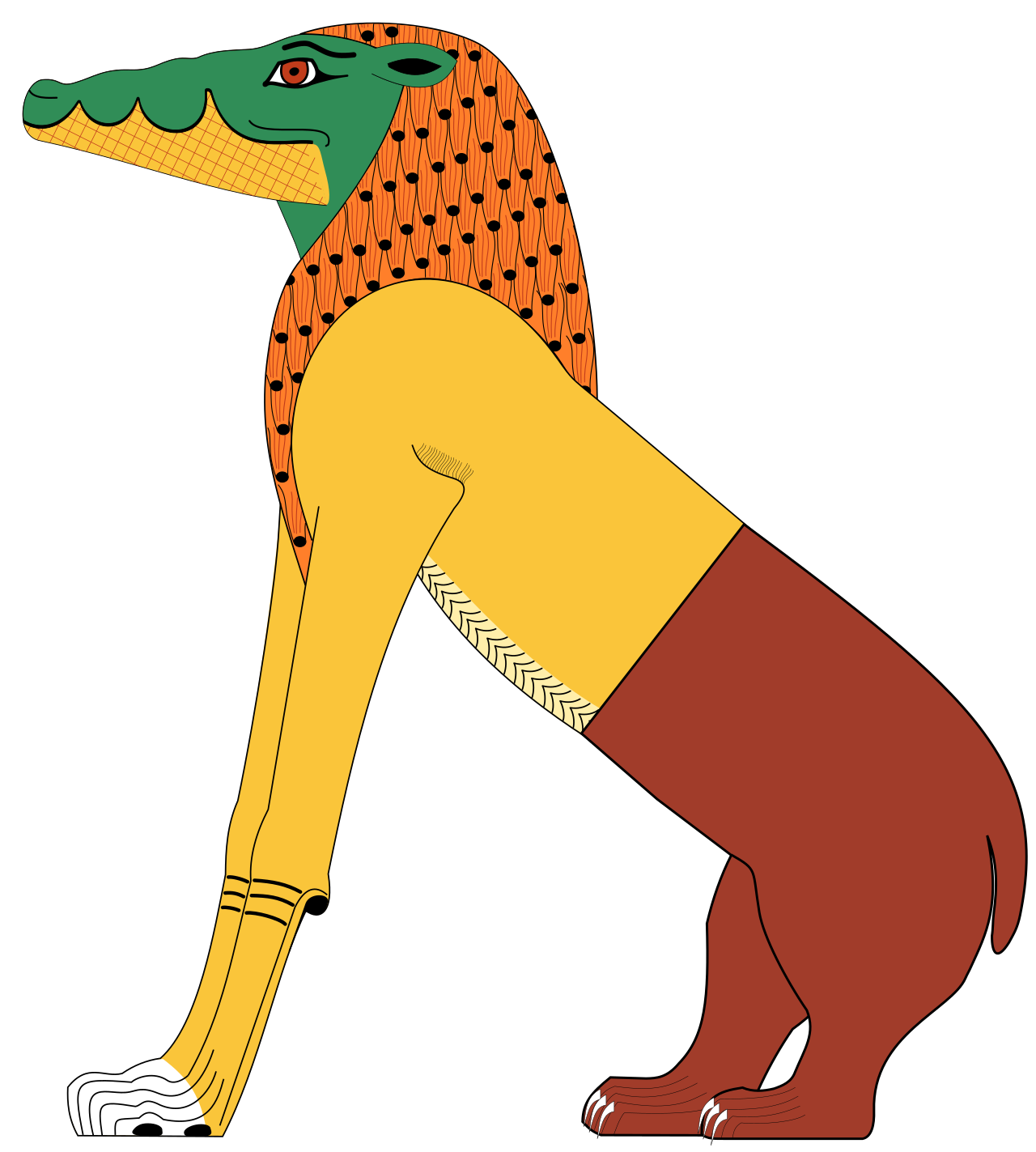
Ammit (Ancient Egyptian: ꜥm-mwt, “Devourer of the Dead”; also rendered Ammut or Ahemait) was an ancient Egyptian goddess with the forequarters of a lion, the hindquarters of a hippopotamus, and the head of a crocodile—the three largest “man-eating” animals known to ancient Egyptians. In ancient Egyptian religion, Ammit played an important role during the funerary ritual, the Judgment of the Dead.
Ammit is denoted as a female entity, commonly depicted with the head of a crocodile, the forelegs and upper body of a lion (or leopard), and the hind legs and lower body of a hippopotamus. The combination of three deadly animals of the Nile: crocodile, lion, and hippopotamus, suggests that no one can escape annihilation, even in the afterlife. She is part lioness, but her leonine features may present in the form of a mane, which is usually associated with male lions.
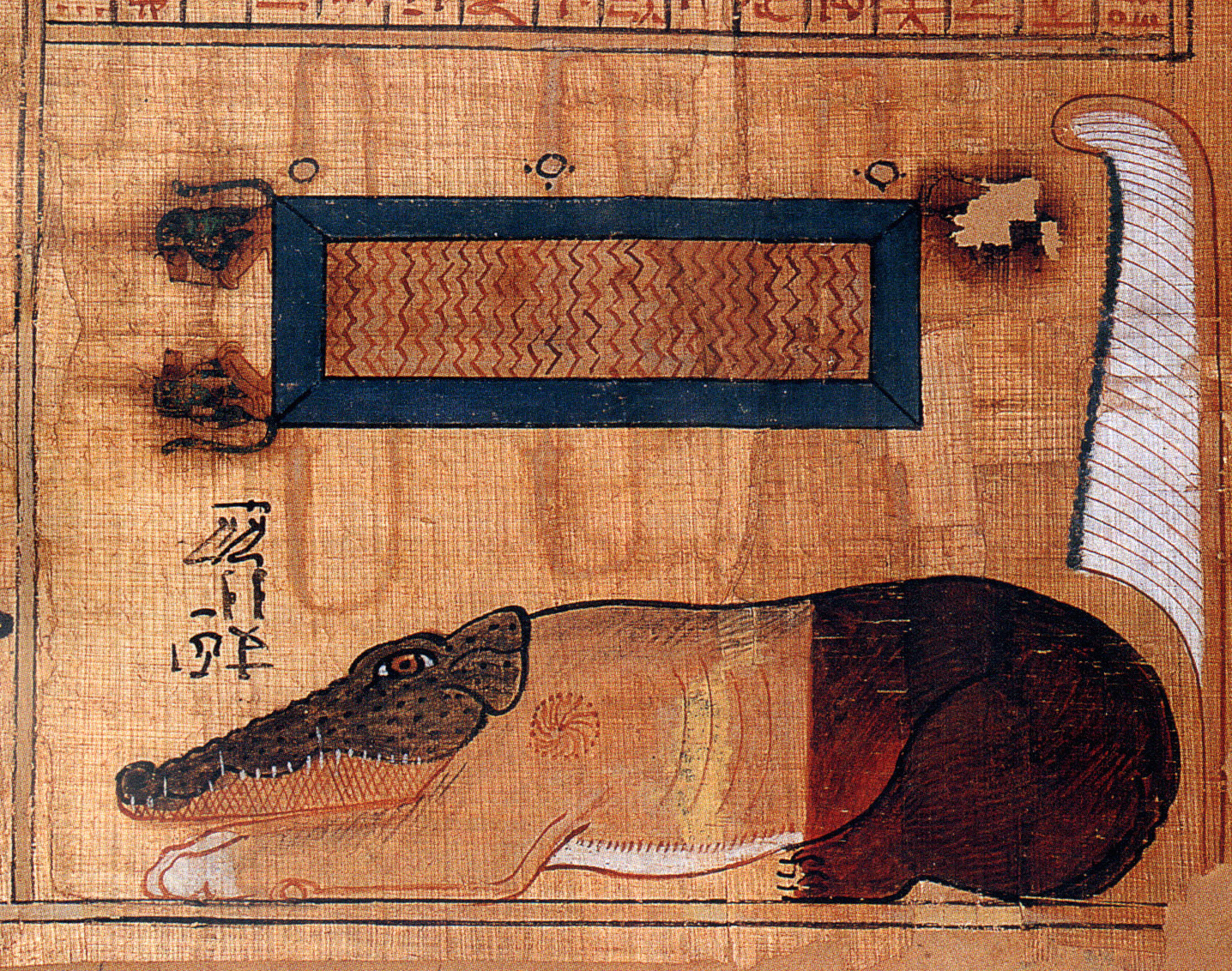
c. 1391–1353 BCE, late Eighteenth Dynasty.
Unlike other gods featured in ancient Egyptian religion, Ammit was not worshipped. Instead, Ammit was feared and believed to be a demon rather than a deity, due to her role as the ‘devourer of the dead’. During the New Kingdom, deities and demons were differentiated by having a cult or center of worship. Demons in ancient Egyptian religion had supernatural powers and roles, but were ranked below the gods and did not have a place of worship. In the case of Ammit, she was a guardian demon. A guardian demon was tied to a specific place, such as Duat. Their appearance was based on a hybrid of an animal or a human and was denoted so the dead could recognize them. Guardian demons that appeared as a hybrid of animals were an amalgamation of traits meant to be feared and to differentiate them from deities associated with humanity.
The Book of the Dead was a collection of funerary texts used to guide the dead to Duat, the Egyptian underworld. The process of the Judgment of the Dead was described in Chapter 125. The ruler of Duat, Osiris, presided over judgment. New Kingdom depictions of this scene occurred at the Hall of the Two Truths (or Two Maats). Anubis, the Guardian of the Scales, conducted the dead towards the weighing scale. Ammit would be situated near the scale, awaiting the results. While Thoth, the god of hieroglyphs and judgment, would record the results. The heart of the deceased was weighed against the feather of Ma’at, the goddess of truth. The feather of Ma’at symbolized the balance, and truthfulness needed to be present during one’s lifetime. The heart or Ib, represented the individual’s soul and was the key to traveling to Aaru.
In Chapter 125 of the Book of the Dead, the deceased is given a series of declarations to recite at the Judgment of the Dead. The Declaration of Innocence was a list of 42 sins the deceased was innocent of committing. The Declaration to the Forty-two Gods and The Address to the Gods were recited directly to the gods, proclaiming the deceased’s purity and loyalty.
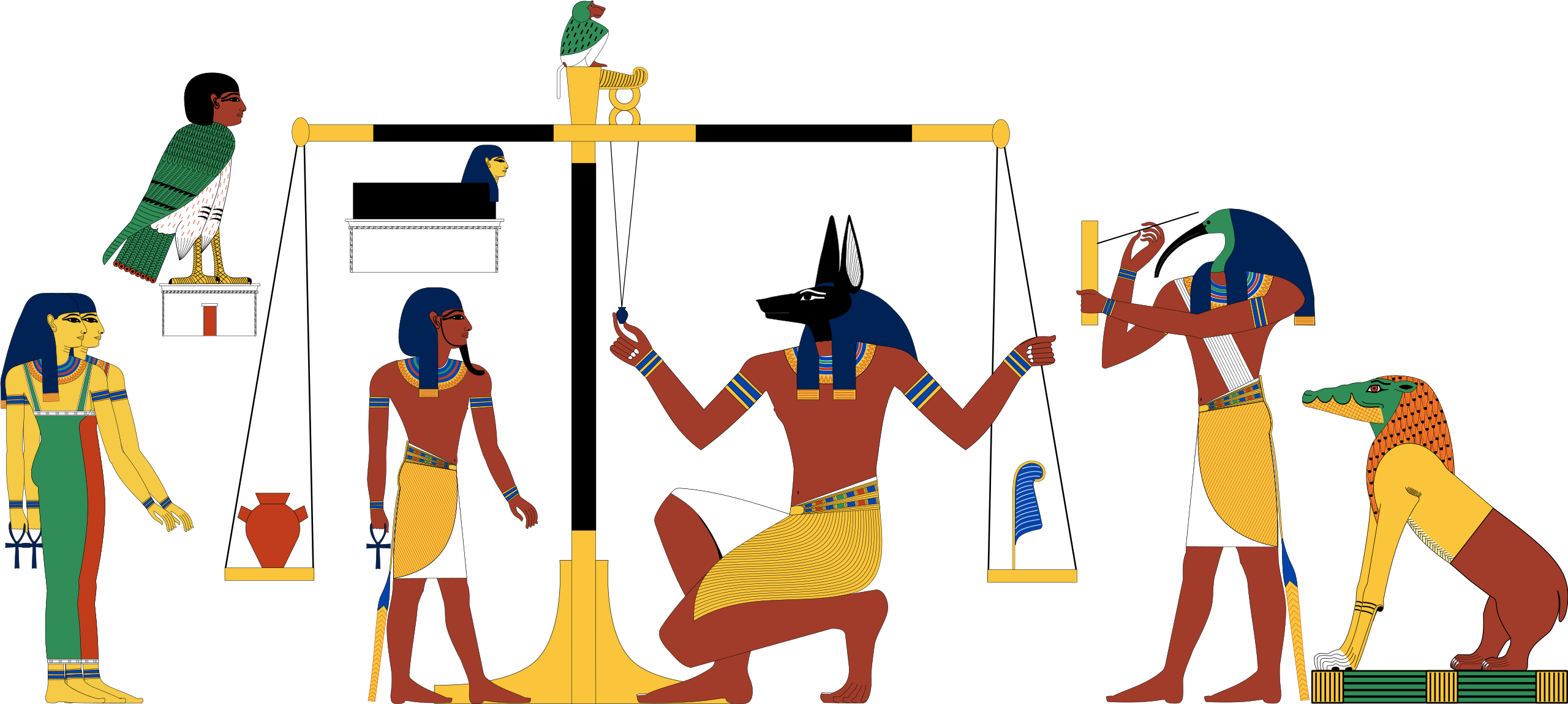
After the declarations are recited, their heart is weighed. If the heart weighed less than the feather of Ma’at, the deceased was ruled to be pure. Thoth recorded the result and Osiris would allow the deceased to continue their voyage toward Aaru and immortality. If the heart was heavier than the feather of Ma’at, the deceased was deemed impure. Ammit would devour their heart, leaving the deceased without a soul. Ancient Egyptians believed the soul would become restless forever, dying a second death. Instead of living in Aaru, the soulless individual would be stuck in Duat.
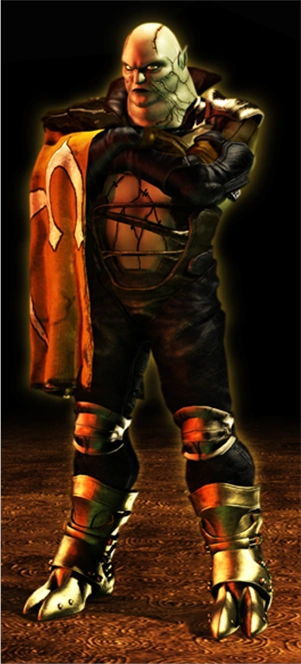
Melchiah was a major character in the Legacy of Kain series, featured in Soul Reaver and Soul Reaver 2. Initially born as a Human in Nosgoth’s early history, Melchiah rose to become one of the elite Sarafan commanders of the Sarafan. Melchiah was killed by the time travelling Wraith Raziel and buried in the Tomb of the Sarafan for a thousand years before Kain raised him as sixth and last of his Vampire sons. Melchiah in turn raised his own Vampire clan, the Melchahim, who participated in the conquest of Humanity. In Kain’s empire, Melchiah was one of the leading ‘Council’, but he did nothing to prevent his Vampire ‘brother’ Raziel ‘s execution. After Raziel returned as a Wraith, Melchiah was the first of his former brothers that he faced.
The current list of all the (known) Krokotopia references can be found here.
Although I am well versed in Pop Culture references but I do not claim to have caught them all. Let me know your favorites in the comments and if I’ve missed one you caught, let me know so I can add it to the list.
Text for this article is excerpted from the linked wiki pages
Melchiah image is from Wizard101, and is copyright of KingsIsle Entertainment.
Ammit drawing is borrowed from Wikipedia. It is copyright Jeff Dahl and is shared under the CC BY-SA 4.0 Creative Commons license.
Ammit Book of the Dead Scanned from Gods, Rites, Rituals, and Religion of Ancient Egypt by Lucia Gahlin, 2008 and borrowed from Wikipedia. The image is in the public domain.
The “Weighing of the Souls” image is borrowed from Wikipedia. It is copyright PharaohCrab and is shared under the CC0 Creative Commons license.
Melchiah image is borrowed from the Legacy of Kain wiki. It is copyright by Crystal Dynamics and Eidos Interactive
Image usage qualifies as fair use under US copyright law.
 Vulcan Stev's Database