Fausty the Snowman – Faust and Frosty the Snowman
https://wiki.wizard101central.com/wiki/Creature:Fausty_the_Snowman
https://en.wikipedia.org/wiki/Faust
https://en.wikipedia.org/wiki/Frosty_the_Snowman
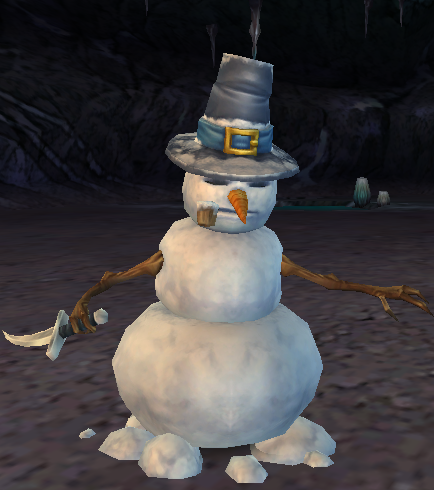
If your Wizard is blending with Life magic, your Wizard has been getting help from Viv and Aren Treebow. Aren has unconcluded business that he and Your Wizard must attend to, Fausty the Snowman.
Fausty is an agent of Aren’s former captor, Haint Nick. The ultimate nogoodnik is hiding out in Savarstaad Pass. He must be dealt with.
The evil snowman is building toys of death to free Haint Nick. Fortunately, your Wizard and Aren are able to thwart his plans.
Fausty the Snowman: “Yes, yes, my servants, build, build the toys. Toys for Death. We will split the veil and free the spirit of Haint Nick. Build faster!”
Aren Treebow: “Awww, are your conscripts moving at too glacial a pace, Fausty?”
Fausty the Snowman: “You!”
Aren Treebow: “Me. And also the Wizard. Ha-ha. We will finish what I started all those years ago. We will end your master’s reign right here and now!”
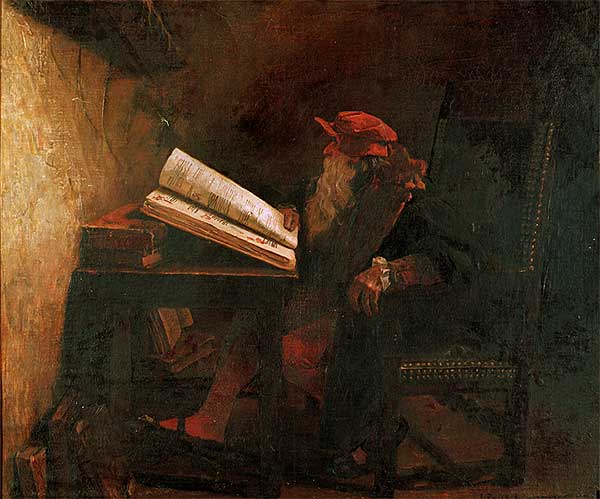
Faust is the protagonist of a classic German legend based on the historical Johann Georg Faust (c. 1480–1540). The erudite Faust is highly successful yet dissatisfied with his life, which leads him to make a deal with the Devil at a crossroads, exchanging his soul for unlimited knowledge and worldly pleasures. The Faust legend has been the basis for many literary, artistic, cinematic, and musical works that have reinterpreted it through the ages. “Faust” and the adjective “Faustian” imply sacrificing spiritual values for power, knowledge, or material gain.

The Faust of early books – as well as the ballads, dramas, movies, and puppet-plays which grew out of them – is irrevocably damned because he prefers human knowledge over divine knowledge: “He laid the Holy Scriptures behind the door and under the bench, refused to be called doctor of theology, but preferred to be styled doctor of medicine”. Chapbooks containing variants of this legend were popular throughout Germany in the 16th century. The story was popularized in England by Christopher Marlowe, who gave it a classic treatment in his play The Tragical History of Doctor Faustus (c. 1592). In Goethe’s reworking of the story over two hundred years later, Faust seduces a pious girl who then commits suicide, but after many further adventures Faust is saved from damnation through the intervention of penitent women, including the girl whose life he ruined.
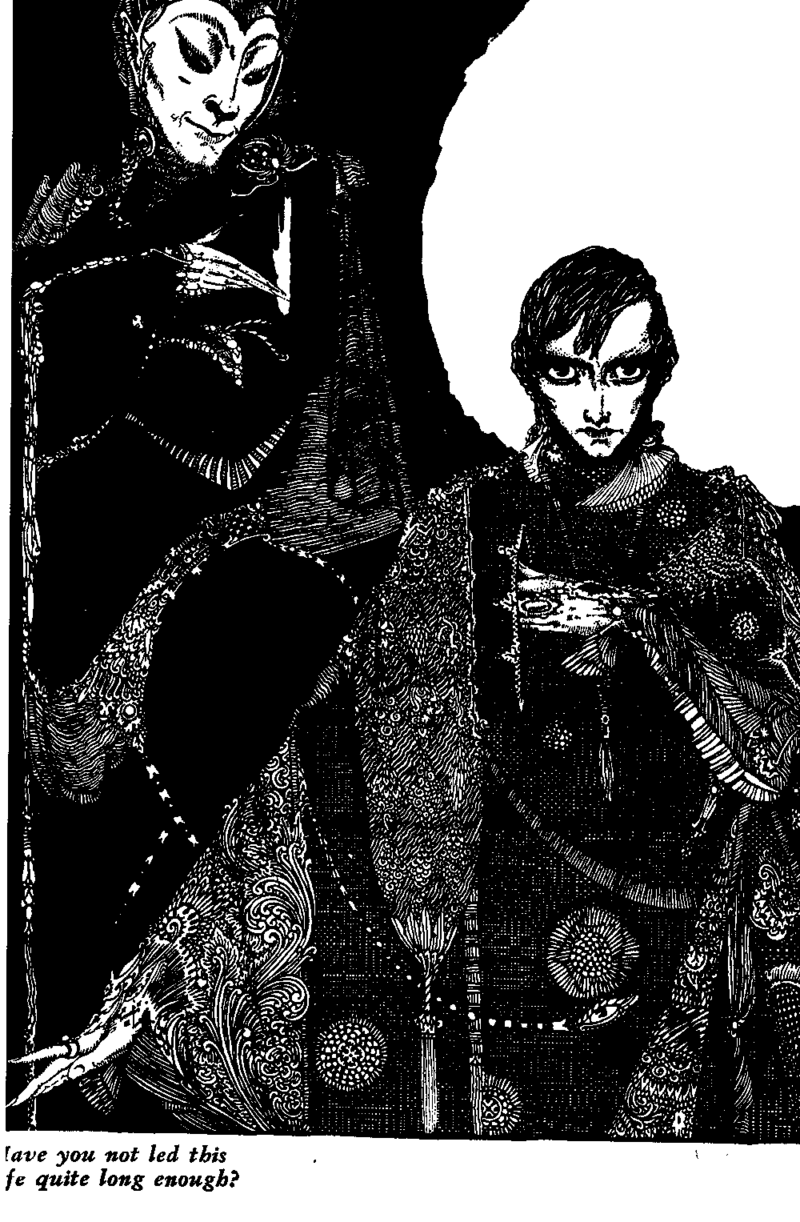
Faust is unsatisfied with his life as a scholar and becomes depressed. After an attempt to take his own life, he calls on the Devil for further knowledge and magic powers with which to indulge all the pleasure and knowledge of the world. In response, the Devil’s representative, Mephistopheles, appears. He makes a bargain with Faust: Mephistopheles will serve Faust with his magic powers for a set number of years, but at the end of the term, the Devil will claim Faust’s soul, and Faust will be eternally enslaved.
During the term of the bargain, Faust makes use of Mephistopheles in various ways. In Goethe’s drama, and many subsequent versions of the story, Mephistopheles helps Faust seduce a beautiful and innocent young woman, usually named Gretchen, whose life is ultimately destroyed when she gives birth to Faust’s illegitimate son. Realizing this unholy act, she drowns the child and is sentenced to death for murder. However, Gretchen’s innocence saves her in the end, and she enters Heaven. In Goethe’s rendition, Faust is saved by God via his constant striving – in combination with Gretchen’s pleadings with God in the form of the eternal feminine. However, in the early versions of the tale, Faust is irrevocably corrupted and believes his sins cannot be forgiven; when the term ends, the Devil carries him off to Hell.
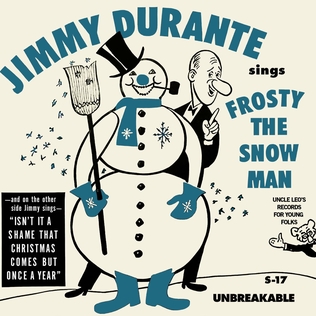
“Frosty the Snowman” is a song written by Walter “Jack” Rollins and Steve Nelson, and first recorded by Gene Autry and the Cass County Boys in 1950 and later recorded by Jimmy Durante in that year. It was written after the success of Autry’s recording of “Rudolph the Red-Nosed Reindeer” the previous year. Rollins and Nelson shopped the new song to Autry, who recorded “Frosty” in search of another seasonal hit. Like “Rudolph”, “Frosty” was subsequently adapted to other media including a 1969 television special.
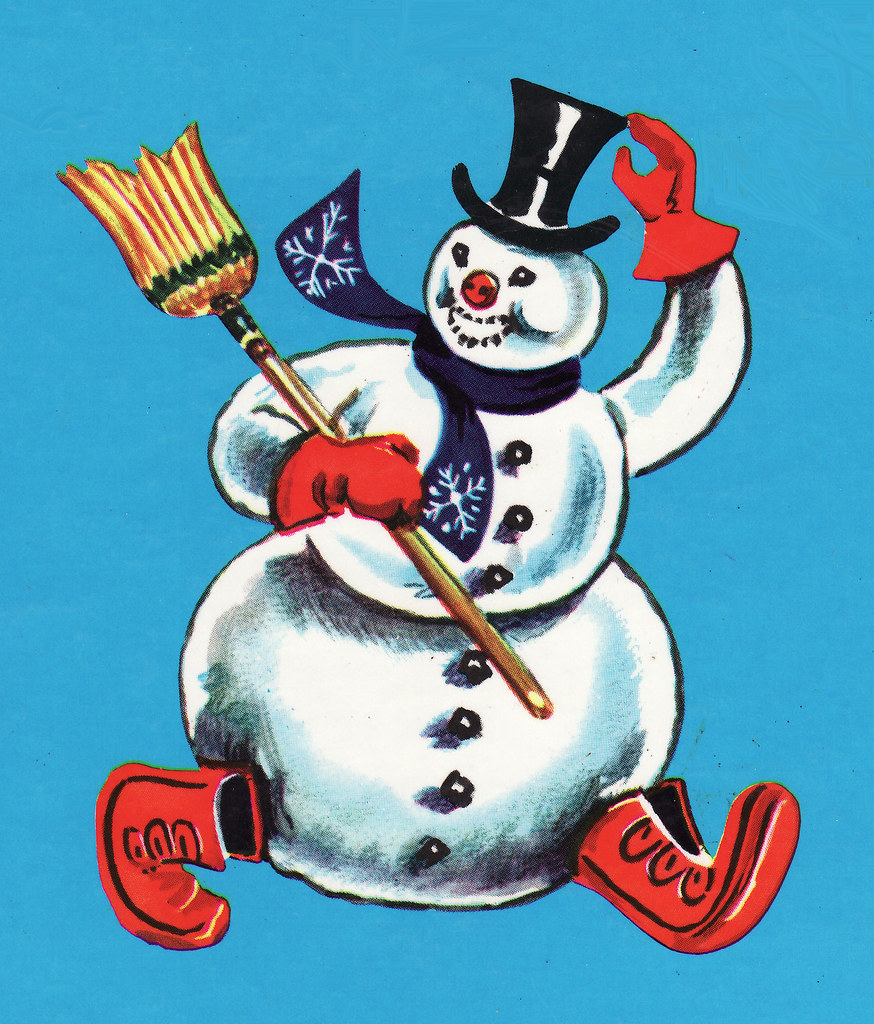
The song’s lyrics describe the adventures of Frosty, a snowman who comes to life after a group of children place a magical silk hat on his head. Frosty laughs and plays with the children until the hot sun threatens to melt him. After leading them through the village streets and running afoul of a traffic policeman, Frosty says goodbye to the children, reassuring them, “I’ll be back again someday.”
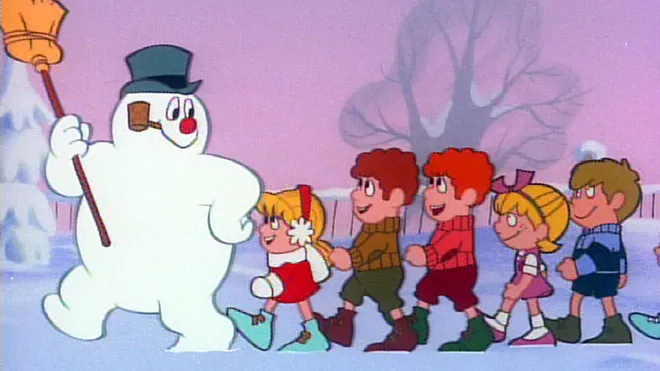
Frosty the Snowman is a 1969 American animated Christmas television special produced by Rankin/Bass Productions. It is the first television special featuring the character Frosty the Snowman. The special first aired on December 7, 1969, on the CBS television network in the United States, airing immediately after the fifth showing of A Charlie Brown Christmas, both scoring high ratings. The special aired annually for the network’s Christmas and holiday season until 2023. After 55 years, NBC acquired the broadcast rights to the special, and continues to air it yearly.
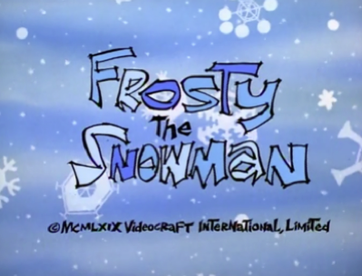
The special was based on the Walter E. Rollins and Steve Nelson song of the same name. It featured the voices of comedians Jimmy Durante (in his final film role) as the film’s narrator, Billy De Wolfe as Professor Hinkle, and Jackie Vernon as Frosty.
Arthur Rankin Jr. and Jules Bass wanted to give the show and its characters the look of a Christmas card, so Paul Coker Jr., a greeting card and Mad magazine artist, was hired to do the character and background drawings. The animation was produced by Mushi Production in Tokyo, Japan, with Yusaku “Steve” Nakagawa and then-Mushi staffer Osamu Dezaki (who is uncredited) among the animation staff. Durante was one of the first people to record the song when it was released in 1950 (though at the time the song had slightly different lyrics), and re-recorded the song for the special.
The current list of all the (known) Grizzleheim/Wintertusk references are located here.
Although I am well versed in Pop Culture references, I do not claim to have caught them all. Let me know your favorites in the comments and if I’ve missed one you caught, let me know so I can add it to the list.
Text for this article is excerpted from the linked wiki pages
Fausty the Snowman image is from Wizard101, and is copyright of KingsIsle Entertainment.
Dr. Fausto image is borrowed from Wikipedia, it is in the Public Domain.
1876 Faust cover is borrowed from Wikipedia , it is copyright Earthsphere and is shared under the CC BY-SA 4.0 Creative Commons license.
Faust and Mephistopheles, Illustration is borrowed from Wikipedia, it is in the Public Domain.
Frosty the Snowman album art is borrowed from Wikipedia, it is copyright MGM Records.
Frosty the Snowman image is borrowed the Golden Glow of Christmas Past, it is copyright Little Golden Books.
Frosty the Snowman title card is borrowed from Wikipedia, it is copyright Rankin/Bass
Frosty the Snowman still is copyright Rankin/Bass
Image usage qualifies as fair use under US copyright law.
 Vulcan Stev's Database