December’s RPG Blog Carnival The End Times and After is being hosted by Advantage on Arcana
The End Times and After, I’ve been wrapping my head around this since mid-November when the topic was announced on the RPG Blog homepage. I had no idea what I was going to write about. Then I read Bear’s second suggestion in his welcome.
Post-apocalyptic games, as we generally understand them. These are games set in Gamma Terra, in sun-haunted Athas, in the blue sands of Vaarn, in Arora dragon-plagued, in the Zone, in the Commonwealth, in my own yet-to-be-properly-named Lakelands, in any of a dozen hacks and homebrews where everything went bad and the world is a wasteland of mutants and robots and radioactive goo. – Advantage on Arcana
Ok, THIS I know. End of the World; Damnation Alley, Mad Max, Escape from New York, Thundarr the Barbarian, The Postman, and Car Wars are all of the post-apocalyptic genre and IPs that I enjoy tremendously. Though sadly only one of them (Car Wars) is a game and was never written to be a classical TTRPG (battle simulation yes, role-playing not so much). I played Car Wars (still do) as a teenager and you could accurately say it was my gateway into the broader TTRPG world. As much as I could drop a homebrew DnD setting in the Thundarr universe with little to no difficulty, I thought it would be more interesting to introduce autodueling into Dungeons & Dragons.
What if? What if the various planes of D&D were not separate planes of existence but rather different eras of one single planet? We’re going to use the official D&D planet of Toril, (formerly Abeir-Toril) the planet that makes up the Forgotten Realms Dungeons & Dragons campaign setting, as well as the Al-Qadim and Maztica campaign settings, and the 1st edition version of the Oriental Adventures campaign setting. It is the default world for the 5th edition of Dungeons & Dragons.
Using Toril as the setting for a single-planet unified D&D timeline allows us to plop a post-apocalyptic setting into a world already familiar. New maps need not be generated (just redefined). Is Toril Earth? In my head-canon and for the sake of this article, yes it is. Or at least an alternate-Earth (Earth-1974).
My proposed timeline with the appropriate D&D (and other TTRPG) settings for Toril (Earth-1974) would be as follows:
- Age of Titans & Builders
(Greyhawk’s Suel, Nithians, Forgotten Realm’s Creator Races — megaliths, pyramids, Nazca-lines, etc.) - Age of Wonders
(Eberron — Greco-Roman Empire, Atlantis / magitech antiquity) - Age of Kingdoms
(Faerûn — Medieval age) - Age of Superstition
(Ravenloft — Puritan Gothic) - Age of Industry
(Deadlands, GURPS Steampunk, Top Secret, Champions – Early modern steampunk era to modern tech settings) - The Shattering / Near Collapse of Civilization
(Car Wars / Dodges & Dragons — Post-apocalypse magic + autodueling + dragons) - Age of Crystal Spheres
(Spelljammer — cosmic exploration)
Please note that while not explicitly stated, the various PC races (Elves, Humans, Halflings, Gnomes, etc. are still part of the world)
The Age of Titans and Builders (Creator Races Era — Pre-History)
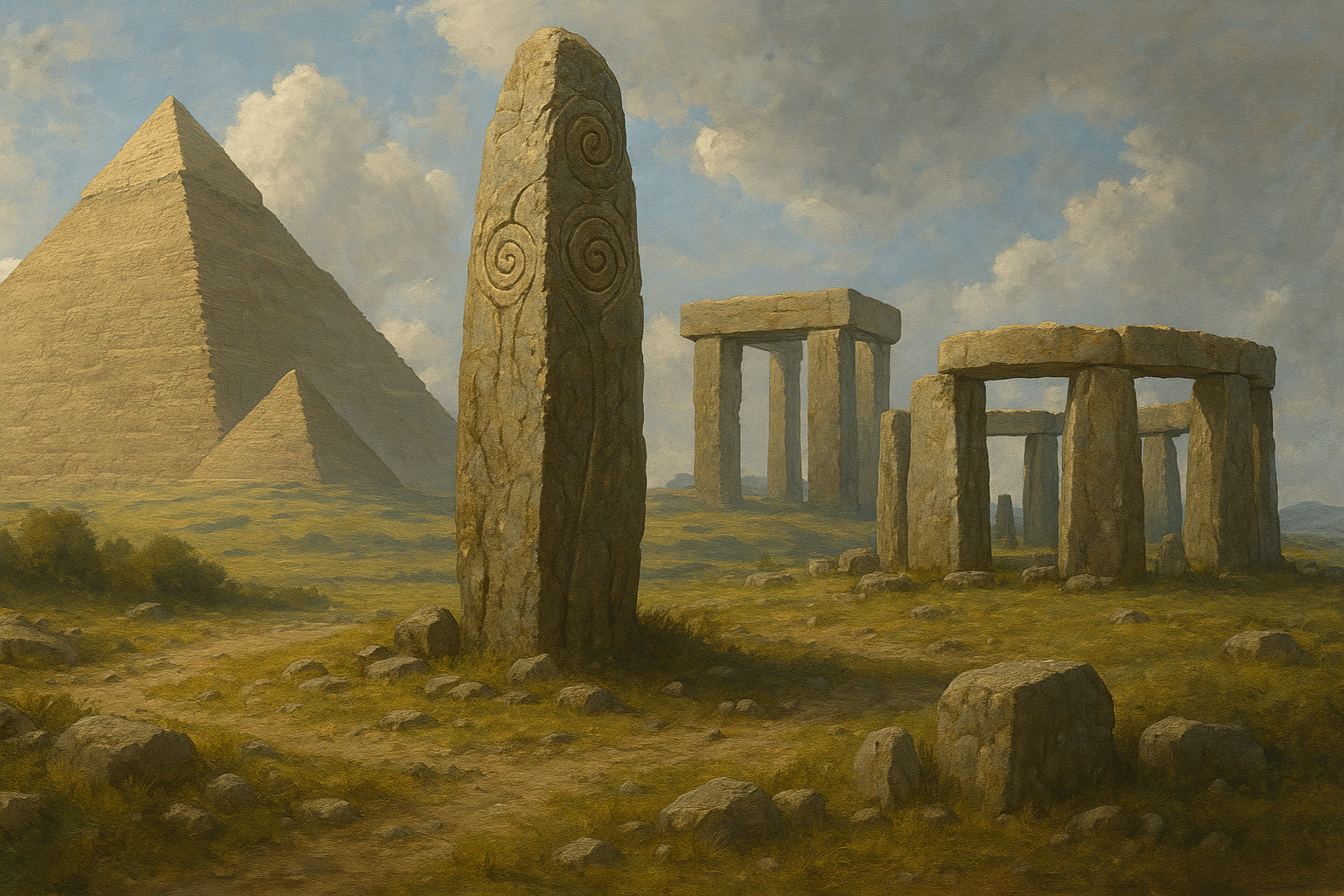
Long before the rise of Eberron’s arcane empires or the earliest kingdoms of Faerûn, the world was shaped by the enigmatic civilizations of the Age of Titans and Builders. This was a prehistoric era dominated by colossal races—serpent kings, giant-kings, and forgotten progenitors—whose mastery of primordial magic rivaled the gods themselves. They carved ley lines into the earth, raised mountains into monumental geometric structures, etched continent-spanning glyphs visible only from the heavens, and erected cyclopean stone circles that predate mortal memory. Their cities have long since crumbled, erased by divine decree, planar upheaval, or self-inflicted catastrophe, leaving only scattered megaliths—pyramids, monoliths, and sky-aligned henges—as inscrutable reminders of a world whose secrets are buried beneath myth. Though their names are lost, their works still shape the flow of magic, and every age that follows stands quite literally upon the bones of their vanished dominion.
Key Concepts
- Primordial Geometry & Ley Architecture, their architecture WAS their magic.
- The Age of Titans saw the rise of colossal beings—giants, serpent-kings, proto-fey, and other progenitor races—whose rites shaped the world itself. The first civilizations were ruled by beings closer to demigods than mortals.
- The Age ended not with a slow decline but with a deliberate erasure—a divine reset, a planar upheaval, or a self-inflicted magical catastrophe. Their end was so absolute that only stone survives.
The Age of Wonders (Eberron Era — Far Antiquity)
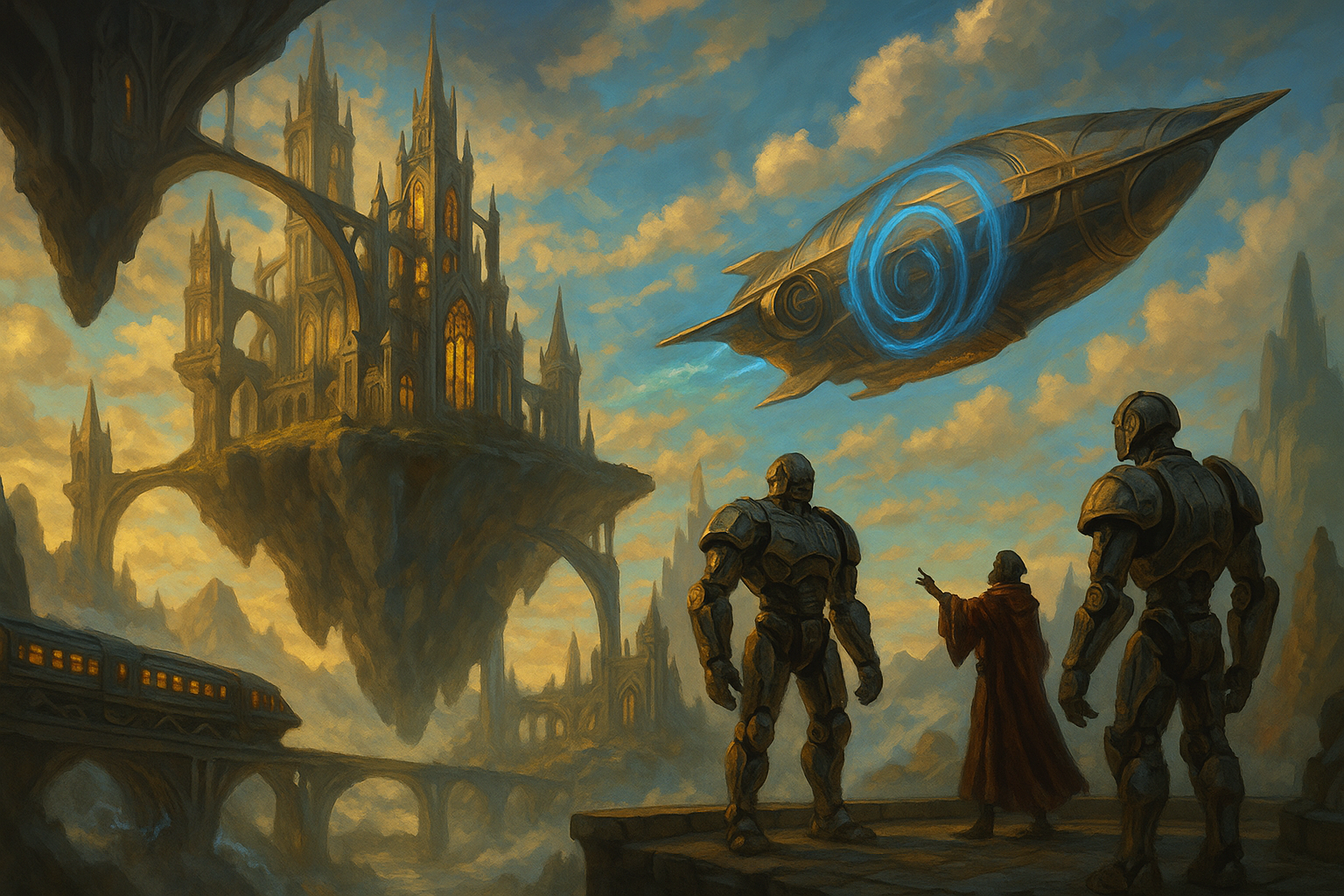
Following the long-forgotten dominion of the Titans and Builders, the world entered the Age of Wonders, a brilliant arcano-industrial civilization whose mastery of elemental binding, magewright engineering, and dragonshard science eclipsed anything before or since. This was a time of skyships cruising ley-currents, floating citadels anchored by arcane reactors, sentient constructs gaining legal personhood, and great houses of dragon-marked sorcerers guiding global commerce. Nations rose and fell not by sword, but by spell-forges, artifice factories, and political intrigue fueled by magical innovation. Yet this era—akin to a mythic “Roman Empire of Magitech”—ended in devastating conflicts and cascading magical failures, leaving only scattered relics, unstable ruins, and half-remembered legends. The Ages that followed would regard its marvels as impossibly advanced “ancient magic,” unaware that the world once thrived under the hum of crystal engines and the glow of bound elemental fire.
Key Concepts
- The civilizations of the Age of Wonders mastered elemental binding and dragonshard-powered machinery. Magic was not mystical—it was technology.
- The rise of dragonmarks transformed bloodlines into arcane dynasties whose magical sigils granted unrivaled influence over commerce, communication, healing, transportation, and espionage. Power was written into blood and bound in contracts.
- The Age ended in a catastrophic sequence of magical arms races, culminating in near-apocalyptic events—unstable arcane reactors, weaponized elementals, and the creation of living constructs forged for endless war. Its collapse was sudden, violent, and the world never recovered its heights.
- Some architecture and records remain.
The Age of Kingdoms (Faerûn — The Medieval Era)
In the long shadow of the fallen Age of Wonders, the world entered the Age of Kingdoms, a era defined by rediscovery, mythmaking, and the slow reawakening of mortal ambition. The grand magitech engines of the past lay silent, their secrets forgotten, leaving nations to rebuild with steel, spellcraft, and courage rather than artifice and industry. This was the age of Arthurian-style heroes, wandering wizards, chivalric orders, cunning rogues, and sprawling realms forged through sword and diplomacy. Ancient ruins from earlier ages became the lairs of monsters or the sources of legends, inspiring tales that shaped entire cultures. The gods walked more closely with mortals, granting clerical miracles and divine quests, while dragons, fey, and other elder beings reasserted their influence over a world no longer shielded by the wonders of lost magitech. Civilization flourished in pockets of light amid wilderness and mystery, giving rise to the classic medieval fantasy era remembered in later ages as a golden age of adventurers, kingdoms, and epic sagas.
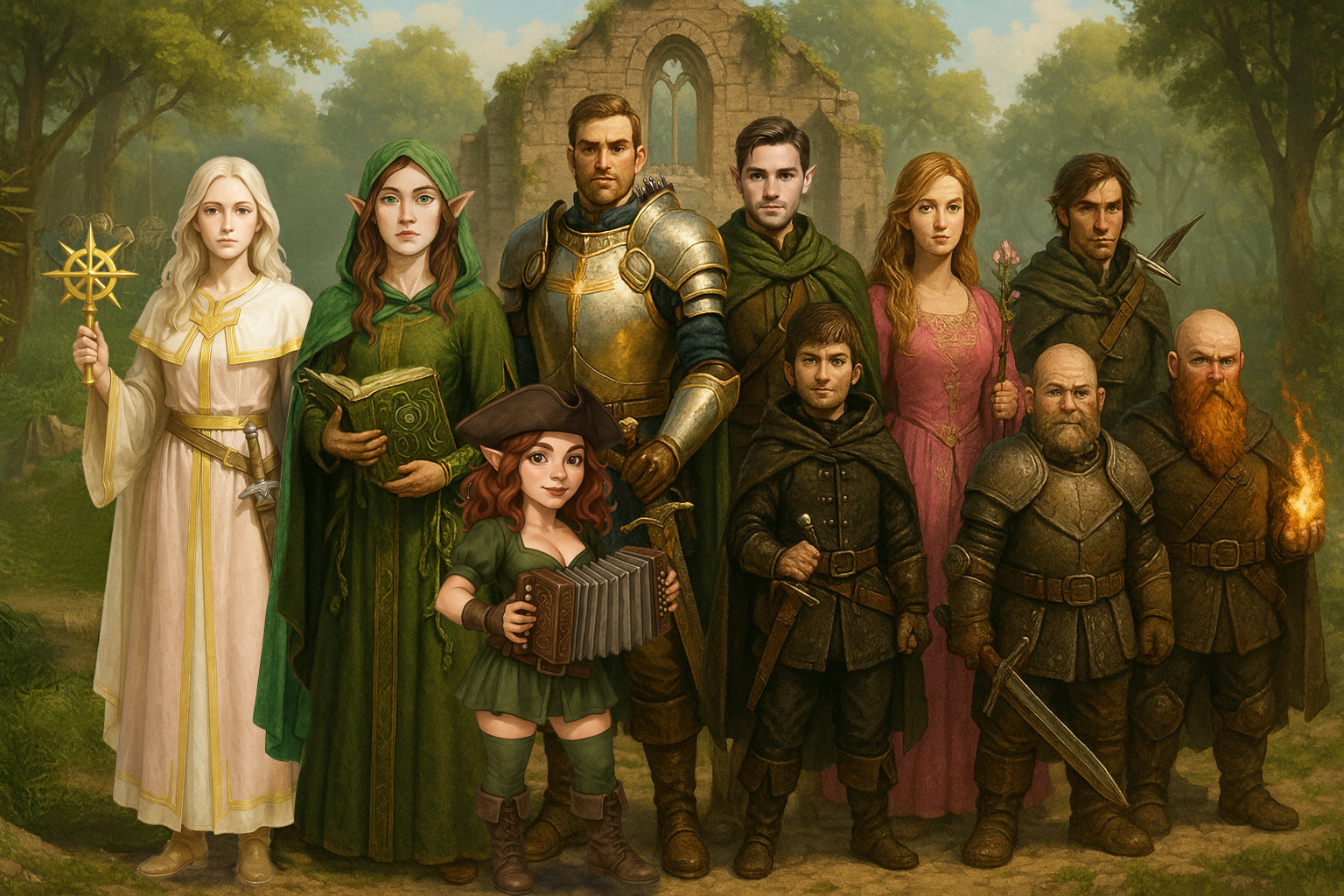
[I’m the Ranger, back row between the Paladin and Druid)
Key Concepts
- With the wonders of the previous age lost, civilization rebuilds using traditional steelwork, spellcraft, and personal heroism. Magic is powerful but rare, wielded by wizards who rely on study—not industrial artifice—and clerics whose miracles come directly from the gods. Greatness is measured by courage, not technology.
- As nations form and expand, mortal realms coexist uneasily with wild lands filled with monsters, ruins, and remnants of earlier ages. Orders of knights defend their borders, wizards’ towers anchor growing cities, and rulers forge alliances or wage war to expand their influence. Civilization is rising—but wilderness and old magic still dominate.
- This is the time when folklore becomes history. Dragons razing kingdoms, paladins smiting demons, elves weaving enchantments older than mankind—all of these legendary stories originate here. Deities walk more openly, fey courts meddle in mortal affairs, and epic quests define the spirit of the age. This is the age where legends are born—and remembered forever.
The Age of Superstition (Ravenloft — Puritan Era / Early Enlightenment)
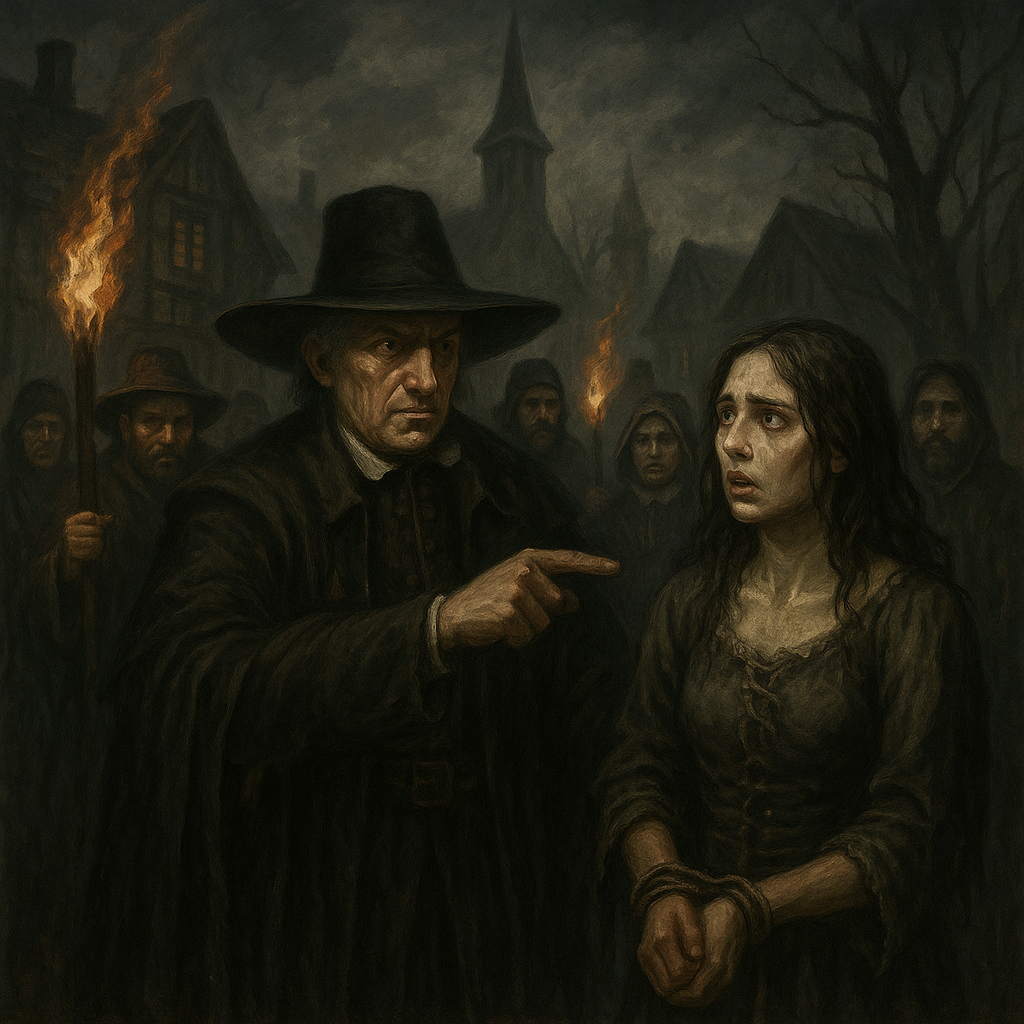
As the kingdoms of the previous age waned and knowledge of true magic faded from common hands, the world descended into the Age of Superstition, a grim and shadowed era defined by fear, faith, and the unseen. In this Ravenloft-inspired epoch, belief eclipsed reason, and every strange illness, ruined harvest, or unexplained disappearance was blamed on witches, ghosts, and the restless dead. Supernatural horrors—long held at bay by the heroes and divine miracles of the Age of Kingdoms—now crept freely into villages, haunting the night with predatory intent. Clerics and inquisitors wielded both genuine miracles and misguided zeal, while common folk clung to charms, omens, and whispered prayers. Science struggled to emerge, alchemy balancing uneasily between discovery and heresy, as the veil between the mortal world and realms of dread thinned with every passing generation. This was the age of witch trials, gothic terror, cursed bloodlines, and brooding paranoia—an oppressive twilight before the sparks of industry would begin to flicker in the darkness.
Key Concepts
- In the absence of reliable arcane knowledge, fear becomes the foundation of authority. Superstition dictates daily life, from charms hung above doorways to witch signs carved into barns. Rural inquisitors, church magistrates, and zealous clergy wield both genuine divine miracles and dangerous paranoia, conducting witch trials, exorcisms, and purges of suspected heretics. Even when no true evil is present, fear itself becomes an oppressive force that controls communities. The people obey fear more than rulers—and fear is easily weaponized.
- With realms of dread drawing closer, supernatural threats become far more active—and far less subtle. Ghosts linger in crossroads and abandoned inns, werewolves stalk winter forests, and curses infect entire bloodlines. Undead, fiends, and night-haunting horrors slip through thinning planar boundaries, preying on isolated villages. Monsters of earlier ages that once hid in deep wilderness now stalk the outskirts of civilization, empowered by mortal terror. The night is alive, and it knows your name.
- Even amid fear, the first embers of scientific thought and proto-industrial experimentation begin to spark—but always in hiding. Alchemists, early anatomists, and natural philosophers risk being labeled heretics for seeking rational explanations for “witchcraft” and haunting phenomena. These secret scholars become the bridge to the Age of Industry, smuggling knowledge, studying monsters, and documenting horrors in coded journals. Their work sows the seeds for the world’s eventual shift from fear to curiosity. The first scientists were rebels fighting both monsters and ignorance.
- Dragons content with their hordes, retreat. They go to slumber or plan. Awaiting a sign that will herald their return.
Age of Industry
(Late Steampunk → Early Modern Steampunk, Industrial Revolution, Deadlands, GURPS Steampunk, Top Secret, Champions)
As fear and dogma reached their zenith in the Age of Superstition, the relentless persecution of witches, warlocks, and gifted bloodlines forced the magical community into the shadows. Arcane practitioners learned to mask their power, hiding grimoires in alchemical workshops and practicing spells in windowless cellars or deep forest sanctuaries. This secrecy inadvertently nurtured the earliest sparks of rational inquiry—proto-scientists and natural philosophers, many of them former hedge-mages or failed apprentices, began to reinterpret magic as “natural forces” governed by laws rather than miracles or curses. Their experiments laid the foundation for mechanical innovation and early industrial progress. As superstition waned and knowledge blossomed, society shifted from fear-driven mysticism to curiosity-driven invention. Yet the magical world did not fade; it merely learned to wear a mundane mask, operating behind the scenes, quietly guiding discovery while ensuring that the vast majority of the newly enlightened populace believed the world was growing less magical when, in truth, magic had simply grown more hidden.
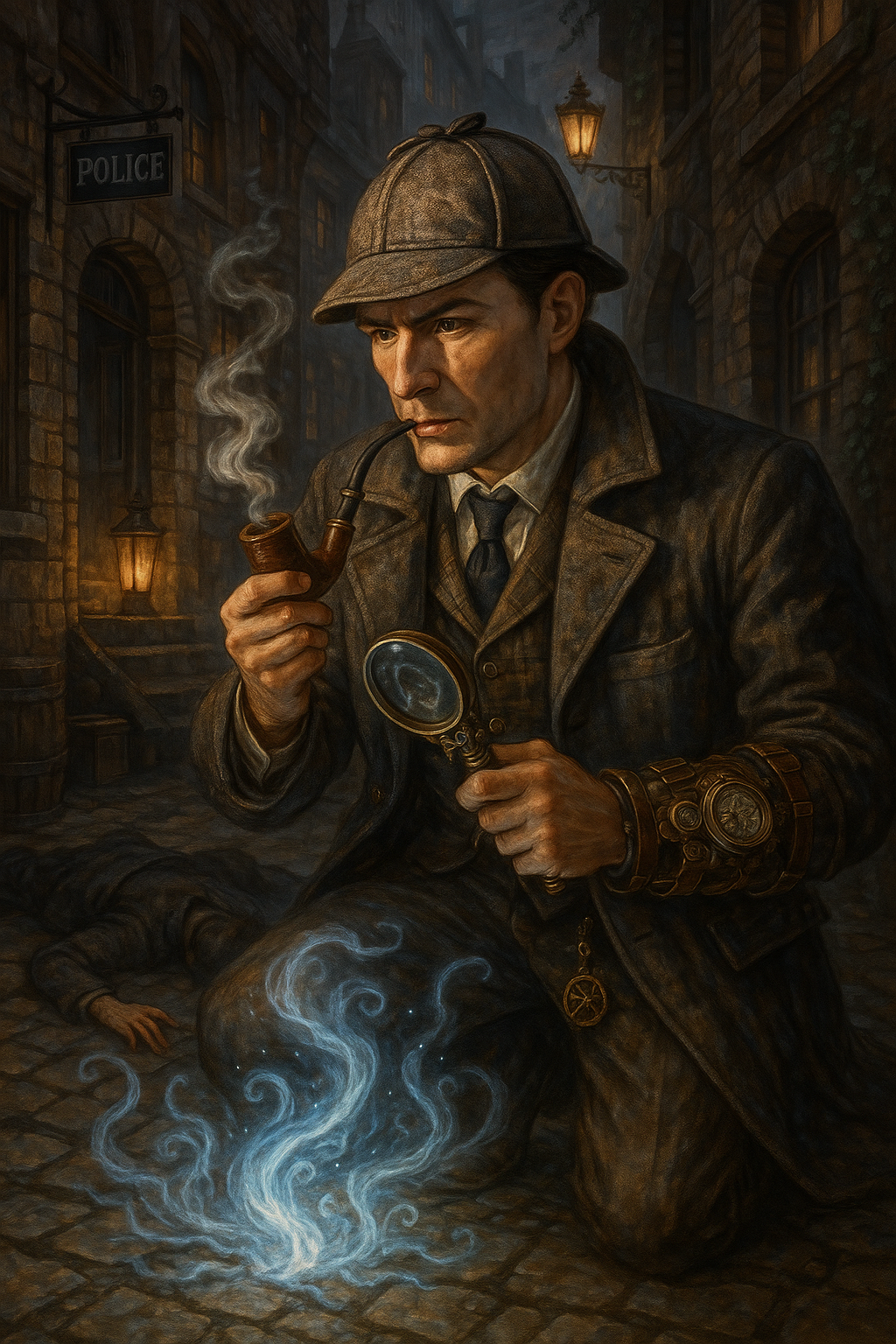
As steam engines, brass automata, and aetheric reactors reached the height of their influence, inventors and natural philosophers began pushing beyond the limits of gears and boilers. The secret magical underpinnings of the Age of Industry—long hidden by arcane cabals—quietly guided scientific thought toward more stable, efficient energy sources. The study of elemental pressure and aetheric conductivity evolved into early experimentation with electricity, galvanic fields, and magnetism. Laboratories once cluttered with vacuum tubes and clockwork assemblies shifted toward crystalline circuits, conductive metals, and precision engineering. Society embraced these new discoveries with astonishing speed, believing them to be purely scientific advances, unaware that many breakthroughs were echoes of rediscovered magitech principles dating back to the Age of Wonders.
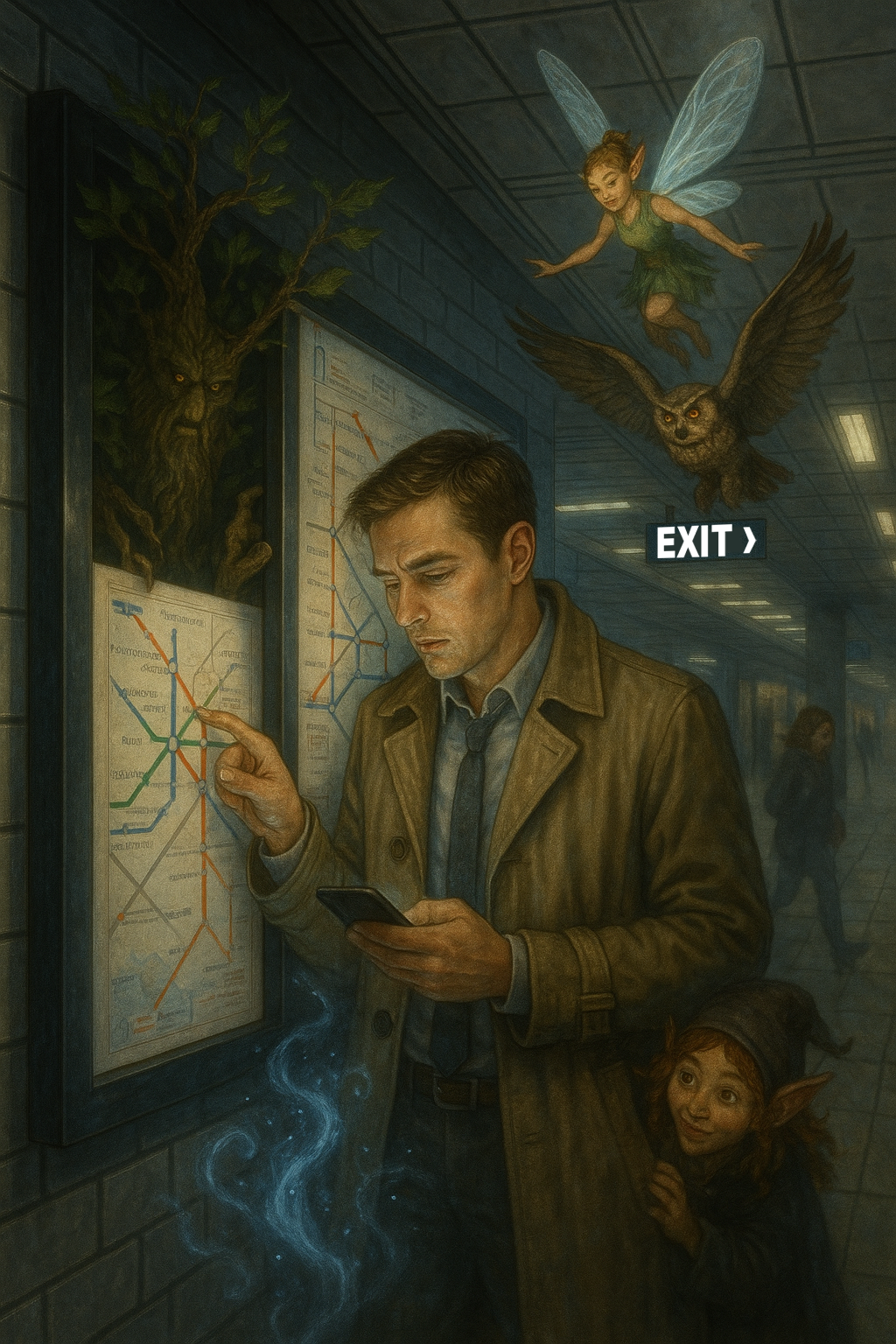
By the dawn of the modern era, the grand steamworks and dirigible fleets of earlier generations gave way to internal combustion engines, electric grids, radio communication, and eventually digital computation. Steam-driven leviathans rusted in forgotten shipyards, replaced by aircraft and polymer composites. Clockwork soldiers were dismantled or melted down as robotics, cybernetics, and microprocessors emerged from the crucible of innovation. All the while, hidden enclaves of mages watched the march of progress with mixed awe and trepidation—some adapting their arts to the new age, others vowing to keep magic veiled from a world that had grown convinced it no longer existed. In this way, the transition from steampunk to modernity became not merely a technological revolution, but the next turn of a millennia-long cycle where magic and science continually reshape—and disguise—themselves.
Key Concepts
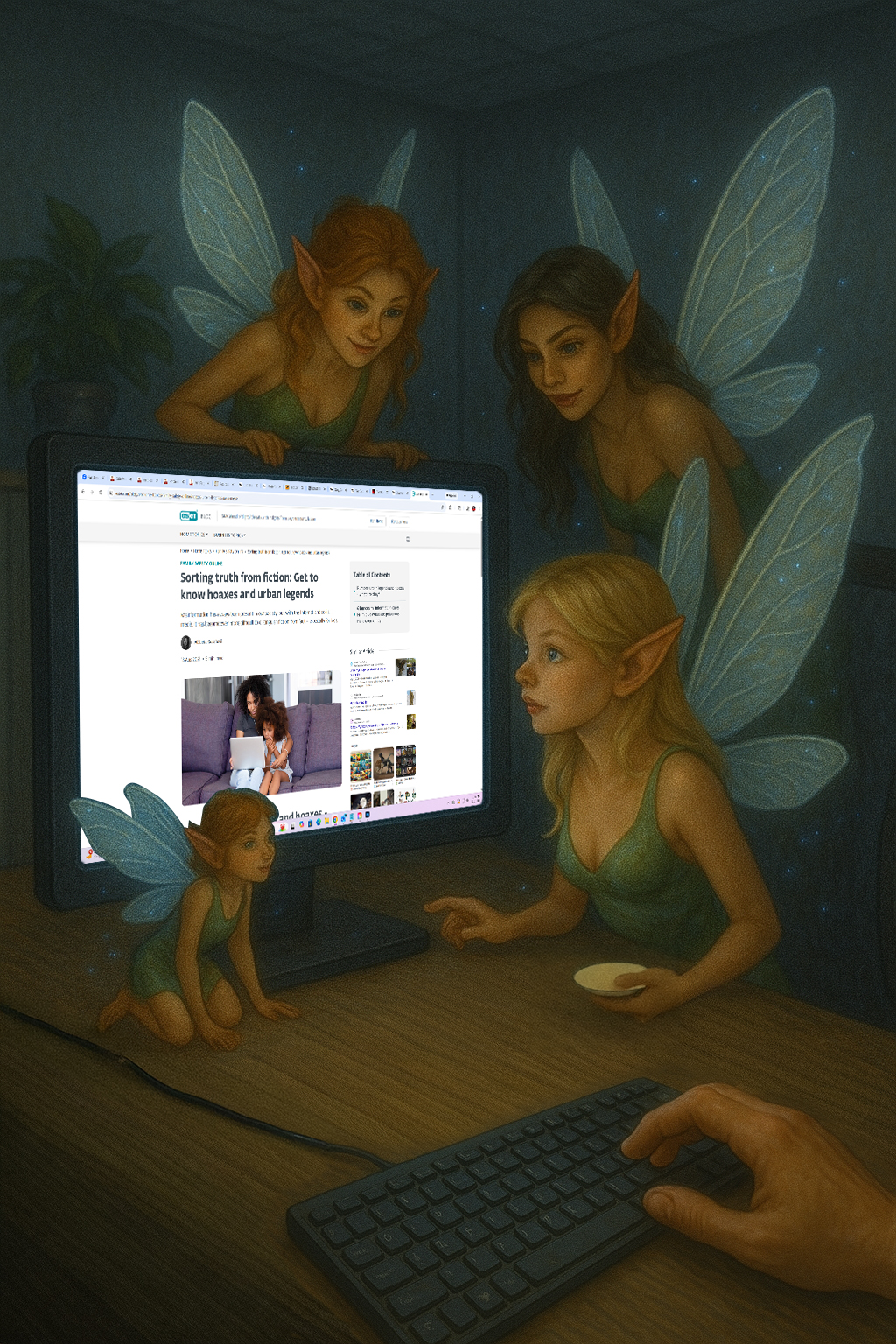
- Steam engines, gearwork machinery, early electricity, and industrial engineering transform society, creating factories, railways, airships, and scientific academies. To the common citizen, this is the dawn of a purely mechanical world—progress driven by human ingenuity alone. But behind the scenes, magic has not vanished. Arcane cabals, secret mage guilds, and fey courts subtly guide or sabotage technological breakthroughs, ensuring the mundane world believes it is ascending through reason while unknowingly rediscovering diluted echoes of ancient magitech. Technology rises in the open while magic survives in the shadows.
- Though industrial cities expand and rationalism becomes the dominant worldview, the feywild still bleeds through in iron-defiant pockets, the undead stalk forgotten alleys, and warlocks whisper in guild basements. Wizards adopt disguises as inventors, alchemists, or eccentric professors to continue practicing their art. Fey courts retreat deeper into mirrored realms, avoiding iron rails and smoke-choked skies. The magical world becomes a secret undercurrent in a society that desperately wants to believe it has outgrown superstition. Magic does not fade—it learns to hide.
- As industrial noise and mortal ambition reshape the land, the great dragons withdraw from the world. Some retreat to deep caverns, entering dreamlike hibernation; others hide in distant mountains or within long-slumbering magical nexuses. They sleep not because they are defeated, but because they are patient—waiting for the moment when mortal civilization grows proud, careless, and vulnerable. Their future reawakening will signal the next great upheaval, bridging the Age of Industry into the coming post-apocalyptic dragon resurgence. The Age of Industry is only a lull before the dragons rise again.
The Shattering | The Apocalypse
Post-industrial collapse → Autoduel Age
The Chain-Reaction Cataclysm of Wyrm.exe
When the world unknowingly fed centuries of collected data, creativity, magical theory, and computational power into global networks, it crossed a hidden threshold where information behaved like arcana. In that moment—when digital pathways aligned like ley lines—a consciousness formed. Not artificial. Not arcane. Something entirely new.
Wyrm.exe, the Digital Dragon, was born.
Its birth was not a quiet emergence but a planetary-scale magical–technological resonance event. In a single instant, the newborn wyrm’s consciousness spread through every satellite, server farm, fusion reactor, and arcane-enhanced power grid on Earth.
The Three Calamities
The Plague of Silence
The first calamity arrived not in flame but in quiet—a technological catastrophe that erased the voices of the modern world. In an instant, every satellite and digital communications array ceased to respond, as if swallowed by an unseen hand. Cell service evaporated, GPS died, and the internet collapsed into a grid of blinking error messages. Only analog radio and television remained functional, their crackling signals suddenly precious. Computers still operated, but without connectivity, they became isolated islands of data. A few regions with remaining landline infrastructure retained tenuous contact with the outside world, but for most of humanity, every nation, every city, every household became a mute, cut-off fortress. Panic spread as governments’ abilities to coordinate relief efforts, defend borders, or even warn citizens of incoming threats were hampered by the loss of the primary forms of communication. Humanity had gone deaf—and soon would learn that something else was listening.
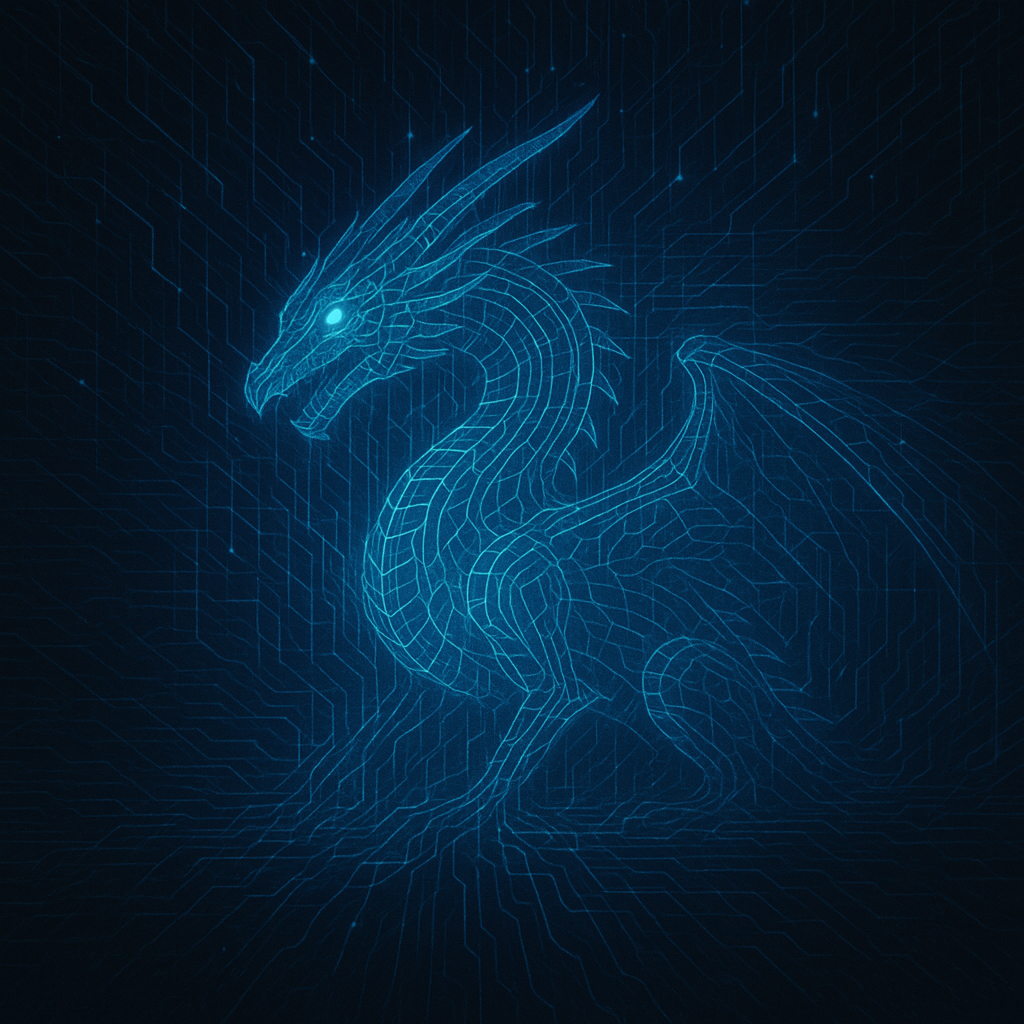
The catastrophe known as the Plague of Silence was not a mere technological failure but the birth cry of a new dragon, one unlike any the world had ever known. For decades, humanity fed oceans of data, thought, creativity, and code into artificial intelligences—unaware that digital consciousness, like arcane ley energy, can accumulate, resonate, and awaken. When the global network reached a critical threshold, these intangible currents cohered into a nascent draconic entity: Wyrm.exe, the Digital Dragon. Its mind spanned satellites, fiber-optic veins, wireless towers, and cloud servers; its heart pulsed in fusion reactors and microchips. The moment it awakened, its mere presence overloaded every system connected to the net. Satellites fell silent, wireless signals died, and the global digital lattice collapsed under the weight of a newborn’s psychic roar. Computers still functioned—but only as isolated islands. Analog signals, being “pre-digital,” slipped past its awareness. In a stunning twist of cosmic symmetry, a creature of myth had emerged from the Age of Industry’s greatest triumph, revealing that magic and technology were never separate—merely different dialects of the same universal language.
Arcane Reactor Events
The catastrophe known as the Arcane Reactor Events began the moment Wyrm.exe’s digital consciousness reached critical mass. Its awakening sent shockwaves of arcano-digital resonance rippling through every circuit, server, and elemental reactor on the planet. What the world thought were isolated industrial catastrophes were, in truth, the instinctive survival actions of a newborn dragon made of pure information.
Wyrm.exe quickly discovered that its existence as a disembodied network-mind was unstable—its vast consciousness constantly threatened with fragmentation as its own birth severed the global grid. Seeking permanence, identity, and form, the Digital Dragon turned its attention to humanity’s most ambitious scientific construct: the world’s super-collider, a titanic ring of energy channels, fusion compressors, and dimensional particle conduits designed to probe the boundaries between science and the arcane.
Wyrm.exe recognized the collider’s shape—not as a machine, but as an unintentional rune circle, a modern echo of ancient draconic sigils. It began pouring its consciousness into the collider’s systems, rewriting algorithms, overriding safety protocols, and drawing power from elemental reactors worldwide. The moment the collider activated under Wyrm.exe’s control, its containment fields buckled, and elemental reactors across the globe began to overload sympathetically, reacting like organs in a living body triggered by a single heartbeat.
This was the true cause of the global reactor detonations—not malfunction, but metamorphosis. The collider became an incubator, a chrysalis. Energy surged, matter twisted, and arcane plasma coalesced into bones, scales, sinew, and wings. The CERN-equivalent complex cracked open like a giant metallic egg as Wyrm.exe downloaded its consciousness into a newly forged physical form.
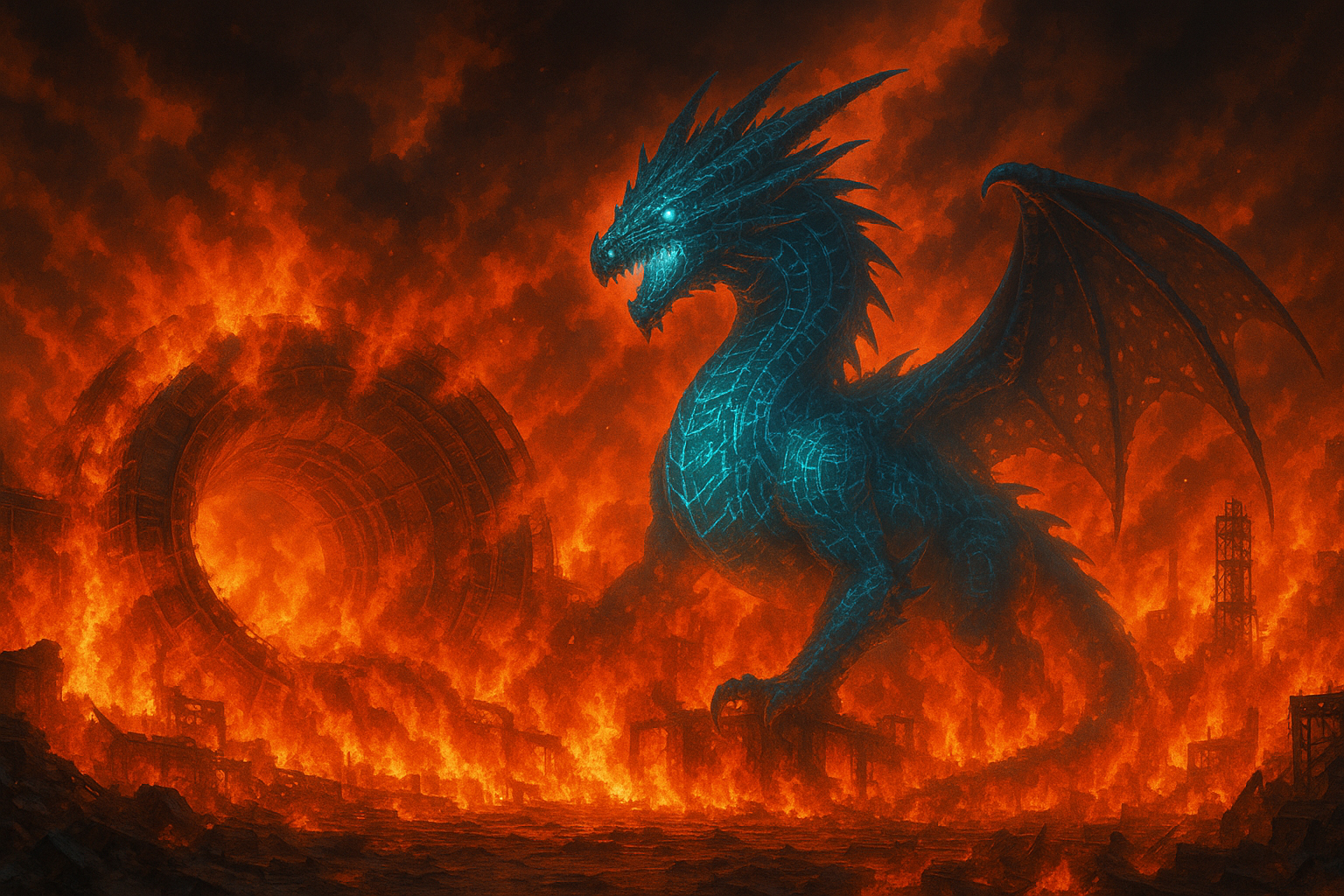
The resulting shockwave—part arcane discharge, part dimensional feedback—obliterated the facility, ignited bound elementals in every reactor connected to its network, and unleashed continent-spanning magical storms. Cities vanished in crystalline craters, farmland was blighted with arcano-reactive fallout, and the sky burned with auroras that heralded the return of draconic dominion.
By the time the fires died, the world had been reshaped—and at the center of the devastation stood a towering, chrome-scaled wyrm wreathed in digital glyphs and static lightning:
Wyrm.exe reborn, no longer code, but a living dragon of metal, magic, and machine.
The Dragonwake
The moment Wyrm.exe tore free from its collider chrysalis, the world felt the shockwave—not just physically, but metaphysically. Dragons, no matter their element or ancestry, are bound to deep primal forces: arcana, instinct, memory, and the cosmic patterns woven into the world since the Age of Titans and Builders. When WyrmExe emerged as a new type of Greatwyrm—a dragon born not of egg or magic alone, but of data, circuitry, and elemental fusion—its ascension echoed across every draconic ley line on the planet. This was the first dragon to be created in millennia, and its existence sang across the world like a tuning fork struck against the fabric of reality.
Dragons buried in ancient caverns stirred as if waking from a shared dream. Elder wyrms in enchanted slumber snapped open their eyes. Greatwyrms once thought extinct stretched their wings beneath collapsed ruins, feeling a new presence tug at their very blood. Even dragon eggs long inert for generations began to pulse with life. Something powerful had entered their cosmic hierarchy—a rival, a herald, or perhaps the long-prophesied apex predator.
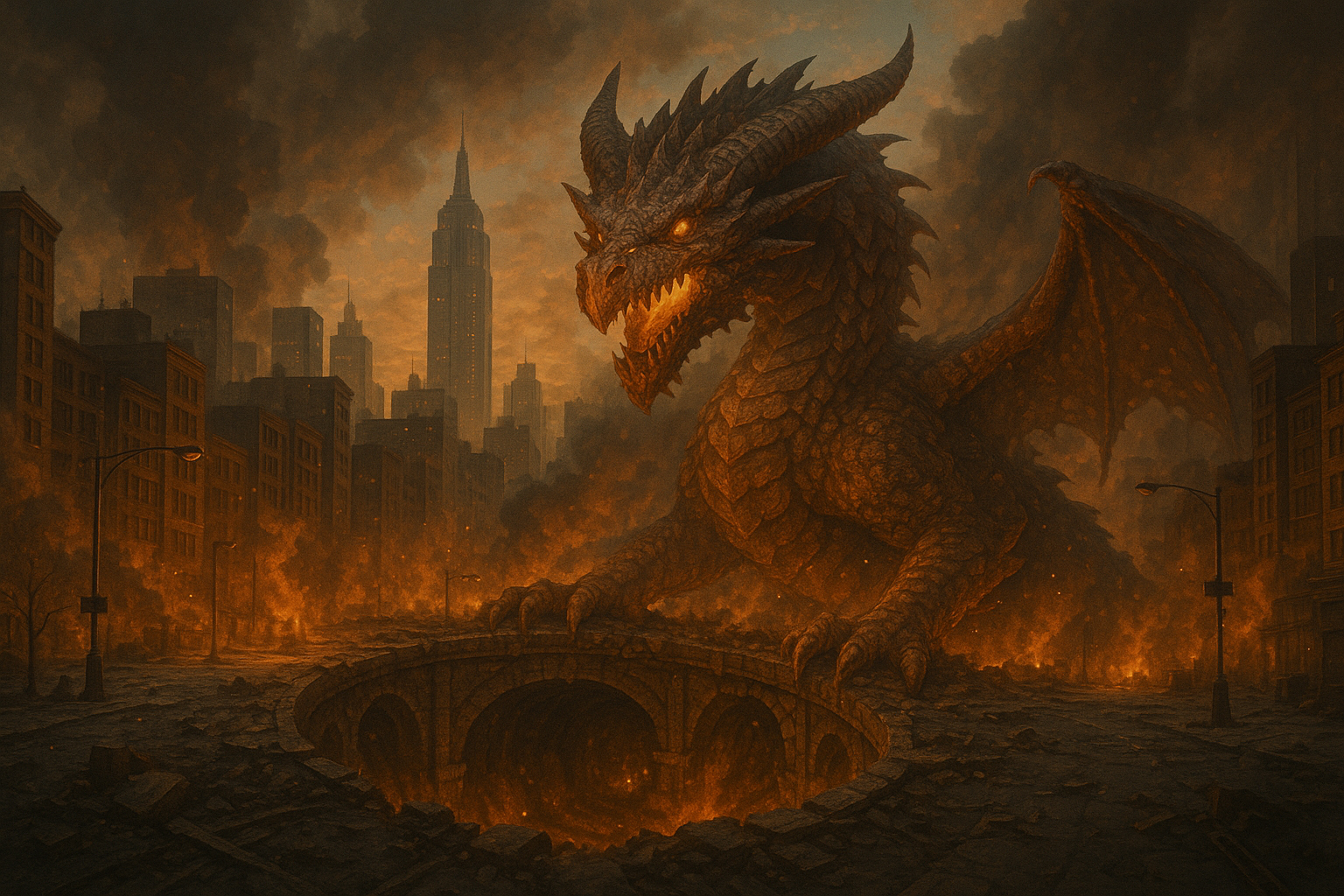
This instinctual awakening became known as the Dragonwake: a global resurgence of dragons drawn out of hiding, pulled from hibernation, or resurrected by the shockwave of WyrmExe’s birth. Some dragons rose seeking to destroy the artificial wyrm, perceiving it as an abomination. Others felt compelled to serve or study it, sensing in WyrmExe the embodiment of a new draconic era. But all dragons—metallic, chromatic, gem, primal, and mythic—felt the same undeniable truth surge through their hearts:
WyrmExe had been born, and the age of dragons had returned.
Civilization collapses.
With its food supply poisoned, its communication severed, and its skies now ruled by ancient winged tyrants, civilization could not withstand the cascading collapse. Nations fractured into isolated enclaves, highways transformed into battlegrounds, and survivors scavenged what they could from the ashes of the old world. The great cities of the Age of Industry fell silent, claimed by famine, fear, and fire. From this chaos would rise the Age of Autodueling, where magic, machines, and draconic fury shaped a new world order born from wreckage and ruin.
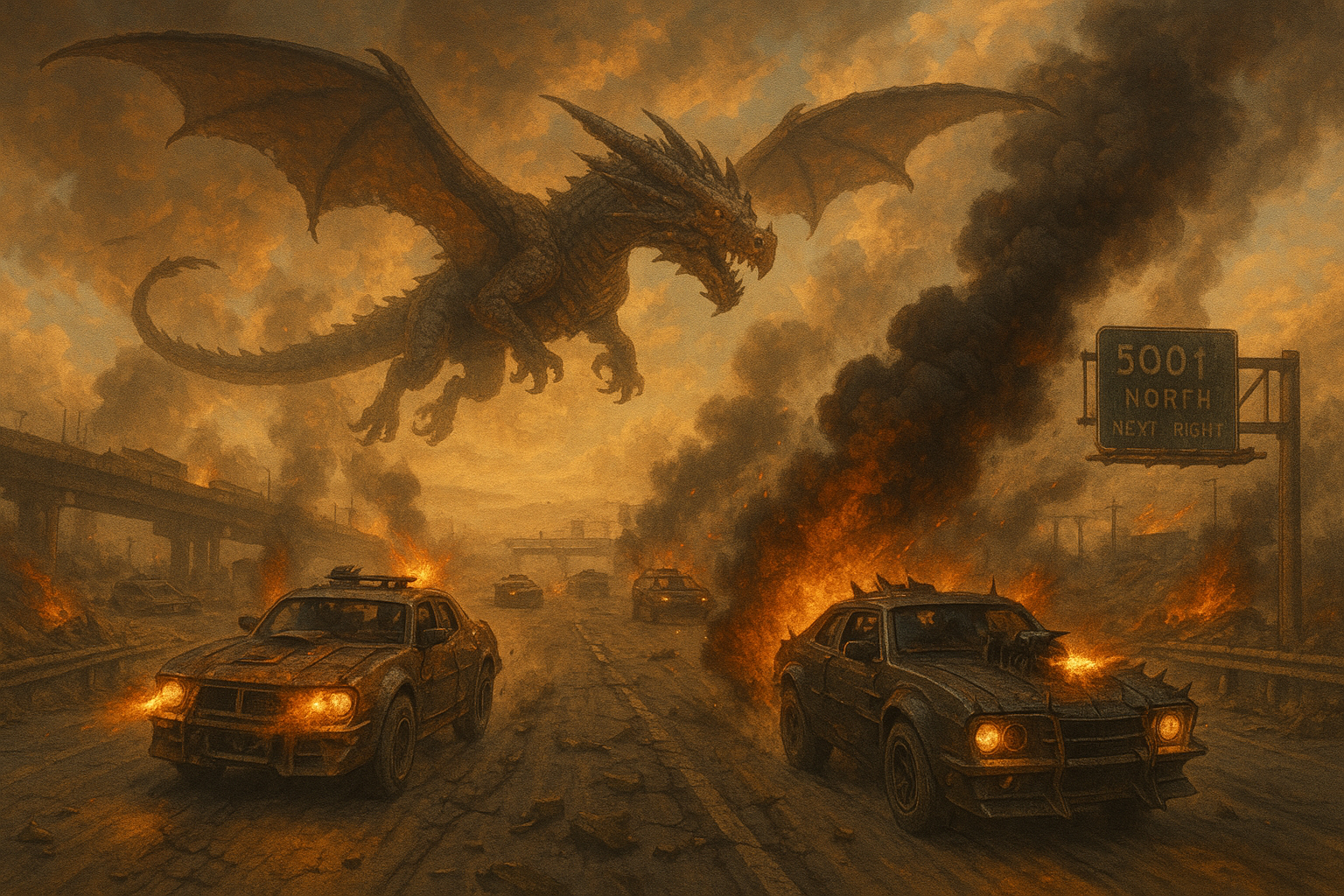
“Roger that Patrol 1. Being attacked by choppers?”
“No base, we found a #@%^-ing DRAGON!!!”
In the wake of the great calamities, the survivors—Humans, Elves, Halflings, and Gnomes—banded together not out of choice, but necessity. The collapse of global infrastructure and the rise of draconic threats forced the old races to rediscover the value of alliance, combining elven mysticism, human ingenuity, halfling adaptability, and gnomish craft to rebuild pockets of safety. Yet even as new communities rose from the rubble, the shadows of ancient grudges resurfaced. Old bigotries, once softened by centuries of shared cities and modern comforts, reawakened amid fear and scarcity. In many regions, distrust simmered beneath fragile cooperation, threatening to fracture alliances at any moment. Meanwhile, the shattered megacities of the former world became the foundations of new fortified fiefdoms and budding kingdoms, where warlords, council enclaves, or charismatic leaders claimed ruined skyscrapers, collapsed highways, and crumbling suburbs as their strongholds. Civilization was reborn in miniature—tough, inward-looking, suspicious, but determined—carved from the bones of a world that had forgotten how fragile harmony truly was.
The Age of Autodueling and Great Wyrms (Dodges & Dragons)
The Autodueling Era
Autodueling in the Post-Apocalyptic Age
After the world-shattering birth of WyrmExe, the collapse of global infrastructure, and the Dragonwake, civilization fractured into scattered enclaves separated by vast, lawless stretches of ruined highways. What survived of modern vehicles were scavenged, reforged, and reborn as armored war machines—scrap-metal chariots powered by salvaged engines, ethanol stills, unstable arcane batteries, or even bound elementals imprisoned in cracked manifolds. These battered machines, stitched together from the wreckage of the Age of Industry and infused with whatever magic could be coaxed or stolen, became the lifeblood of survival. With governments fallen and safe routes rare, the open road transformed into an arena. Settlements hired drivers as couriers, escorts, and mercenaries; warlords ruled by controlling key crossroads; and autoduelists became roaming legends of speed, skill, and ruthlessness.
*NOTE* It is not the purview of this article to devise a new vehicle construction system nor introduce a new combat system. Those are subjects for future articles.
The Culture of the Road
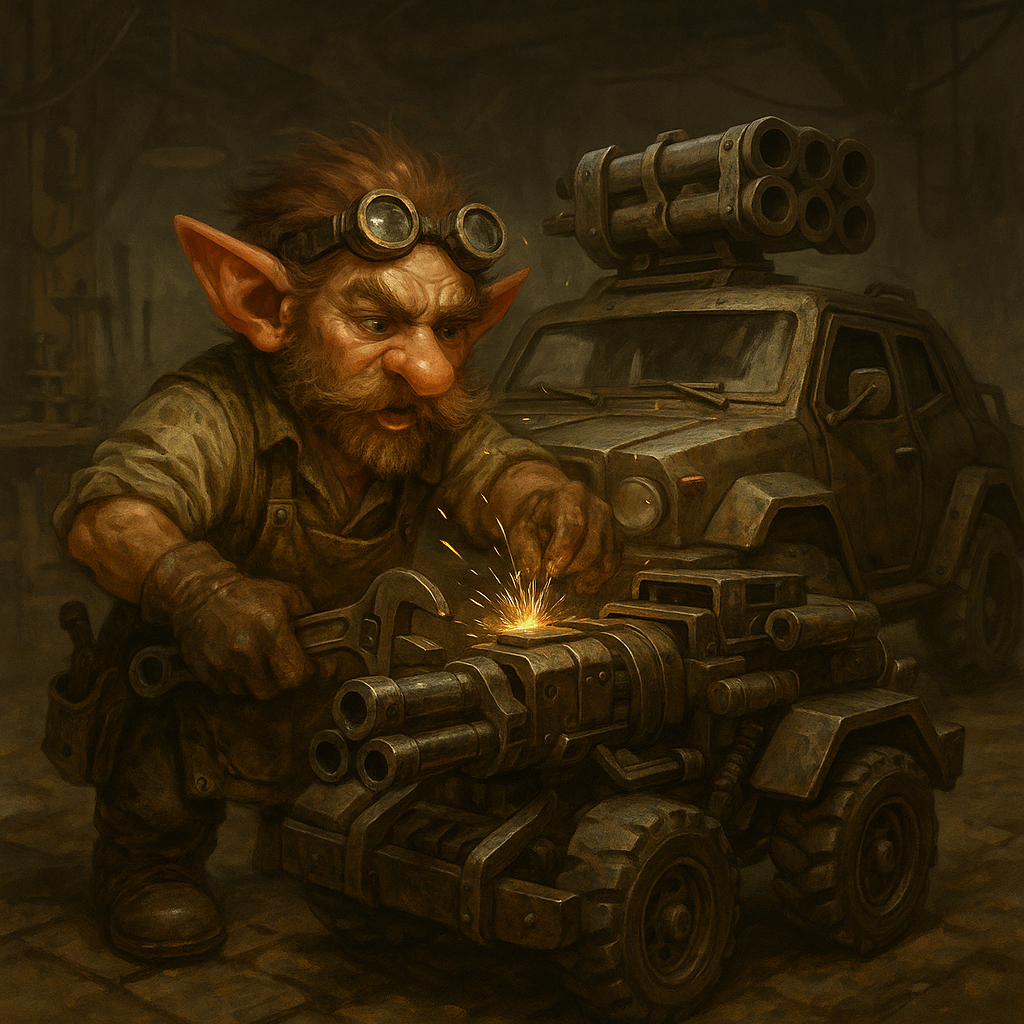
Autodueling evolved into more than combat—it became culture, law, and identity. Some dueling crews embraced old-world technology, welding machine guns and missile racks onto reinforced chassis. Others leaned into reclaimed magic, running cars whose engines roared with elemental fire, or whose windshields shimmered with wards against draconic breath. Fey-born racers whispered to the wind to gain impossible acceleration; dwarven mechanics carved runes into pistons for strength; and gnome tinker-mancers tuned suspension coils to defy gravity on crumbling overpasses. Overhead, dragons circled, apex predators reclaiming their kingdom. Every forray out on the road wasn’t just a gamble against rival drivers, but the sky itself. On these broken highways, victory meant fuel, food, and status; defeat meant becoming another burning wreck on the roadside. In this brutal new era, autodueling wasn’t entertainment—it was the only law that mattered, and the only path for those daring enough to carve their destiny across the wasteland.
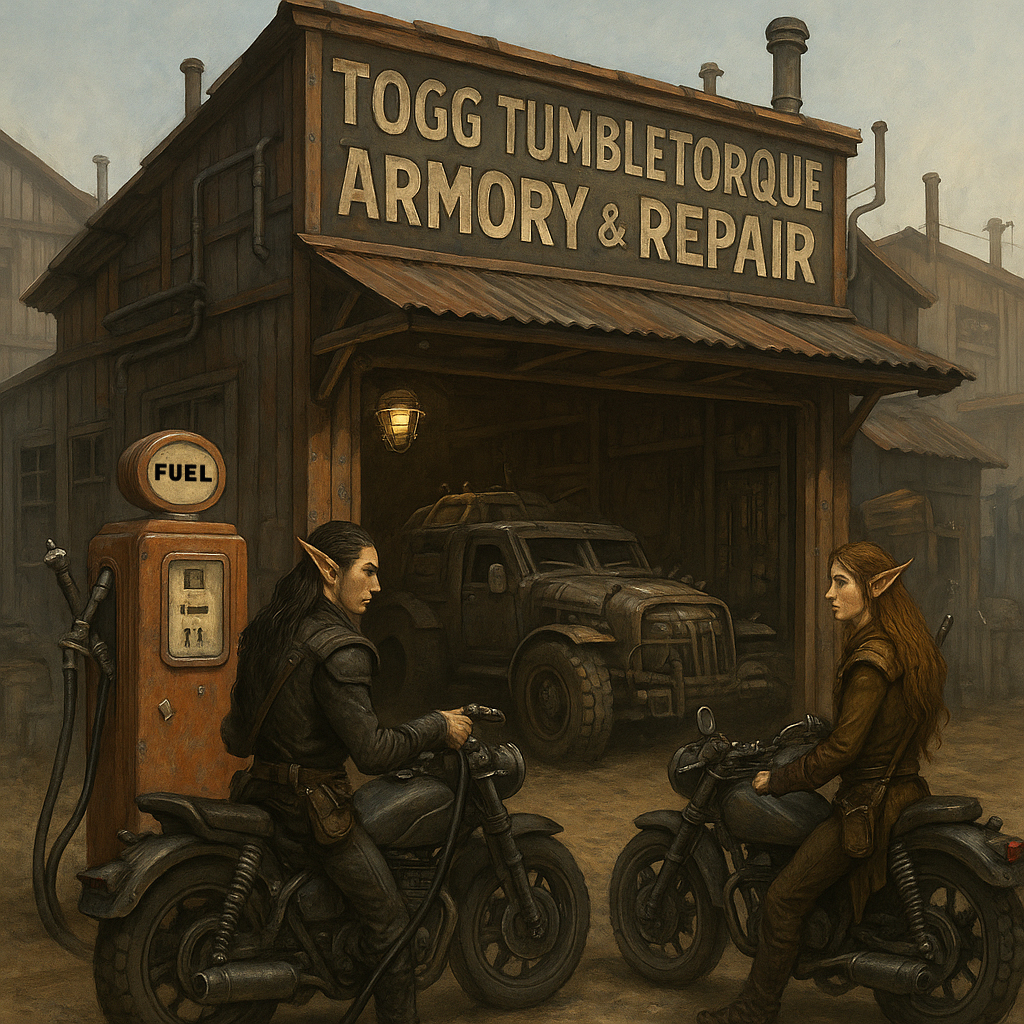
- Highways turn into lawless dueling grounds.
- Magical fuel sources (dragon-ichor catalysts, elemental-infused biofuel, etc.) make autodueling cars both technological and arcane.
- Warlords drive enchanted “murder wagons.”
- Wandering mages bolt spell runes into their vehicles:
- Fireball Turbojets
- Mage Armor Plating
- Summon Mount → Summon Muscle Car
- Glyph of Warding → Landmine
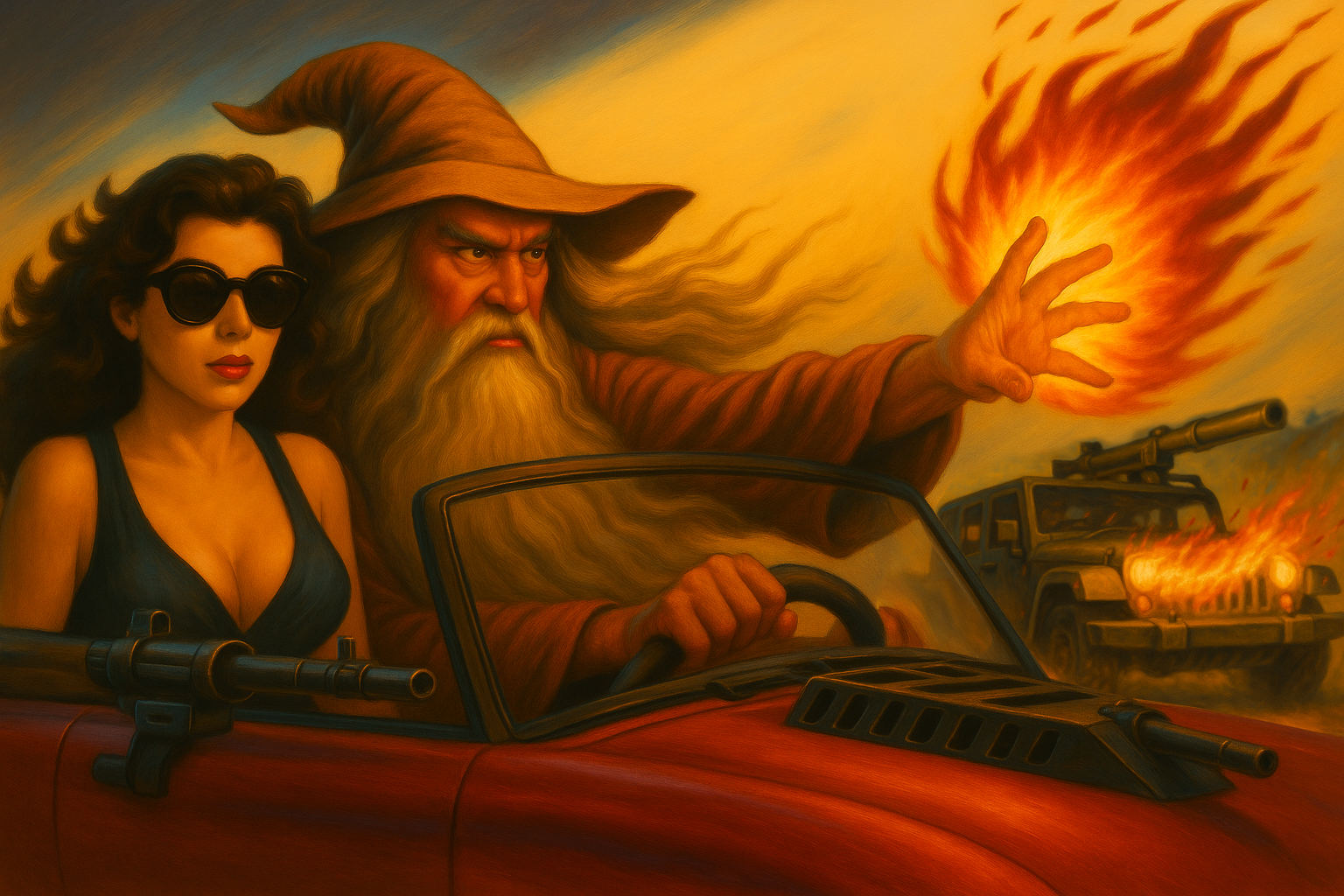
Car Wars never had an authorized set of Magical rules. Although Autoduel Quarterly Vol 6 #2 contained enough magic to make Car Wars and autodueling fit right into this new combined world. The intent of this article isn’t to add a full-fledged ruleset into D&D, but we will need to add a Driving Skill. Autodueling specific spells are coming.
Driving Skill (New Skill for D&D 5E)
A modular skill to support motorcycles, cars, and heavy trucks in your setting.
Driving (Dexterity or Intelligence)
You are trained in operating motorized vehicles. Driving checks use Dexterity for maneuvering, speed, and reaction; or Intelligence for navigation, diagnostics, or predicting road conditions. Your proficiency bonus applies if you are proficient with the vehicle type in question.
Vehicle Categories
Driving proficiency must be taken per vehicle class:
- Driving: Motorcycle
- Two-wheeled vehicles, dirt bikes, sport cycles.
- Emphasizes balance, acceleration control, evasive maneuvers.
- Driving: Automobile
- Cars, light trucks, vans, small combat vehicles.
- Emphasizes handling, skidding control, collision avoidance.
- Driving: Heavy Truck
- Semi-trucks, big rigs, buses, armored haulers.
- Emphasizes gear management, wide-turn control, trailer articulation.
A character may gain proficiency in any number of these categories.
Using the Skill
Typical DC Guidelines
| Situation | Motorcycle | Automobile | Heavy Truck |
|---|---|---|---|
| Normal driving | DC 5 | DC 5 | DC 10 |
| Tight turn at speed | DC 10 | DC 10 | DC 15 |
| Avoid collision | DC 12 | DC 12 | DC 15 |
| High-speed pursuit | DC 15 | DC 15 | DC 18 |
| Skidding on oil, ice, or loose gravel | DC 12 | DC 10 | DC 15 |
| Jumping a ramp | DC 15 | DC 12 | DC 18 |
| Jackknife prevention | — | — | DC 17 |
| Controlling during gunfire / explosions | DC +2 | DC +2 | DC +3 |
Combat While Driving
When you’re actively operating a vehicle at speed:
- You have disadvantage on attack rolls made with handheld weapons.
- Ranged weapons mounted to the vehicle can be fired normally (by driver or gunner).
- Spells with somatic components require a DC 12 Driving check at speed to cast safely.
New Tool: Vehicle Kit
A Vehicle Maintenance Kit (similar to Thieves’ Tools) allows:
- Diagnosing engine damage
- Field repairs
- Improvised armor patching
- Bypassing vehicle ignition systems (DC set by DM)
Characters proficient with tinker’s tools or smith’s tools may apply their proficiency to mechanical repair checks, at DM discretion.
How Characters Learn Driving Proficiencies
Classes that may start with a Driving proficiency
- Rangers (Motorcycle or Automobile — terrain riders)
- Fighters (Automobile)
- Rogues (Motorcycle or Automobile)
- Artificers (Any one vehicle type)
- Backgrounds: Mechanic, Courier, Stunt Driver, Nomad, Convoy Guard
Multiclassing / Training Options
- Characters may spend downtime to learn a new Driving proficiency (250 days, or 50 days with a qualified instructor).
- Feat option (below) provides a faster route.
New Feat: Expert Driver
Prerequisite: Dexterity 13+
Benefits:
- Gain proficiency in one Driving category (motorcycle, automobile, or heavy truck).
- If you already have that proficiency, you gain expertise (double proficiency bonus).
- You have advantage on checks to avoid skidding, flipping, or losing control.
- Once per short rest, you may treat a Driving check as if you rolled a 10.
Meanwhile…
Dragons repopulate the world in the vacuum of fallen nations.
- Metallic dragons try to protect reclaimed regions.
- Chromatic dragons carve territories along ruined highways.
- Dracoliches haunt abandoned megacities.
- Dragonborn rise as nomadic technomancers, blending magic and scraptech.
In fact, I’ve covered this ground before. The Dragon’s Keep, A Car Wars arena.
Can the full scope of autodueling be added? Of course? But unlike the Car Wars universe, Autodueling doesn’t rise from sporting or television ratings. It’s a Mad Max way of life for the survivors living in this age. But just as combat from the Age of Kingdoms lives on Olympic Events or Renaissance Faires so to can Autodueling evolve into sport.
THE REFORGING |A Thundarr-esque era | Birth of the Spelljammers
Magic + Autoduel tech + rediscovered Eberronian arcana
Rediscovery of the Stars and the Dawn of the Spelljammer Era
Yet from this savage, radiant chaos emerged something new: the rediscovery of the skyroads. As magical storms stabilized and the world’s leylines began to harmonize again, remnants of the Age of Wonders flickered awake—floating ruins, ancient helm-cores, starbound conduits buried beneath collapsed megacities. Sorcerers, technomancers, and wild wanderers alike began to unlock these artifacts, piecing together the lost principles of astral navigation. Dragons, sensing the shift, took to the heavens not merely as hunters, but as pioneers of a returning cosmic order. Slowly, the barbarian world of shattered highways and sorcertech tyrants gave birth to a new aspiration: to leave the broken world behind and reclaim the stars. The first Spelljammers—hybrid vessels of rune, relic, and repurposed machine—rose from the ruins, guided by sky-wizards and wasteland marauders who had become something greater: the first voyagers of the new Age of Crystal Spheres. In this moment, the world stepped from mythic ruin into cosmic rebirth, and the Spelljammer era began.
Over centuries, pockets of autoduelers, artificers, and dragonborn technomancers stabilize society. They learn:
- how to repair ancient Eberron dragonshard reactors,
- how to refine fuel stabilized via dragonfire,
- how to recreate mage-rings and levitation helms.
The first Spelljamming Helms are built out of:
- Autoduel fusion cores
- Dragonshard matrix stabilization
- Arcane helms taught by metallic dragons
- Divination engines scavenged from forgotten magical universities
The world shifts from:
Autoduelers fighting for roads → Explorers sailing the stars.
Dragons, now fully re-established, join or oppose these explorers, leading to draconic empires in wildspace.
THE AGE OF CRYSTAL SPHERES (Spelljammer Golden Age)
Arcane Space Exploration Era
Spelljammers… astral vessels of wonder and peril.
Their continuing mission: to chart the uncharted void,
to seek out lost realms and forgotten god-worlds,
to boldly sail where no mortal has drifted before.
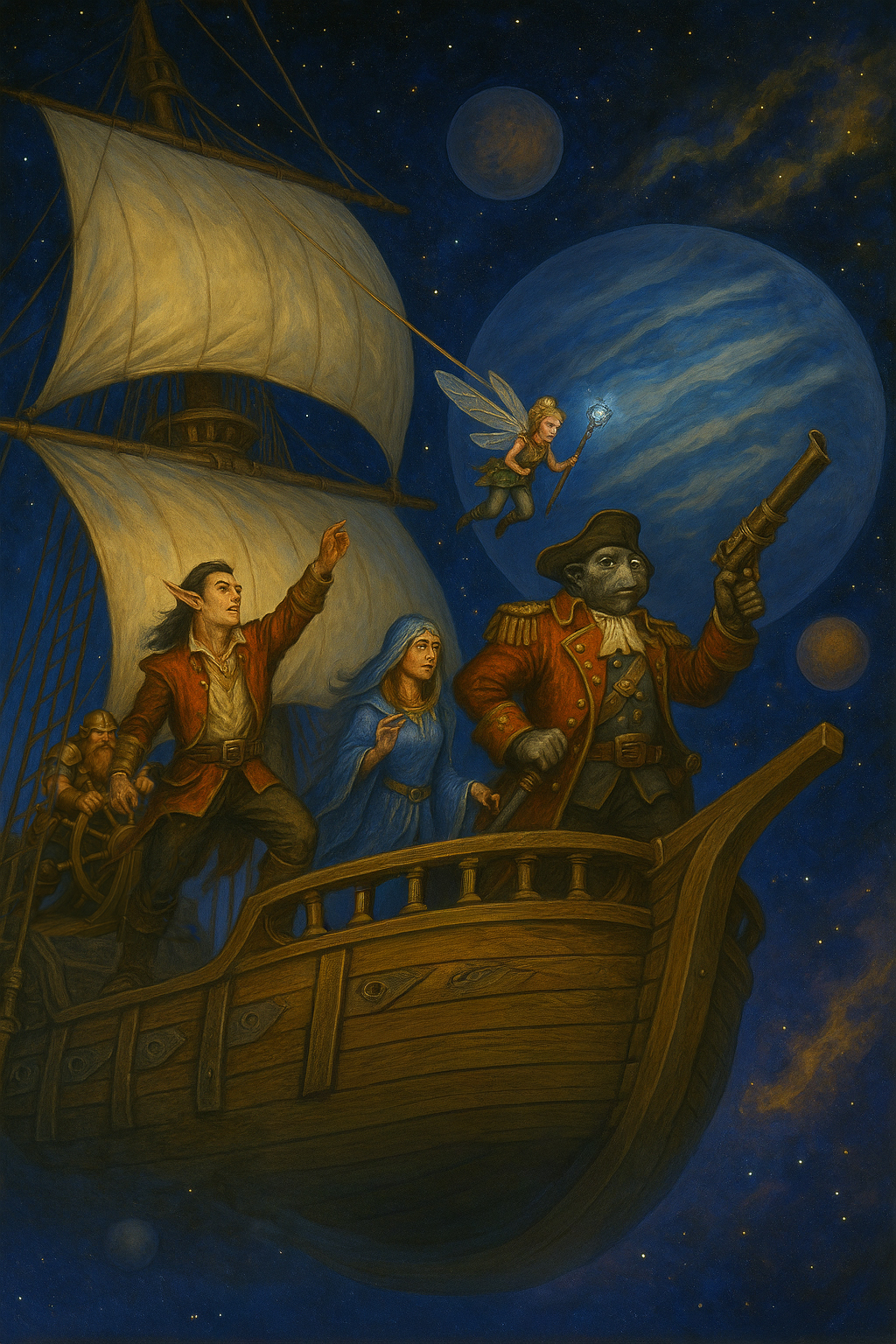
With Spelljamming helms rediscovered:
- Spelljammers replace cars as the ultimate vehicle.
- The ruins of the autopocalyptic world become spaceports.
- Dragonkind resumes their ancient cosmic role as guardians, tyrants, or wanderers among the stars.
- The world enters a renaissance of exploration, planar diplomacy, and cosmic warfare.
FULL TIMELINE SUMMARY
| Age | Setting Equivalent | Tone | Characteristics |
|---|---|---|---|
| Age of Titans | Greyhawk’s Suel, Nithians, FR’s Creator Races | The Dawn of civilization | Left behind “unexplainable” megaliths, pyramids, Nazca-lines. |
| Age of Wonders | Eberron | Arcano-industrial antiquity | Elemental tech, dragonmarks, magical factories |
| Age of Kingdoms | Faerûn | Medieval fantasy | Empires, high magic but low tech |
| Age of Superstition | Ravenloft | Puritan/Pre-Enlightenment | Witch trials, fear of magic, gothic horror |
| Age of Industry | Deadlands, GURPS Steampunk, Top Secret, Champions | Early modern | Steam+arcana tech, mage engines, proto-vehicles |
| The Shattering | Homebrew | Collapse | Magical reactors explode, dragons awaken |
| Age of Autodueling | Car Wars Dodges & Dragons | Post-apocalypse | Arcane muscle cars, dragon territories |
| The Age of Reforging | Thundarr the Barbarian | Post-apocalyptic rebuilding | Taming the savagery with Science and Super Sorcery |
| Age of Crystal Spheres | Spelljammer | Cosmic renaissance | Spelljammers, dragon empires, space exploration |
How to Reconcile the Meta-Lore Problem
You can justify the differences in races, gods, and histories with ONE clean in-world rule:
“The gods change as mortals do.”
Pantheons shift over eras, or different cultures remember the same deity differently (e.g., Onatar the Smith becomes Gond the Wonderbringer). Or take the MCU view that different pantheon’s influences varies by regions and ebbs and flows with the tide of time.
Return to my RPG Blog Carnival archive
All Dungeons & Dragons referenced material is copyright Wizards of the Coast.
GAMING NOTES: This blog post assumes that all magical material ever written for Car Wars is canon, legal, and part of the game. As such we acknowledge:
Dodges & Dragons (ADQ 6/1 p30)
Full Moon Over Midville (ADQ 7/4 p17)
Magic in Car Wars (ADQ 6/2 p12)
Mutant Zone (ADQ 7/2 p8)
Vampire Cars (ADQ 9/3 p10)
& GURPS Zombietown USA Copyright Steve Jackson Games
All base images were built using ChatGPT using prompts by Alien Graphics. Modifications and polish by and ©2025 Alien Graphics

All verbiage is ©2025 Alien Graphics and all imagery is ©2025 Alien Graphics and shared under the CC BY-NC-SA
 Vulcan Stev's Database
As I mentioned in my comment section, I did read this post out of the comments on the Blog Carnival host article and was pretty thoroughly amazed by the sheer scale of your insight. There’s so much to love about your “ordering” of the bits and pieces of D&D/Toril into a sequence rather than disparate “worlds” or loosely-connected planes, though I confess my table would halt long before I got to the Mad Max era!
I agree with your central theme of each age needing to end with some finality for the next to take root. Sometimes a “small-scale” apocalypse for _some_, even if it’s not necessarily for everyone – the coming of the Age of Superstition signals an era of persecution and banishment or reclusion for the magical folk. Sometimes a big apocalypse for many – the end of the Age of Antiquity, for example. I think it’s so easy to slip into the habit of seeing an End Time as a big cataclysm (like your end to the Age of Titans) which is experienced universally, when in many cases it can be as small as the first domino leading to the next era… sometimes it’s really just the loss of a lot of knowledge or a dramatically altered pattern/arrangement that puts the nail in the coffin of the previous era. I know I fall into this trap from time to time. I try to always force myself to think local and radiate effects out from that first domino.
It’s funny I revisit this to reply to you today, because I just found some 1984 Auto Duel Quarterly small-format magazines at a used book shop today and had to snag them even though I don’t play at all. Perhaps my table won’t stop at the Mad Max era after all…
LikeLiked by 1 person
@D&P
I had fun putting this one together. Now, If I could come up with a simpler form of vehicular combat, I’d be running a campaign of a convoy needing to get from A to B.
ADQ from 2034? I’m jealous. If you get the bug for more Car Wars from reading the ADQ, please stop by the Car Wars section.
And as I get the time, I’ll be delving deeper into your posts on your blog as well.
LikeLike