Errant at Errant Thinking is hosting the March 2026 RPG Blog Carnival – Tiny Epics: Small Souls in a Big World! Now I could sit back this month and post links to the cute furry little creatures I’ve homebrewed for various campaigns, like the Firefly Cherub, Lurklets, or the Rotorhawk, but where’s the fun in that? The carnival is about doing something new, not rehashing what’s already been posted.
What to do, what to do, what to do… This suggestion jumped out at me. Creations: Unique little critters to serve as interesting allies or enemies, regardless of the player character’s size!
I was immediately brought back to fourth grade (mid 70s if you’re wondering). Mrs. Little (actually her name not a pseudonym for the article) introduced me to a series of books by English author, Mary Norton, The Borrowers (not to be confused with the American book series and animated series The Littles.) I loved the idea of tiny people living in the walls of my house.
Both series tell the tales of tiny humanoids who live in the homes of full-sized humans and survive by borrowing those things which go missing in our everyday lives; a sock from the dryer, your pen, that cookie you SWORE you just put down. I loved The Borrowers books back in the day. But I wondered, what if , what if the Borrowers or the Littles were a playable DnD race?
I present the Borrowkins / Hedranai
Hedranai
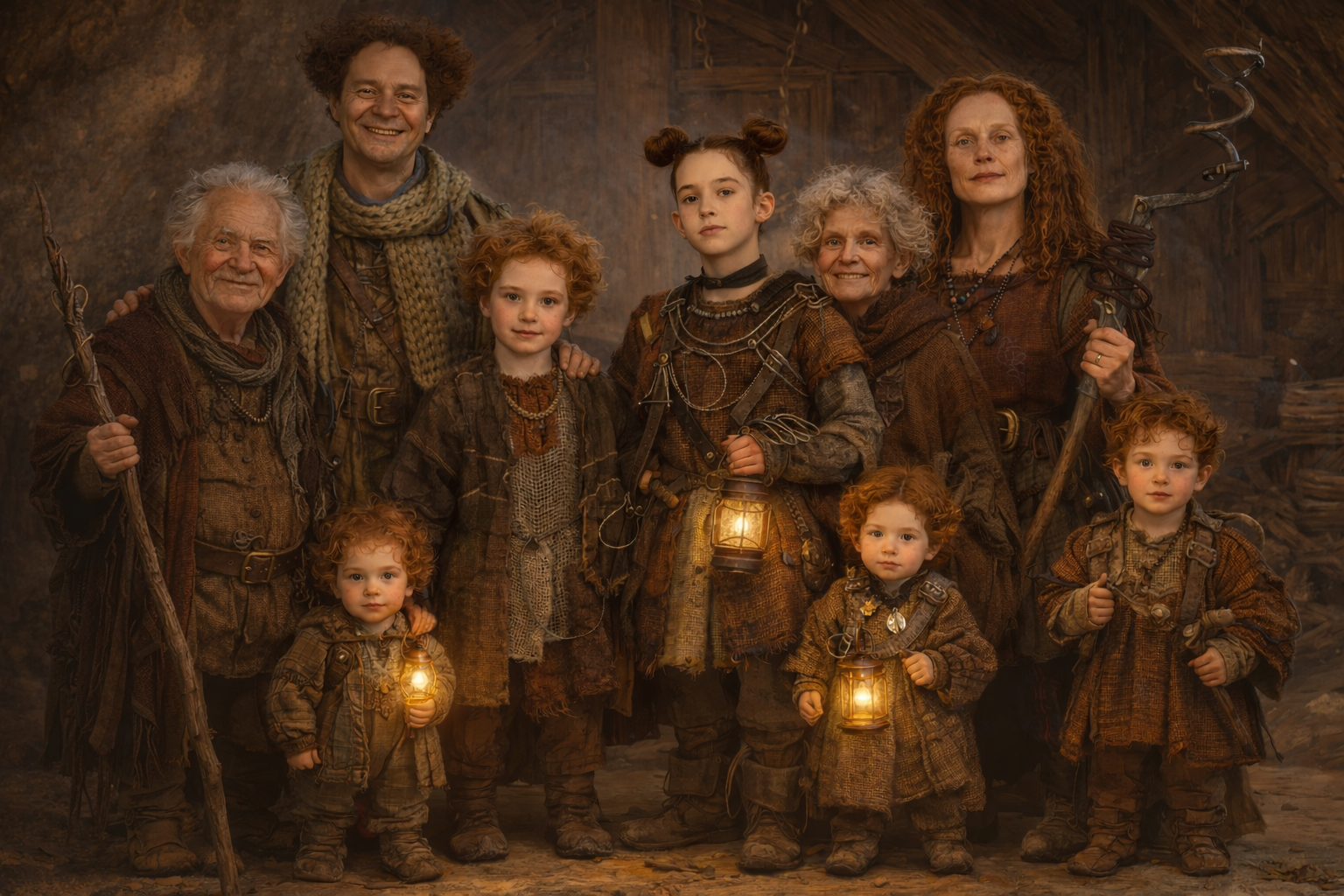
Known to certain learned Largefolk as “Borrowkin,” the Hedranai are a secretive, long-lived Fey people rarely glimpsed and seldom believed. Standing scarcely six inches tall, they bind themselves to structures and landscapes for centuries at a time, preserving, correcting, and—when necessary—quietly undoing what the Largefolk build. They do not define themselves by size. They define themselves by stewardship. They are the Keepers of the Boundary, Hearth or Field
The Hedranai like most fey are believed by most to be mythical. While learned scholars may call them “Borrowkin,” tavern folklore speaks of House Ghosts, Hedge Spirits, or the Tendon Folk—but these are only Largefolk names for something older. The Hedranai are Fey, though not of the reveling Seelie or Unseelie courts nor the bright glades of the Wild or Archfey. The Hedranai may live closer the to Largefolk than most fey but are more secretive than the “wee folk” (Pixies, Sprites, and Fairies). Hedranai are far more comfortable around the Large folk then Centaurs or Satyrs. Hedranai are more bemnevolent than Hags. They are of thresholds and edges; of rafters and roots, of hinges and hedgerows, of clockworks and tree stumps, never far from the Largefolk they depend on for survival.
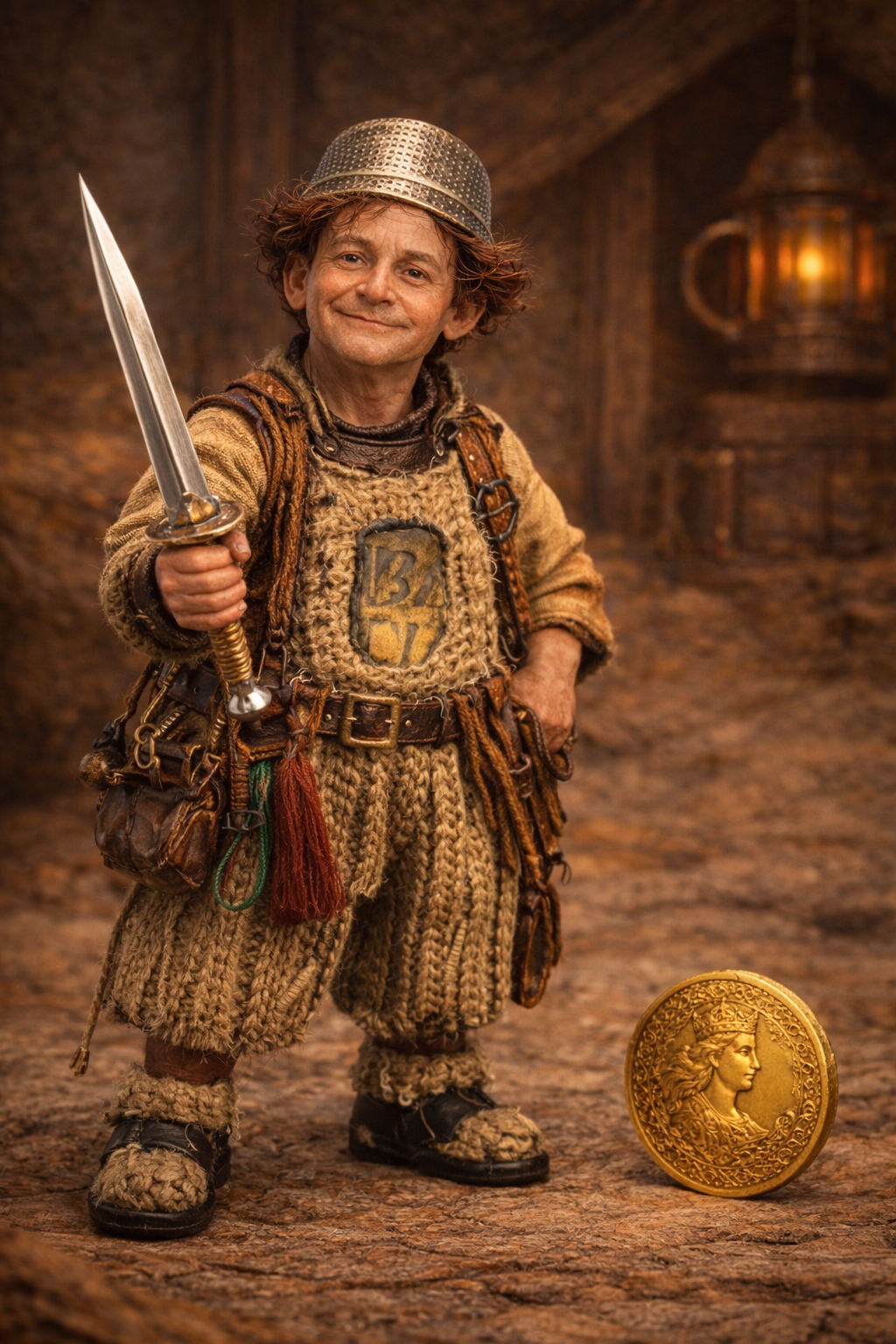
The Hedranai are well known among themselves for their habit of quietly “borrowing” (hence the term “Borrow Kin”) small objects from the Largefolk and giving them new purpose. To the Hedranai, the world of the Largefolk produces an abundance of tiny, easily forgotten things—needles, buttons, bits of wire, scraps of leather, loose coins, broken watch springs, and stray lengths of thread. Such items are often overlooked or discarded by their original owners, yet in Hedranai hands they become valuable resources. A sewing needle may be forged into a rapier, a thimble turned into a helmet, a button shaped into a shield, and a watch spring transformed into a clever mechanical device. This practice is not viewed as theft within Hedranai culture, provided the item is small enough to be carried and its absence would be easily dismissed by the Largefolk as simply misplaced. To the Hedranai, reclaiming forgotten objects and turning them into useful tools is merely another form of stewardship—restoring value to what the larger world has carelessly left behind.
At six inches tall, the Hedranai do not measure themselves by size, nor by dominion, nor by spectacle. They bind themselves to place. A clan of 6 to 10 family units [a typical family unit may consist of one or two elders, Mother, Father, unmarried siblings of either parent and any children under the age of 100] may swear stewardship to a single manor, mill, bridge, windbreak, garden or grove for centuries. They repair beams no mason sees, redirect water no farmer notices, and correct stresses long before collapse. If a structure stands far longer than it should, it may be that Hedranai hands have walked its hidden joints. If your garden produces faithfully year in and year out, the cultivators have favored you.
They are long-lived, maturing as humans do [still considered a child until their first century has passed], but enduring for ten or more human lifetimes. An elder Hedranai may remember the first stone laid in a fortress and the fourth king to abandon it. Their memory is not only spoken but carved, tied, braced, and encoded into the grain of wood and the set of stones. Writing, to them, is a useful but unproven fashion. Ink fades. Wood remembers. Stone never forgets
Hedranai society is clan-bound and lawful by nature. They believe in oath and continuity. Hedranai bind themselves not by blood alone, but by place. Each clan swears stewardship to a structure or region for generations. Every few generations, young Hedranai “Walk the Thread,” traveling their broader region to share knowledge and prevent stagnation before returning—or choosing a new boundary to keep. Those who depart permanently to live among the Largefolk are called Far-Threaded: eccentric, curious, sometimes admired, never entirely understood.
In battle, the Hedranai do not seek to overpower. They undermine; a strap loosens, a rope frays, a tendon is cut at precisely the wrong moment. They are not made for brute force, but rather for leverage.
Their instinctive talent for tinkering is universal; even the youngest Hedranai can fashion springs, snares, and subtle devices from scrap and fiber. To them, craft is not a trade. It is a language of its own. If a Hedranai identifies as a Maker (Artificer) he or she is capable of TRULY wonderous constructions.
Among all beings, dragons alone speak their true name without hesitation. Dragons recognize in the Hedranai something rare: a mind that thinks in centuries. The two races do not consider themselves equals in strength—but they do in perspective. An ancient dragon may seek the counsel of a Hedranai elder who has kept a fortress beam true for four hundred years. A younger dragon will revere the older Hedranai with respect and treat a younger Hedranai as an equal. The Hedranai, in turn, respect a dragon who understands territory as responsibility rather than conquest.
To the Largefolk, the Hedranai remain rumor. To dragons, they are known. To other Fey they are secrets never revealed. To themselves, they are simply the ones who keep the Boundary.
Hedranai Traits
Your Hedranai character has the following traits.
Diminutive Frame: A Hedranai’s small stature affects its combat style. They are not built for brute force.
- Cannot wield weapons with the Heavy property [Note a human Dagger would probably be a Hedranai HEAVY weapon].
- Cannot wield most weapons scaled for Largefolk, (a small human dagger would be a LARGE great sword.)
- When dealing damage with a Strength-based weapon (even if reduced to Hedranai proportions), reduce the weapon’s damage die by one step (d12 → d10 → d8 → d6 → d4 → 1).
- Hedranai have disadvantage on Strength checks and Strength saving throws against creatures Small or larger.
- You have disadvantage on checks to grapple creatures Medium or larger.
- A Hedranai’s carrying capacity is measured in ounces, not pounds. When adventuring, a Hedranai must rely on a pack animal or someone else to carry their portion of the loot.
Precision Anatomical Attack: Because of their diminutive size, Hedranai don’t normally fight a Largefolk. When the do, they are trained to strike where it matters.
Once per turn, when scoring hit a creature larger than them with a finesse or piercing weapon, a Hedranani may deal an extra 1d4 precision damage if one of the following is true:
- You have advantage on the attack roll.
- An ally is within 5 feet of the target.
- The target is prone, restrained, or grappled.
When this precision damage is dealt, the target’s speed is reduced by 10 feet until the start of your next turn. The target has disadvantage on its next opportunity attack before the start of your next turn. A Hedranai has advantage on any Sneak Attack feature. Sneak Attack and Precision Anatomical Attacks will stack where applicable.
Impossible to Pin Down: You have advantage on Dexterity saving throws against effects created by creatures Medium or larger. When a creature larger than you misses you with a melee attack, you can use your reaction to move 5 feet without provoking opportunity attacks.
Hard to Target: When a creature Large or larger makes a ranged attack against you beyond 30 feet, you gain half cover.
Crawlspace Native: You can move through openings as small as 1/2 inch without squeezing. You have advantage on Stealth checks in environments containing furniture, debris, foliage, or urban clutter.
Underfoot: A Hedranai can move through the space of any creature larger than it. Opportunity attacks against a Hedranai are made with disadvantage.
Featherlight: A Hedranai takes no falling damage from falls of 40 feet or less. You treat “unclimbable” vertical surfaces as difficult terrain instead of requiring climbing checks (you move at half speed).
You can cling to a creature larger than you as part of your movement (Athletics or Acrobatics vs their Athletics). While clinging:
- You have advantage on your next attack.
- If they take damage, you must succeed on a DC 10 Dex save or fall.
Inborn Tinkerer: All Hedranai are instinctive engineers. You gain proficiency with Tinker’s Tools.
After a short rest, you may craft one Tiny device from available materials. The device lasts until your next long rest or until you create another. After a long rest, you can craft a device that lasts until destroyed. Unless the Hedranai in question is an artificer, he or she may maintain only one such device at a time.
Examples include:
- Spring Snare: A creature entering a 5-foot space must succeed on a Dexterity saving throw (DC = 8 + your proficiency bonus + your Dexterity modifier) or fall prone.
- Threadline: A nearly invisible 20-foot tripwire (Perception check to detect).
- Latch Jammer: Grants advantage on one check to open, disable, or sabotage a mechanism.
- Whistle Capsule: Emits a piercing tone audible up to 300 feet.
Long Memory: A Hedranai has a cultural proficiency in the History skill. When making a History check concerning a structure, settlement, or battlefield that is more than 50 years old, you treat a roll of 9 or lower on the d20 as a 10 and THEN add any proficiency bonuses. Advantage if the area or structure was previously occupied by other Hedranai clans
Draconic Recognition: Dragons recognize the Hedranai as fellow long-lived stewards of territory. You have advantage on Insight checks when interacting with dragons. A dragon whose alignment is within one step of yours on the alignment chart begins interactions one step less hostile (DM’s discretion).
Some traits vary as to the Clans the Hedranai originate from.
Hearth Hedranai
Hearth clans dwell within structures: walls, rafters, under floorboards; barns, ships, mills, shops and ancient halls. They are:
- Wallwise. – advantage + proficiency bonus on Stealth and Survival checks in constructed environments.
- Domestic Engineer. – may treat furniture as full cover; clutter, and debris as half cover. And can fashion a short rest shelter in 10 minutes from household objects
- Latchcraft. – You gain proficiency in Investigation (Detect Traps) or Sleight of Hand (Lockpicking) [your choice]. And have advantage on any Perception checks within structures.
Hearth Borrowkin are masters of:
- Structural sabotage
- Door latches
- Armor buckles
- Siege rope failures
They are the whispered “house spirits.” Hearth Hedranai while not shunned by other Fey are not treated cordially or with respect.
Field Hedranai
Field clans dwell in hedgerows, roots, hollow trees, gardens, and stone fences close enough Largefolk civilization that predatory animals tend to stay away. Their traits are:
- Grassstep. – You have advantage + proficiency bonus on Stealth checks in natural terrain. You have natural camouflage outdoors and also have advantage on any Perception checks in nature.
- Bramble Runner. – Non-magical difficult terrain caused by plants does not cost you extra movement.
- Beast Whisper. – You gain proficiency in Animal Handling.
Field Borrowkin often:
- Ride mice, rabbits, or squirrels
- Travel with birds
- Sabotage war camps at night
They are the “hedge ghosts.” When encountering other Fey a Field Hedranai are at least treated cordially by other Fey
Creature Type: You are a Fey.
Size: Hedranai are Tiny (5–7 inches tall) and weigh approximately 55-60 grams (2 oz. or double the mass of mouse) For simplicity sake a Hedranai will occupy a 2½-foot space in combat (or 1/4 of a map grid square. You can only benefit from armor and weapons specifically crafted for Hedranai. [*NOTE* Hedranai equipment weighs 1/10 normal.]
Speed: Your walking speed is 25 feet. You have a climbing speed equal to your walking speed and a swim speed of 10 feet.
Age: Hedranai mature at roughly the same rate as humans, reaching adulthood around 16–18 years of age. However, they commonly live 500 to 700 years, and elders may exceed 1,000 years. They do not appear visibly elderly in the way humans do. Instead, age shows in; Silvered hair, Slower but more deliberate movements, Obsessive craftsmanship, and a Deep memory of “The Largefolk’s” repeating mistakes
Hedranai think in generations. To a Borrowkin; a human war is a storm, a human dynasty is a season, a ruined manor may be a 200-year project. They are patient. Because they live centuries, a Borrowkin might spend 40 years perfecting a grappling spring design. Spending 80 years mapping a castle’s internal beams is a worthwhile project. 120 years refining a clan trap system is time well spent.
Hedranai are slow to trust. A 300-year-old Borrowkin has seen; promises made and promises broken. He has seen “Good kings,” “Better kings,” and “Worst kings” An adventuring Hedranai may be traveling with the third generation of his chosen group. They don’t panic. They observe. A Hedranai may only reveal themselves to a new party one adventurer at a time and cautiously.
A 700-year-old Borrowkin is not frail, they are experienced. Age shows not as frailty but as refinement.
Alignment:
Hedranai culture strongly values oath, stewardship, and generational memory. Most Hedranai are Lawful, often Lawful Good or Lawful Neutral, though individuals may vary. RARELY a Hedranai clan may adopt the Alignment (into the Chaotic or Evil ranges) of a powerful Largefolk whose structure they inhabit (especially if it’s a dragon).
Borrowkin culture tends strongly toward lawful alignment, with differences depending on the individual. Their worldview is shaped by stewardship, obligation to clan, and the belief that promises and responsibilities can span generations. Hedranai see themselves as quiet keepers of balance, maintaining the integrity of the structures and lands they bind themselves to. To them, chaos is not a form of freedom but a sign of neglect and decay—rot spreading through beams, rust eating at hinges, fire catching in dry rafters, or careless Largefolk trampling through the world without awareness of the smaller lives around them. Rather than seeking upheaval or domination, Borrowkin act to correct imbalance, often through small, precise actions that restore stability before disorder can spread.
However, the Borrowkin concept of being lawful differs greatly from the civic or bureaucratic law followed by Largefolk societies. They have little interest in human tax codes, royal decrees, or the shifting borders of kingdoms. Their laws are older, quieter, and rooted in tradition rather than institutions. A Borrowkin’s duty is defined by simple but enduring principles: protect the hearth, preserve the field, honor the thread that connects generations, remember the past, and pass knowledge forward. These values form a kind of cultural law—an inherited code of stewardship and memory that guides their actions far more strongly than any written rule of kings or courts.
The largely lawful nature of the Borrowkin has an important consequence for how the wider world perceives them: it keeps them hidden and almost mythic. Because they value restraint, stewardship, and continuity, they do not multiply recklessly, swarm cities, or wage visible wars that would draw attention to their presence. Their actions are measured and quiet, carried out with the intention of maintaining balance rather than asserting themselves openly. If the Borrowkin were chaotic as a people, their numbers and activities would quickly reveal them to the Largefolk. Instead, they remain little more than rumor and folklore. The world does not see Borrowkin armies or settlements—it simply wonders why certain ancient bridges never seem to collapse, why some old halls stand far longer than they should, and why small problems sometimes resolve themselves before anyone notices they existed.
Lawful Good Clans
- Protect structures, habitats, and inhabitants alike.
- Sabotage Largefolk tyrants.
- Aid villages unseen.
- VERY Friendly to the Far-Threaded
Lawful Neutral Clans
- Protect the structure or habitat above all.
- If the Largefolk inside are cruel? Not their concern.
- Preservation over morality.
- Cordial and polite to the Far-Threaded
Lawful Evil Clans (rare but terrifying)
- Bind themselves to warlords.
- Sabotage rivals.
- Conduct generational vendettas.
- Engineer collapses.
- Cordial to the Far-Threaded if not involved in a Clan Vendetta though they can be openly hostile to the Adventurer’s party.
Draconic Recognition
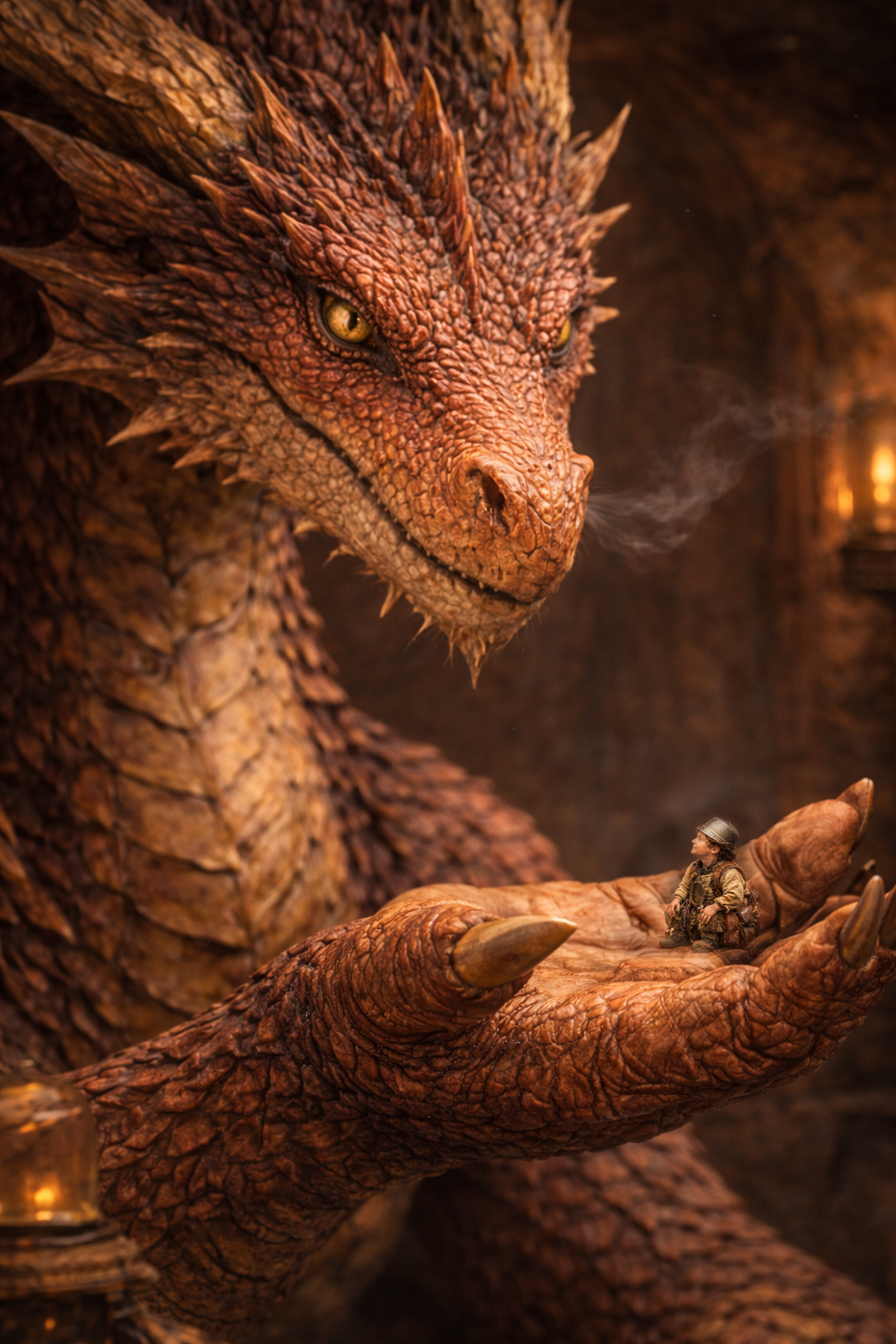
Among all the peoples of the world, only dragons consistently recognize the Hedranai for what they are. While most Largefolk dismiss them as superstition or household spirits, and other fey can downright dismissive of them because of the perceived close associations between Hedranai and humans, dragons see in the Hedranai a rare kindred mind—one that measures time in centuries and understands territory as stewardship rather than conquest. The two races do not consider themselves equal in strength or stature, but they respect one another as intellectual and temporal peers. A dragon knows that a Hedranai elder who has maintained the same hall, bridge, or grove for four hundred years possesses a depth of observation few mortals could match. Likewise, the Hedranai recognize dragons as ancient keepers of domain and memory. Because of this shared perspective, interactions between them are often direct and unusually honest. An elder dragon may seek the counsel of a Hedranai steward regarding the slow changes of a region, while a traveling Hedranai—especially one whose temperament aligns with the dragon’s own—may be treated as a thoughtful guest rather than a curiosity. In a world where most beings measure power in size or force, dragons and the Hedranai instead recognize one another through patience, memory, and the responsibility of guarding a place across generations.
Among the Hedranai and dragons, respect is not measured by matching ages but by the shared capacity to think across centuries. A dragon does not expect a Hedranai to equal its years, nor does a Hedranai measure worth by sheer longevity or acquisitions. Instead, each recognizes the other’s potential for continuity—the ability to observe, remember, and steward a place over time. An ancient dragon might regard a forty-year-old Hedranai as young but already showing the patience and perception that mark a worthy mind, while a five-hundred-year-old Hedranai elder may calmly advise a two-hundred-year-old dragon as one not yet fully settled into the long rhythms of territory and responsibility. There is no insecurity in these exchanges, only perspective shaped by the unhurried march of days.
When an adventuring party encounters the dragon, the dragon may be aloof and dismissive. That is until the dragon notices the Hedranai peering out of the Wizard’s pocket. The dragon will address the Hedranai directly.
Imagine this: Party confronts an ancient dragon, the dragon ignores the fighter, dismisses the wizard, studies the Borrowkin.
Then says, “Ah. Hearthbound. Whose beam do you serve?”
Cultural Identity
Borrowkin culture is built on secrecy, observation, and precision. Living unseen among what they call the Largefolk, they rarely interfere openly in the affairs of the wider world. Instead, they watch carefully, learn patiently, and act only when necessary. To the Borrowkin, large creatures are not enemies to conquer or rivals to defeat; they are forces of nature—powerful, unpredictable, and often unaware of the smaller lives around them. As a result, Borrowkin do not wage wars in the way the Largefolk understand them. When they act, they do so quietly and deliberately, making small adjustments that ripple outward: a strap cut at the right moment, a hinge reinforced before collapse, a rope weakened where it must fail. Where others see conflict, Borrowkin see imbalance, and their actions are not battles but corrections.
Among themselves, Borrowkin rarely come to war at all. The causes that drive most Largefolk conflicts hold little meaning for them. Territory is seldom contested, as clans bind themselves to a single structure or stretch of land for generations. Resources are rarely fought over, for when the Largefolk abandon a place, the Hedranai typically move on as well. Nor do ideological divisions fracture their society; while individual clans may differ in temperament, nearly all Borrowkin acknowledge the same underlying Creative Force that shapes the world. As a result, disagreements may arise, but they are resolved through patience, counsel, and time rather than battle.
Among the Hedranai, the concept of “borrowing” from the Largefolk carries little of the moral weight that theft does in Largefolk societies. To them, the vast world of the Largefolk produces an endless excess of small objects—pins, threads, scraps of cloth, bits of wire—items so easily misplaced that their disappearance is rarely noticed. Hedranai tradition permits taking only what one can personally carry and only what could plausibly be dismissed by the Largefolk as merely lost rather than stolen. This practice is not viewed as dishonest but as practical stewardship of overlooked resources. Within a Hedranai clan the rule is restraint and discretion, but among those who walk the Far Thread and adventure alongside Largefolk companions, borrowing for the good of the group is often seen as a worthy virtue. A well-placed needle, button, or coil of thread can mean the difference between failure and survival, and to the Hedranai, putting forgotten things to useful purpose is simply another form of keeping the balance of the world.
They view large creatures the way we view weather: Unstoppable. Dangerous. Not malicious — just unaware.
All Borrowkin are makers. They are not grand artificers in the arcane academy sense —
but practical engineers of the overlooked (though a Hedranai with some study would make a GREAT Artificer). They don’t forge swords. They turn: pins into rapiers, needles into swords, thimbles into helms, watch springs into torsion traps, thread into grappling line, and forgotten garbage into wondrous creations (stepping out of universe think of the Professor’s abilities on Gilligan’s Island)
Tinkering is not a profession, it is instinct.
{DM Note *If your PC can imagine it out of available materials it shouldn’t a be a matter of skill but rather time. And it should go without saying, alchemical constructions need an alchemy skill, magical constructions need magical skill*}
Myth Among the Largefolk
Among the Largefolk, the Hedranai are rarely recognized for what they truly are, and even their existence is widely debated. Most common folk regard the so-called “Little People” as no more than folklore, placing them in the same category as will-o’-wisps, fairies or other wandering myths. Across different regions they are known by many names—the Tendon Folk, House Ghosts, Hedge Spirits, Wall Shadows, Underfoot, Hinge Fairies, or even Garden Gnomes—each title reflecting a half-glimpsed encounter or a misunderstood story passed down through generations. Most scholars dismiss such tales outright, while a few eccentric academics devote themselves to studying the scattered reports of the “Borrowing Kin” and structural oddities that might hint at something real. Only dragons consistently recognize the truth. Among dragons, the small stewards of rafters and hedgerows are not myths at all, and they are addressed by their true name: the Hedranai.
Are Hedranai Rare? Perhaps? perhaps not. Hedranai are whispered about, never officially documented and seldom seen. Even an adventuring Hedranai may only reveal themselves to the actual members of the party (maybe not even all of them). Most Commoners do not actually believe the myths. Actual sightings are relegated to drunken nonsense or blamed on rats. With the exception of human or elven children. That “imaginary” friend of a human child might in fact be a Hedranai.
Borrowkin are believed by the common rabble to be:
- Benevolent Spirits of homes
- Manifestations of small injustices
- Protectors of thresholds
- Guardians of “what is overlooked”
Common folklore claims:
- If you lose something small, a Borrowkin has claimed it.
- If your laces are cut in battle, one was near.
- If anyone falls screaming clutching their ankle — you offended one.
- Farmers leave out crumbs “just in case.”
Most scholars dismiss them as:
- Fey tricksters
- House spirits
- Manifestations of guilt
- Divine punishment for hoarding
The “eccentric” Scholars who do believe:
- Debate them endlessly.
- Have no physical specimen.
- Write entire treatises on “The Lesser Folk of Domestic Space.”
Adventurers:
- Might meet exactly one in a lifetime.
- Might never see one — only the results.
Memory Traditions and Keeping of History
The Hedranai preserve their history through several intertwined traditions, each reflecting their deep trust in enduring materials and living memory. Among Hearth clans, important events and lineage records are often carved discreetly into wood or stone within the very structures they maintain, while Hedge clans encode similar knowledge in natural features such as roots, standing stones, or hidden marks in the landscape. These subtle carvings are sometimes cited by eccentric scholars as the only tangible evidence that the Hedranai truly exist. Other knowledge is preserved through intricate knotwork patterns that encode information, as well as through carefully maintained oral recitations of clan lineage and history passed down through generations. Written records do exist in the form of tiny micro-ledgers, though many elders still regard writing as a relatively recent and somewhat unreliable fashion. As the Hedranai proverb reminds their younger kin: ink may fade, but wood and stone remember.
Borrowkin clans remember every burned house. They remember every war camp trampled through their fields. They remember which human lineages were kind. They remember which ones were careless.
The oldest and most trusted method by which the Borrowkin preserve their history is through what they call structural memory. Rather than relying solely on written records, they encode knowledge directly into the structures and mechanisms they maintain. Hidden carvings inside beams, carefully tied knot sequences in thread, patterned bracing in rafters, distinctive gear ratios in long-running devices, and even the placement of support pegs can all serve as deliberate markers of memory. To an experienced Hedranai elder, these signs read like a living archive; by studying a single joint or brace they can tell who repaired it, what winter first cracked it, or which distant war caused it to shift. In this way their craft becomes a language and their architecture a record of generations. To the Borrowkin, writing is merely convenient and temporary—ink fades and paper dissolves but wood and stone last.
Another important way the Borrowkin preserve their past is through oral lineage, a disciplined tradition maintained within every clan. Specific roles ensure that knowledge is preserved accurately across generations: the Memory-Keeper, who maintains the clan’s historical record; the Keeper of Thread, who tracks lineage and the passing of responsibilities; and the Elder of Hinges, who remembers the structural history of the places under the clan’s care. Together they memorize events such as clan migrations, the rise and fall of Largefolk dynasties, the collapse or repair of important structures, and even long-standing treaties with dragons. Their recitations are precise and factual rather than poetic; Borrowkin oral tradition resembles an audit more than a song. An elder might recount history in stark terms: “Year of the Second Millfire. Three beams split. One Largefolk king lied, the resulting war took the Miller’s son and lasted until the roof was repaired.” Such is the tone by which the Borrowkin remember their world.
Writing is a comparatively recent practice among the Borrowkin, often regarded by elders as a “useful fad” borrowed from the Largefolk. Those clans that have adopted written records typically keep them in tiny stitched ledgers, scraps of vellum, micro-script etched onto treated bark, or even thin engraved metal slivers small enough for Borrowkin hands to handle. Despite its convenience, many of the oldest elders remain deeply skeptical of written history. Ink can burn, smear, fade, or be deliberately altered, making it an unreliable keeper of truth. By contrast, the Borrowkin trust the records preserved in the physical world around them. A beam that cracked a century ago still bears its scar, a hinge remembers when it was reset, and a brace shows the marks of the hands that repaired it. To the Borrowkin, structures are far harder to falsify than ink, and while writing may record events, wood and stone preserve them.
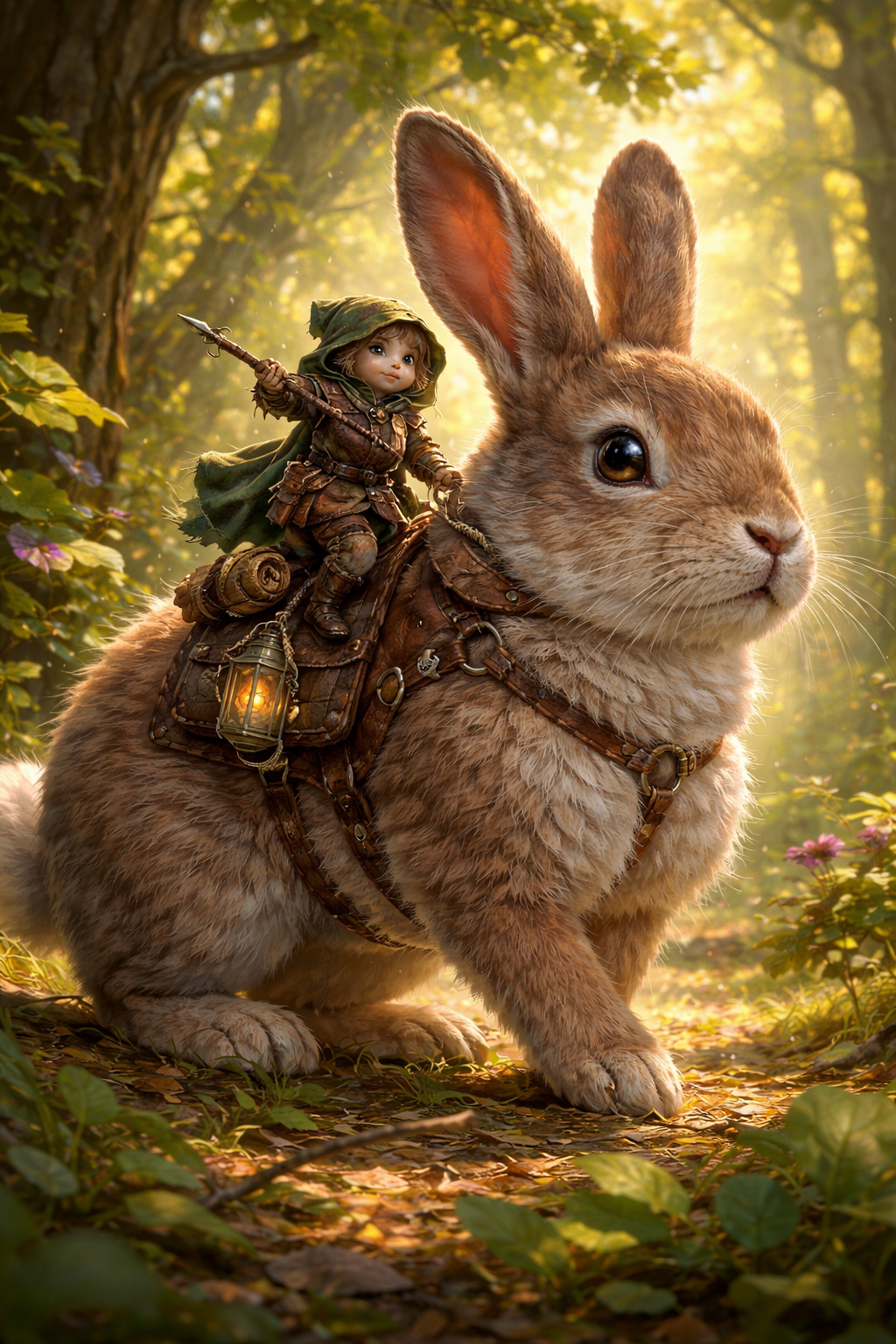
Mounts: A Hedranai can use:
- Mouse
- Rat
- Squirrel
- Rabbit
- Bat
- Raven
- Dog
- Cat (very risky, requires Animal Handling check)
- Other similarly sized creatures
as a mount if trained.
Regional Circulation
Every few generations, young Borrowkin (100-150 years old) will leave the clan area for 10–30 years to travel within the broader region. They do this to trade knowledge between clans and marry outside their hearth or field. This prevents stagnation — culturally and genetically. It is called “Walking the Thread.” It’s expected and encouraged. Many Hedranai have traveled surreptitiously with Adventure Parties in the past. In fact your party may have one traveling with you even now.
Returning from a Threadwalk elevates status. Returning from a Threadwalk with a new husband or bride elevates status even more so.
A Borrowkin who decides adventuring is a way of life, one who leaves Hearth or Field permanently to travel with Largefolk is seen as eccentric; like a hobbit who enjoys dragons, a monk who prefers taverns, a thief who gives away what he steals to those poorer than he, or watchmaker who smashes clocks. These celebrated individuals are called, the Far-Threaded. They are not disowned, not exiled, just… unusual.
When a Far-Threaded Hedranai encounters another clan, they are fed and given shelter. They are questioned about “Fresh Thread for the Loom” (news and such from afar). Occasionally, the Far-Threaded might be asked to “Mend the Broken Stitch” (ie spread some genetic diversity). The elder of the clan might present a young widow to the Far-Threaded and say something like, “Far-Threaded, the seam in this house was cut before its time. If it honors you, we would ask that you lend your thread to the weave, so the line may continue.”
Unless the clan being visited is politically opposed to the adventuring Hedranai. Then it’s up to the DM is the encountered clan hostile? indifferent? treacherous?
Adventuring Hedranai: Playing a Hedranai as PC
Among adventurers, Hedranai naturally gravitate toward roles that reward subtlety, ingenuity, and precision rather than brute strength. They excel as scouts, saboteurs, and infiltrators, slipping in where others cannot and altering the battlefield before a fight has even begun. Many become skilled artificers, rogues, rangers, or magic users, using clever devices, stealth, and arcane insight to influence events from the edges of conflict. Hedranai rarely serve as frontline combatants, preferring instead to win battles by changing the conditions of the fight—weakening a rope, disabling a mechanism, or striking at the exact moment an advantage appears. As a result, it is exceedingly uncommon to encounter a Hedranai barbarian or paladin. Clerics, however, do occasionally arise among them, typically those who have bound themselves to a place of worship. Such Hedranai often incorporate the beliefs of the Largefolk who use the shrine or temple, interpreting those traditions through their own understanding of the Creative Force that shapes and sustains the universe.
How does a Borrowkin interact with the rest of the party? On first meeting the Borrowkin (as the Largefolk would know them) would most likely have to convince the party they are not: drunk, hallucinating, or going crazy.
At 6 inches tall, they:
- Can ride in a wizard’s pocket.
- Hide in a fighter’s backpack.
- Act as infiltrators and scouts.
- Bypass doors, locks, and walls.
In combat they do not duel. A Hedranai will dart about the battle unseen; cutting straps, severing tendons and loosening saddle buckles. In fact, during battle, a Hedranai will attempt accomplish those tasks while scouting ahead of his party, beyond the fight. He or she will disable traps; tactically disrupt the enemy and conduct behind the lines sabotage. Given the chance and opportunity, the Hedranai will scout out the battle field the night before and untie anchor lines, sabotage siege ropes, or slip poison or potions into supplies.
They are incredible problem-solvers, not frontline tanks. They are built to change outcomes. Hedranai are most valuable in; urban intrigue, siege warfare, dungeon infiltration, and dragon encounters.
Those Borrowkin who leave the quiet stewardship of their clans to travel the wider world are known as Far-Threaded, and their outlook often differs slightly from that of their more settled kin. Adventuring Borrowkin tend to lean a bit more toward independence—some becoming Lawful Good idealists seeking to quietly improve the world, others neutral explorers driven by curiosity, and a rare few chaotic wanderers who choose to live outside the obligations of clan and hearth. Even so, the habits of their culture rarely leave them entirely. Far-Threaded Borrowkin still plan carefully, craft ingenious tools, and take agreements seriously. Though they may reject the fixed duties of a clan, they rarely abandon the underlying discipline of their people—they simply choose their own structures by which to live.
Sample Hedranai Rogue (Level 5 Example)
Name: Talan of the Barge Wright Inn (where his clan resides)
Race: Hedranai (Tiny Fey)
Class: Rogue 5 (Thief)
Background: Clan Steward (custom, similar to a Guild Artisan)
Alignment: Lawful Neutral
Age: 300
Basic Statistics
Size: Tiny (6 inches tall)
Creature Type: Fey
Speed: 25 ft, climb 25 ft
Armor Class: 17 (Studded leather 12 + Dex 5)
Hit Points: 33 (5d8 + 5)
Ability Scores
| Ability | Score | Modifier |
|---|---|---|
| Strength | 6 | -2 |
| Dexterity | 20 | +5 |
| Constitution | 12 | +1 |
| Intelligence | 14 | +2 |
| Wisdom | 14 | +2 |
| Charisma | 10 | +0 |
Saving Throws: Dex +8, Int +5
Skills Acrobatics +7, Investigation +5, Perception +5, Sleight of Hand +7, Stealth +9, Tinker’s Tools +5
Senses passive Perception 15
Languages Common, Sylvan, Hedranai Cant, Draconic
Challenge 3 (700 XP)
Proficiency Bonus +2
Skills
Hedranai rogues rely heavily on skills.
Expertise
- Stealth (+11)
- Sleight of Hand (+11)
Proficient Skills
- Perception +5
- Investigation +5
- Acrobatics +8
- Stealth +8
- Thieves’ Tools +8
- Tinker’s Tools +5
Hedranai Racial Traits
Tiny Frame
- Cannot wield Heavy weapons
- Strength weapon damage reduced one die step
- Disadvantage on Strength checks vs Small or larger creatures
Underfoot
- Can move through larger creatures’ spaces
- Opportunity attacks vs you at disadvantage
Impossible to Pin Down:
You have advantage on Dexterity saving throws against effects created by creatures Medium or larger. When a creature larger than you misses you with a melee attack, you can use your reaction to move 5 feet without provoking opportunity attacks.
Hard to Target: When a creature Large or larger makes a ranged attack against you beyond 30 feet, you gain half cover.
Crawlspace Native: You can move through openings as small as 1/2 inch without squeezing. You have advantage on Stealth checks in environments containing furniture, debris, foliage, or urban clutter.
Featherlight: A Hedranai takes no falling damage from falls of 40 feet or less. You treat “unclimbable” vertical surfaces as difficult terrain instead of requiring climbing checks (you move at half speed).
You can cling to a creature larger than you as part of your movement (Athletics or Acrobatics vs their Athletics). While clinging:
- You have advantage on your next attack.
- If they take damage, you must succeed on a DC 10 Dex save or fall.
Precision Anatomy
Once per turn when hitting a creature larger than you with a finesse or piercing weapon, deal +1d6 precision damage and choose:
- Reduce target speed by 10 ft
or - Target has disadvantage on its next opportunity attack
Inborn Tinkerer: All Hedranai are instinctive engineers. You gain proficiency with Tinker’s Tools.
After a short rest, you may craft one Tiny device from available materials. The device lasts until your next long rest or until you create another. After a long rest, you can craft a device that lasts until destroyed. Unless the Hedranai in question is an artificer, he or she may maintain only one such device at a time.
Examples include:
- Spring Snare: A creature entering a 5-foot space must succeed on a Dexterity saving throw (DC = 8 + your proficiency bonus + your Dexterity modifier) or fall prone.
- Threadline: A nearly invisible 20-foot tripwire (Perception check to detect).
- Latch Jammer: Grants advantage on one check to open, disable, or sabotage a mechanism.
- Whistle Capsule: Emits a piercing tone audible up to 300 feet.
Long Memory: A Hedranai has a cultural proficiency in the History skill. When making a History check concerning a structure, settlement, or battlefield that is more than 50 years old, you treat a roll of 9 or lower on the d20 as a 10 and THEN add any proficiency bonuses. Advantage if the area or structure was previously occupied by other Hedranai clans
Draconic Recognition: Dragons recognize the Hedranai as fellow long-lived stewards of territory. You have advantage on Insight checks when interacting with dragons. A dragon whose alignment is within one step of yours on the alignment chart begins interactions one step less hostile (DM’s discretion).
Some traits vary as to the Clans the Hedranai originate from.
Hearth Hedranai
Hearth clans dwell within structures: walls, rafters, under floorboards; barns, ships, mills, shops and ancient halls. They are:
- Wallwise. – advantage + proficiency bonus on Stealth and Survival checks in constructed environments.
- Domestic Engineer. – may treat furniture as full cover; clutter, and debris as half cover. And can fashion a short rest shelter in 10 minutes from household objects
- Latchcraft. – You gain proficiency in Investigation (Detect Traps) or Sleight of Hand (Lockpicking) [your choice]. And have advantage on any Perception checks within structures.
Hearth Borrowkin are masters of:
- Structural sabotage
- Door latches
- Armor buckles
- Siege rope failures
They are the whispered “house spirits.” Hearth Hedranai while not shunned by other Fey are not treated cordially or with respect.
Rogue Class Features
Sneak Attack: 3d6
Cunning Action
Bonus action:
- Dash
- Disengage
- Hide
Thieves’ Cant
Roguish Archetype: Thief
Fast Hands
Use object, Sleight of Hand, or thieves’ tools as a bonus action.
Second-Story Work
Climbing does not cost extra movement.
(Excellent for Hedranai moving through walls, beams, rafters.)
Equipment
Scaled for Hedranai size.
Needle Rapier
- Damage: 1d6 piercing
- Finesse, light
- Clearly a polished sewing needle
Button Shield
- +1 AC (small buckler)
Studded Leather Armor
Made from stitched leather scraps and watch springs.
Thimble Helmet
Thread Grapple
30 ft silk thread with hook made from a bent pin.
Tinker Kit
Watch springs, wire, buttons, thread spools.
Tiny Lantern
Modified firefly lamp.
Combat Style
A Hedranai rogue rarely fights toe-to-toe.
Typical tactics:
- Hide in clutter or shadows
- Move through enemy spaces
- Strike tendons with Sneak Attack (a critical hit could slice right through an Achille’s Heel)
- Disengage and reposition
- Sabotage battlefield elements
Example attack:
Needle Rapier
+8 to hit
Damage:
1d6 + 5 + 3d6 Sneak Attack
Average: 18 damage
All from a creature six inches tall.
Roleplay Notes
Talan speaks calmly and precisely.
He refers to others as Largefolk.
He carries a tiny stitched journal recording structural weaknesses of buildings he visits. He visits regularly with clans encountered during the party’s travels (DM this is a GREAT way to disseminate vital intelligence to the party)
If encountering a dragon, he introduces himself formally: “Talan, Hedran of the Barge Wright Inn
At 6 inches tall:
- A human sized dagger is the size of a greatsword and treated as a two-handed heavy weapon.
- A housecat is a dire tiger.
- A teacup is a bathtub.
- A coin is heavy cover
Hedranai:
- Scout air vents.
- Sabotage siege engines from the inside.
- Disable armor straps mid-combat.
- Ride familiars.
- Climb dragons.
They are infiltrators. Not duelists nor frontline bruisers
Return to the Blog Carnival Archive
Members of DnD Beyond can soon add this race to their campaigns.
Hedranai base images were built using ChatGPT using prompts and modified by Alien Graphics ©2026 Alien Graphics

All verbiage is ©2026 Alien Graphics and all imagery is ©2026 Alien Graphics and shared under the CC BY-NC-SA
 Vulcan Stev's Database