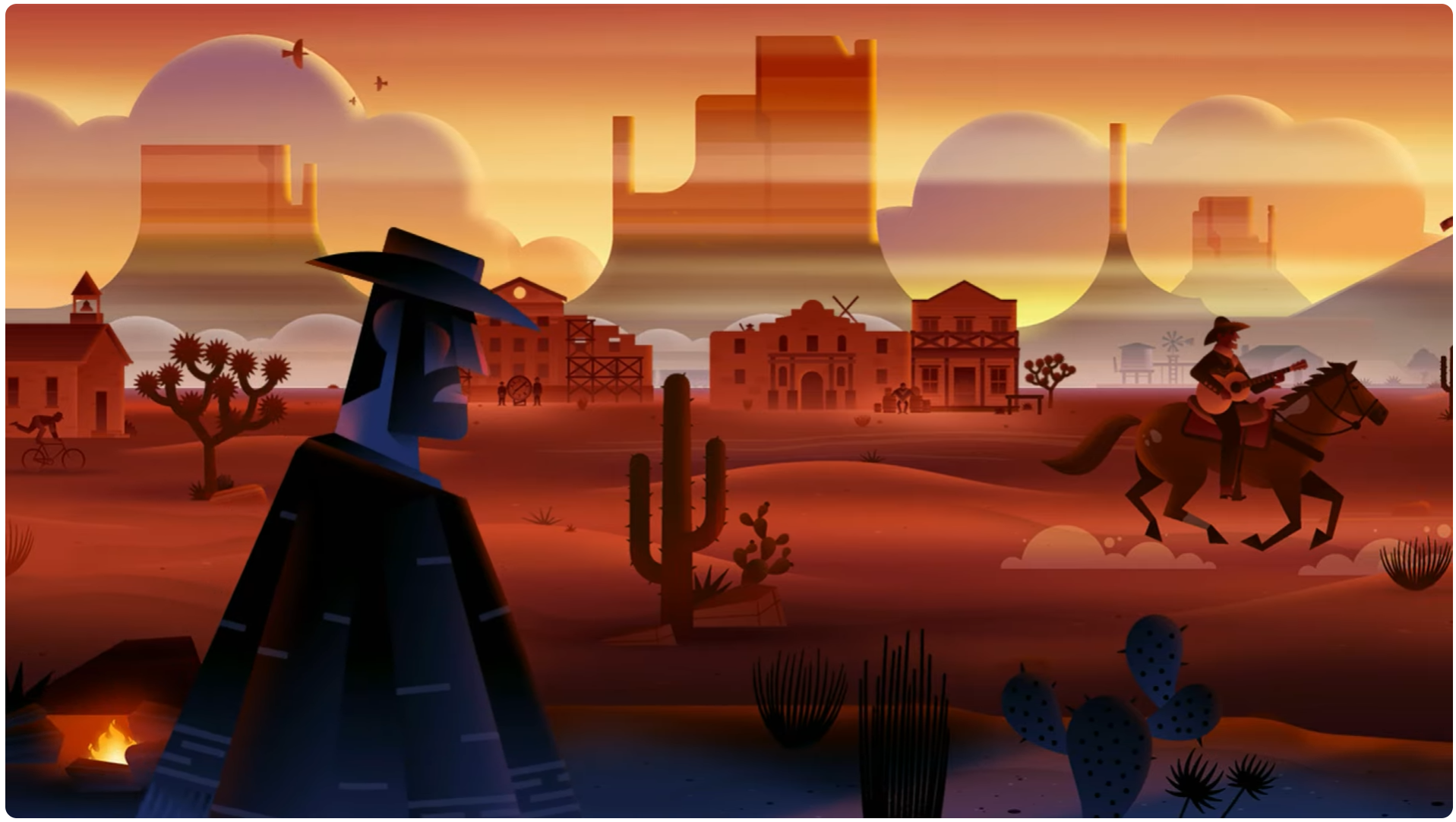
The Roku Western Screensaver made its debut in August of 2020. It is still available as a downloadable screensaver option on your Roku device.
Easter Eggs from the 2020 Space Screensaver
Easter Eggs from the 2021 Romance Screensaver
Easter Eggs from the “2022 Fall Stroll Through the Park” Roku City screensaver
Easter Eggs from the “2022 Winter Stroll Through the Park” Roku City screensaver
Easter Eggs from the “2023 Spring Stroll Through the Park” Roku City screensaver
Easter Eggs from the “2023 Summer Stroll Through the Park” Roku City screensaver
Easter Eggs from the 2025 Wicked remake of Roku City (11/13 – 11/16 2025) & (12/30 – 1/3/2026)
Easter Eggs from Wal-Mart WhoKnewVille (11/22-26/2025)
Easter Eggs from the 2026 XXV Winter Olympiad makeover (2/6-23/2026)

The slow scroll in the background is a tribute to Monument Valley, a heavily used location for many Hollywood westerns. It was most famously used for Stagecoach (1939), directed by John Ford. Other famous westerns filmed in Monument Valley include; The Searchers (1956), Fort Apache (1948), She Wore a Yellow Ribbon (1949), Rio Grande (1950), Once Upon a Time in the West (1968) and The Lone Ranger (2013). Easy Rider (1969) and Forrest Gump (1994) also made use of the iconic landscape as locations as well.
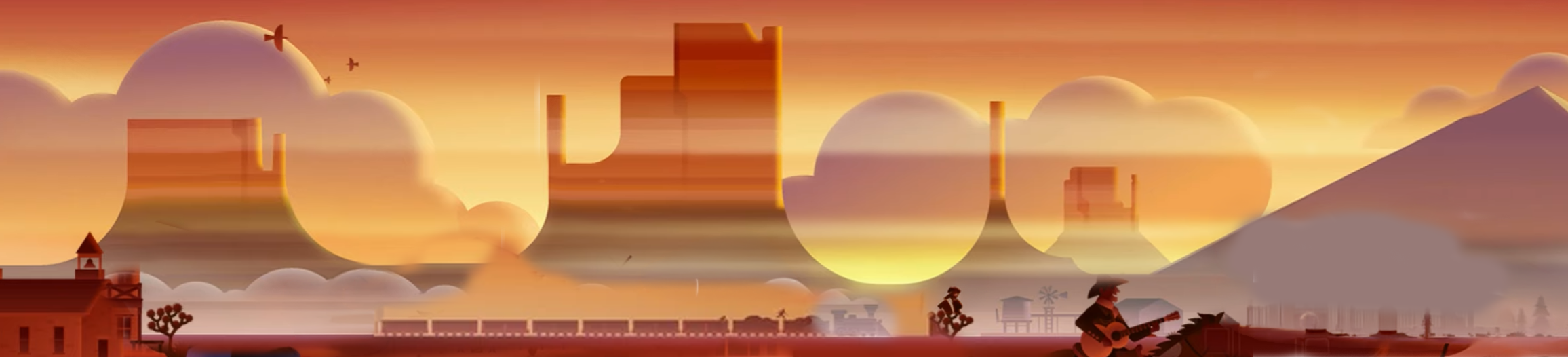
Zooming in on the left 1/3 of the background we see 4-4-0 steam locomotive pulling into a station. There seems to be someone running across the roof. Famous westerns involving train top action include; Emperor of the North Pole (1973), Breakheart Pass (1975), The Great Locomotive Chase (1956), The Great Train Robbery (1903), The Train Robbers (1973), Denver and Rio Grande (1952), The Iron Horse (1924), Union Pacific (1939) and 3:10 to Yuma (2007).

Zooming in on the middle portion we see Dr. Lovelace’s steam-punk Spider Robot attacking a western boomtown Wild Wild West (1999) and a gushing oil well. Gushing oil wells have been featured in; Giant (1956), Tulsa (1949), Oklahoma Crude (1973), Boom Town (1940), Hellfighters (1968), Blowing Wild (1953) and The Stars Fell on Henrietta (1995).
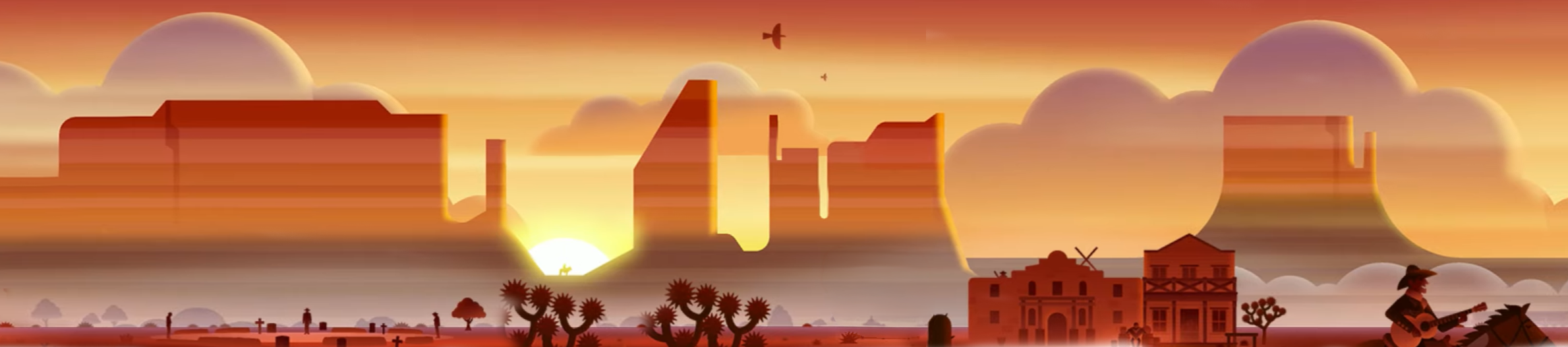
In the last third of the background we see the hero silhouetted on his horse by the setting sun. This iconic image has been featured in The Searchers (1956), Shane (1953), Unforgiven (1992), She Wore a Yellow Ribbon (1949), The Wild Bunch (1969) and Riding the Sunset Trail (1945)

Front and center, larger than life, is the Man with No Name. This is Clint Eastwood’s character in Sergio Leone’s Dollars Trilogy of Italian Spaghetti Western films: A Fistful of Dollars (1964), For a Few Dollars More (1965), and The Good, the Bad and the Ugly (1966). He is recognizable by his ubiquitous sarape, brown hat, tan cowboy boots, fondness for cigarillos, and the fact that he rarely speaks.
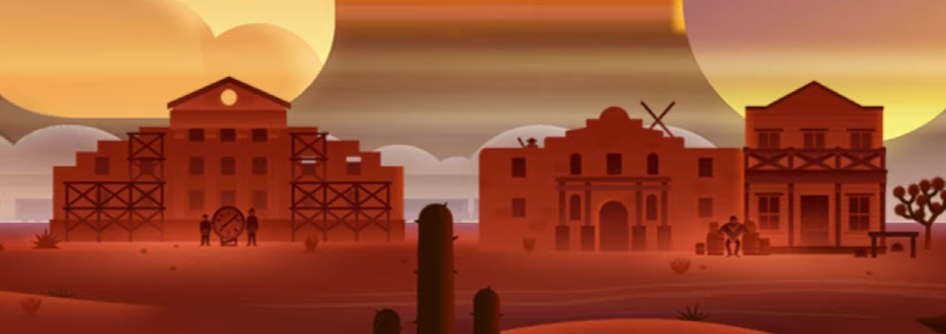
First up is Marty and Doc posing by the new clock for under construction Hill Valley Courthouse from Back to the Future Part III (1990). Next to the courthouse is The Alamo. The Alamo has been the subject of many Hollywood films, including; The Alamo (2004), The Alamo (1960), The Last Command (1955), Alamo: The Price of Freedom (1988), Martyrs of the Alamo (1915), Heroes of the Alamo (1937), and Davy Crockett: King of the Wild Frontier (1955). Next door to the the Alamo is standard western Saloon. Nearly every western I’ve ever seen features a scene (or two) set in a saloon.
Standing by the barrels is someone who looks like Mr. Incredible. However, zooming in on the figure it looks to be a hatless figure wearing a Mexican poncho. Does anyone recognize him?
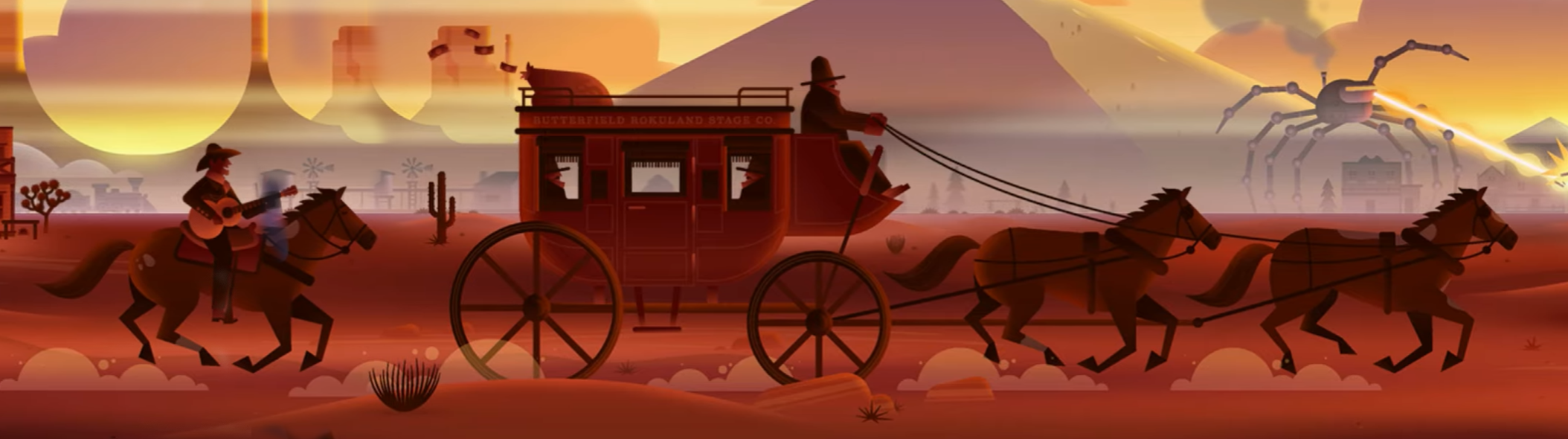
The nitpicker in me does NOT understand HOW the Man with No Name can walk past a singing cowboy and galloping horses pulling a stagecoach. It was suggested the singing cowboy was Roy Rogers riding Trigger. However since Trigger had a lighter colored mane, I’m thinking that’s Gene Autry on Champion. Among Gene’s more notable films are; Tumbling Tumbleweeds (1935), The Phantom Empire (1935), The Old Corral (1936), South of the Border (1939), Back in the Saddle (1941), The Cowboy and the Indians (1949), The Strawberry Roan (1948), The Big Sombrero (1949), The Blazing Sun (1950) and Last of the Pony Riders (1953).
The Stagecoach is a two-for-one reference. The first being John Ford’s Stagecoach (1939), the money flying away as the coach races ahead is an iconic shot. However the name of the Stagecoach is a direct reference to The Hateful Eight (2015). Other notable films involving a stagecoach include; Stagecoach (1966), Stagecoach (1986), Stagecoach Run (1936), The Long Riders (1980), Red River (1948) and Maverick (1994)
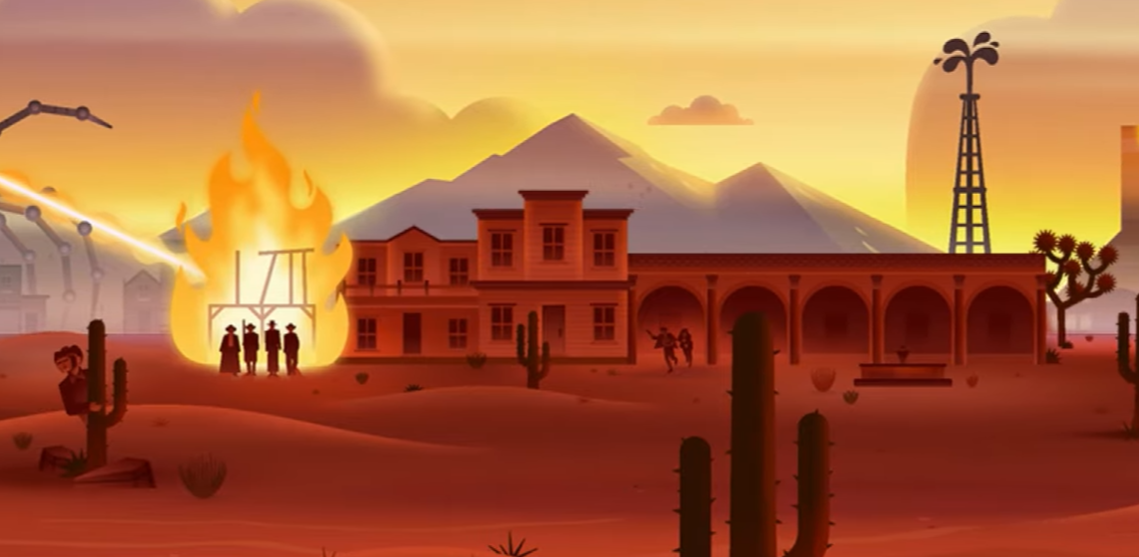
Continuing on we see Yul Brenner’s “Gunslinger” from Westworld (1973). Walking in front of the burning gallows from Silverado (1985) are the Earps and Doc Holiday from Tombstone (1993) [Dale F. points out that the way the gallows are drawn it looks like LZ II, Led Zepplin’s 2nd album featured an explosion on the cover, too much of coincidence NOT to mention). It’s been suggested that the running figures are Butch Cassidy and the Sundance Kid, but the second figure looks too feminine, I’m going with El Mariachi and Caroline from Desperado (1995) but it could be either film {YMMV}.
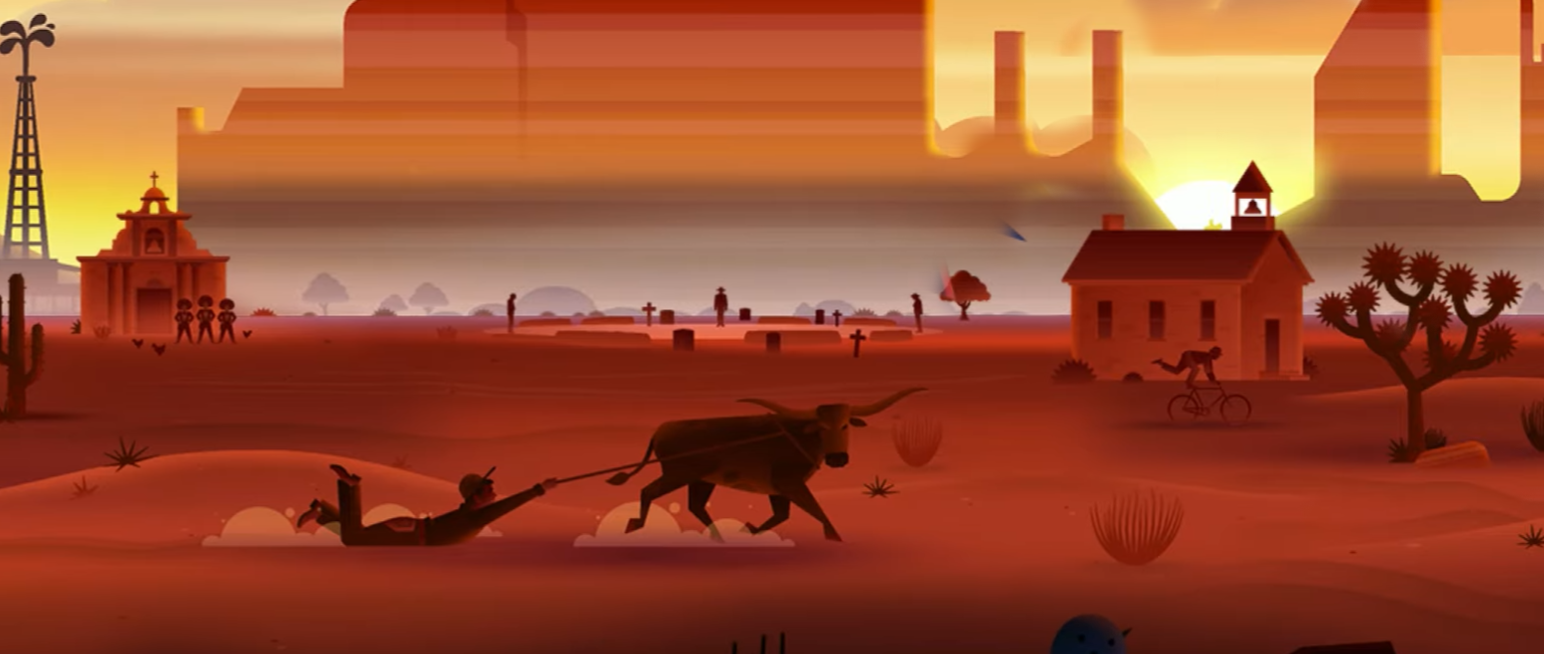
Tumbling along with the tumbleweeds we come across the Three Amigos in front of the Santo Poco Mission from Three Amigos (1986). Mitch Robbins is being dragged across the burning sand (City Slickers 1991) in front of the Sad Hill Cemetery from The Good, the Bad, and the Ugly (1966) while Butch Cassidy rides his bicycle from Butch Cassidy and the Sundance Kid (1969).
Did we get them all? Are there some references you disagree with? Ones you caught that we missed? Let us know.
All images are TV screencaps from Roku’s official YouTube video and are copyright Roku. These are fair use. I make no claim on any of the images.
 Vulcan Stev's Database