Cassia’s Brutes – Et tu, Brute?, Marcus Junius Brutus
https://wiki.wizard101central.com/wiki/Creature:Cassia%27s_Brute
https://en.wikipedia.org/wiki/Et_tu,_Brute%3F
https://en.wikipedia.org/wiki/Marcus_Junius_Brutus

If your Wizard is learning to Weave with Ice, you encounter Julius Freezer, the Icon of Ice. He knows of the corruption of magic that Your Wizard has encountered. It is easier for him to show what he discovered if you join him in Avalon.
During his mortality, he set out from his native Aquila hoping to discover more of the Spiral. He went world to world, studying their unique magicks. Cassia and her Brutes, her Legionnaires, tracked Julius to remove him so Cassia could become the new Dean of the College of Ice.
Cassia’s Brute: “Prepare Freezer, we have been sent to stab you… with our hammers.”
Julius Freezer: “Et tu, Brutes?”
Cassia’s Brute: “I don’t speak Polarian. I just know we’re getting paid by Cassia to get you out of the way, so she can become the new Dean of the College of Ice. Pretty boring goal, if you ask me. But nobody did. So here we are.”
Julius Freezer: “Very well, have at thee.”
Et tu, Brute? (pronounced [ɛt ˈtuː ˈbruːtɛ]) is a Latin phrase literally meaning “and you, Brutus?” or “also you, Brutus?”, often translated as “You as well, Brutus?”, “You too, Brutus?”, or “Even you, Brutus?”. The quote appears in Act 3, Scene 1 of William Shakespeare’s play Julius Caesar, where it is spoken by the Roman dictator Julius Caesar, at the moment of his assassination, to his friend Marcus Junius Brutus, upon recognizing him as one of the assassins. The phrase is often used apart from the plays to signify an unexpected betrayal by a friend.
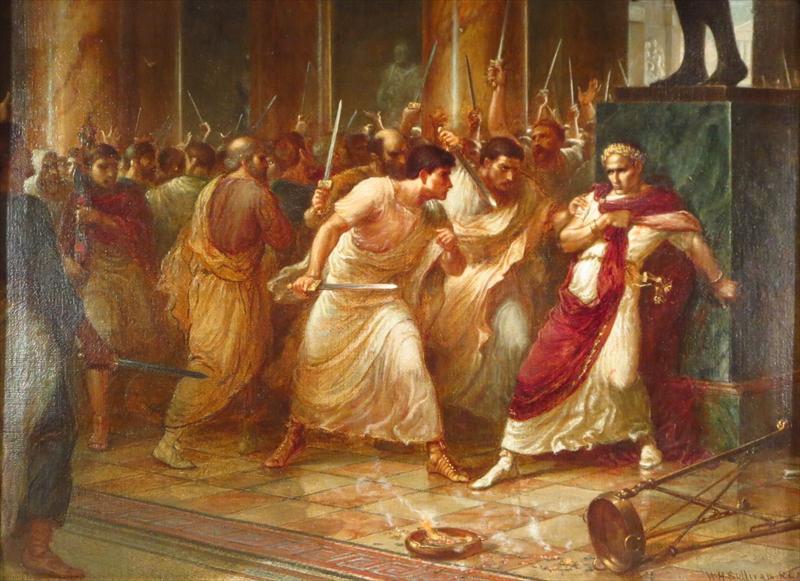
It is located in the Royal Shakespeare Theatre.
There is no evidence that the historical Caesar spoke these words. Though the historical Caesar’s last words are not known with certainty, the Roman historian Suetonius, a century and a half after the incident, claims Caesar said nothing as he died, but that others reported that Caesar’s last words were the Greek phrase Kaì sý, téknon (Καὶ σύ, τέκνον), which means “You too, child” or “You too, young man” to Brutus.
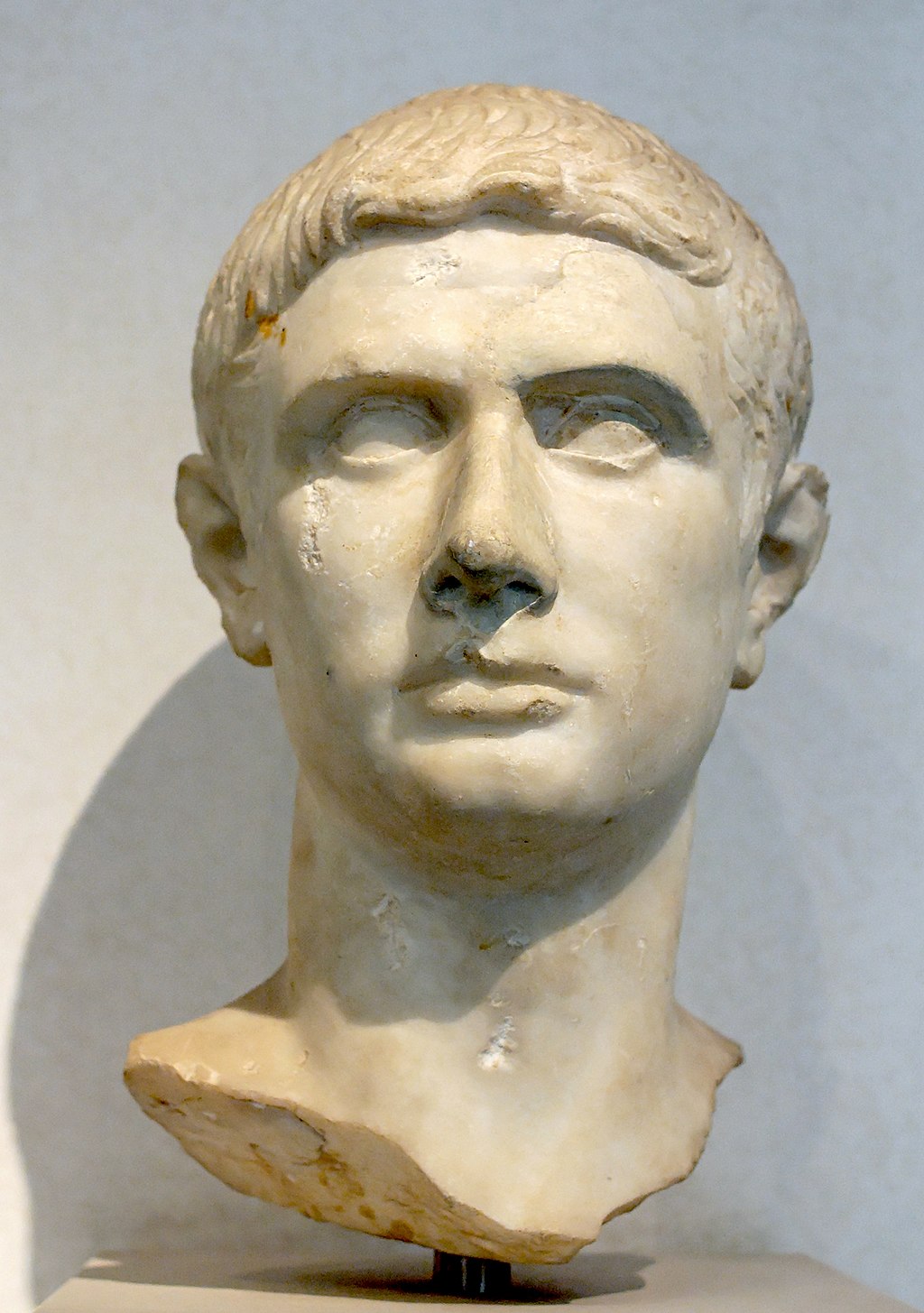
Marcus Junius Brutus (c. 85 BC – October 23, 42 BC) was a Roman politician, orator, and the most famous of the assassins of Julius Caesar. After being adopted by a relative, he used the name Quintus Servilius Caepio Brutus, which was retained as his legal name. He is often referred to simply as Brutus.
Early in his political career, Brutus opposed Pompey, who was responsible for Brutus’ father’s death. He also was close to Caesar. However, Caesar’s attempts to evade accountability in the law courts put him at greater odds with his opponents in the Roman elite and the senate. Brutus eventually came to oppose Caesar and sided with Pompey against Caesar’s forces during the ensuing civil war (49–45 BC). Pompey was defeated at the Battle of Pharsalus in 48, after which Brutus surrendered to Caesar, who granted him amnesty.
With Caesar’s increasingly monarchical and autocratic behavior after the civil war, several senators who later called themselves liberatores (liberators) plotted to assassinate him. Brutus took a leading role in the assassination, which was carried out successfully on the Ides of March (15 March) of 44 BC. In a settlement between the liberatores and the Caesarians, an amnesty was granted to the assassins while Caesar’s acts were upheld for two years.
Popular unrest forced Brutus and his brother-in-law, fellow assassin Gaius Cassius Longinus, to leave Rome in April 44. After a complex political realignment, Octavian – Caesar’s adopted son – made himself consul and, with his colleague, passed a law retroactively making Brutus and the other conspirators murderers. This led to a second civil war, in which Mark Antony and Octavian fought the liberatores led by Brutus and Cassius. The Caesarians decisively defeated the outnumbered armies of Brutus and Cassius at the two battles at Philippi in October 42. After the defeat Brutus took his own life.
His name has become a synonym and byword for “betrayal” or “traitor” in most languages of Europe. His condemnation for betrayal of Caesar, his friend and benefactor, is perhaps rivalled only by the name of Judas Iscariot, with whom he is portrayed in Dante Alighieri’s Inferno. He also has been praised in various narratives, both ancient and modern, as a virtuous and committed republican who fought – however futilely – for freedom and against tyranny.
Avalon references are located here.
Although I am well versed in Pop Culture references, I do not claim to have caught them all. Let me know your favorites in the comments and if I’ve missed one you caught, let me know so I can add it to the list.
Text for this article is excerpted from the linked wiki pages.
Cassia’s Brute image is from Wizard101, and is copyright of KingsIsle Entertainment.
“Et tu Brute” image is borrowed from Wikipedia. It is in the public domain.
Brutus bust image is borrowed from Wikipedia. It is copyright Marie-Lan Nguyen and has been released into the public domain.
Image usage qualifies as fair use under US copyright law.
 Vulcan Stev's Database