Unofficial parody. For Dummies and its related trade dress are trademarks of John Wiley & Sons, Inc. Pokémon and related properties belong to their respective owners. No affiliation, sponsorship, or endorsement is implied.
I make no bones about the fact that I’ve only been a Pokemon hobbyist since April 2026 when I was requested (more like commanded) to learn the game to play with my grandkids. I’m still learning the terminology, strategies, and other things related to the hobby. When I started I couldn’t name ten Pokemon if I tried. I didn’t know the difference between a Holo and Reverse Holo. I stared horrified at the counter help of my FLGS when they asked if I was going to rip my new packs there in the store (I just paid $6.99 / pack why would I tear them in half?)
So to borrow a term from those ubiquitous yellow self help books, here’s my list of things I wish I had known when I got started in the hobby. Please note these terms are for Pokémon only, other CCGs may share or use their own terminology
Core Acronyms & General Terms
- CCG / TCG: Collectible Card Game or Trading Card Game (often used interchangeably for games like Magic: The Gathering, Pokémon, or Yu-Gi-Oh!).
- LCG: Living Card Game (non-random games where expansion packs contain fixed sets of cards).
- FLGS: Friendly Local Game Store.
- PC: Personal/Private Collection (cards you keep rather than trade or sell).
- Bulk: Common cards with little to no secondary market value.
- Hit: A rare, valuable, or special card pulled from a pack (such as a holo or ultra-rare).
- Chase Card: The specific high-value card that everyone tries to pull from a set.
- Raw: An ungraded card that has not been encapsulated by a professional authentication company.
- Slab: A card that has been graded, authenticated, and sealed in a hard plastic case.
- Pop Report: Population Report; a database by grading companies showing how many copies of a specific card received a particular grade. (My personal Pop Report is DEX on my iPad)
Gameplay & Strategy Terms
- Meta / Metagame: The dominant strategies, characters, and deck builds currently winning tournaments.
- Tap or Cut: After a deck shuffle, you opponent can choose to tap (let your shuffle stand as is) or cut the deck themselves.
- Exhaust / Dull: Turning or rotating a card to show it has been used or spent for an action or resource.
- Staple: A card that is universally good and heavily included in most competitive decks for a specific format.
- Teched: A specialized, unexpected single card added to your regular deck to counter specific opponents or unexpected situations.
- Top-Deck: Drawing the exact card you need right off the top of your deck during a crucial moment in the game.
- Net-Decking: Copying a winning or popular decklist online card-for-card rather than building one independently.
- Rotation: When older card sets legally cycle out of standard competitive play formats to keep the game fresh. (as of 9/26 Pokemon sets H/cards released after April 2024, I/cards released after April 2025 and J/cards released after April 2026 are in current rotation)
- Banlist: The official list of cards banned from tournament play due to being overpowered.
Card Classifications
- Basic Pokémon: Cards that you can play directly from your hand onto your Bench or Active spot.
- Evolution Pokémon (Stage 1 / Stage 2): Cards that build on top of previous matching stages to gain more health and stronger attacks.
- Energy: What your Pokemon needs for attack or retreat (Energy comes in 8 forms; Leaf Green, Fire Red, Water Blue, Electric Yellow, Psychic Purple, Fighting Orange, Dark Deep Blue, and Metal Grey)
- Item Cards: Trainer cards that provide immediate effects and can be played as many times as you want during your turn.
- Supporter Cards: Powerful Trainer cards that offer major setup effects, but you are limited to playing only one per turn.
- Stadium Cards: Shared environment cards placed in the center that affect both players until a new stadium replaces them.
- Pokémon Tool Cards: Special equipment attached to your individual Pokémon to grant passive bonuses or extra abilities.
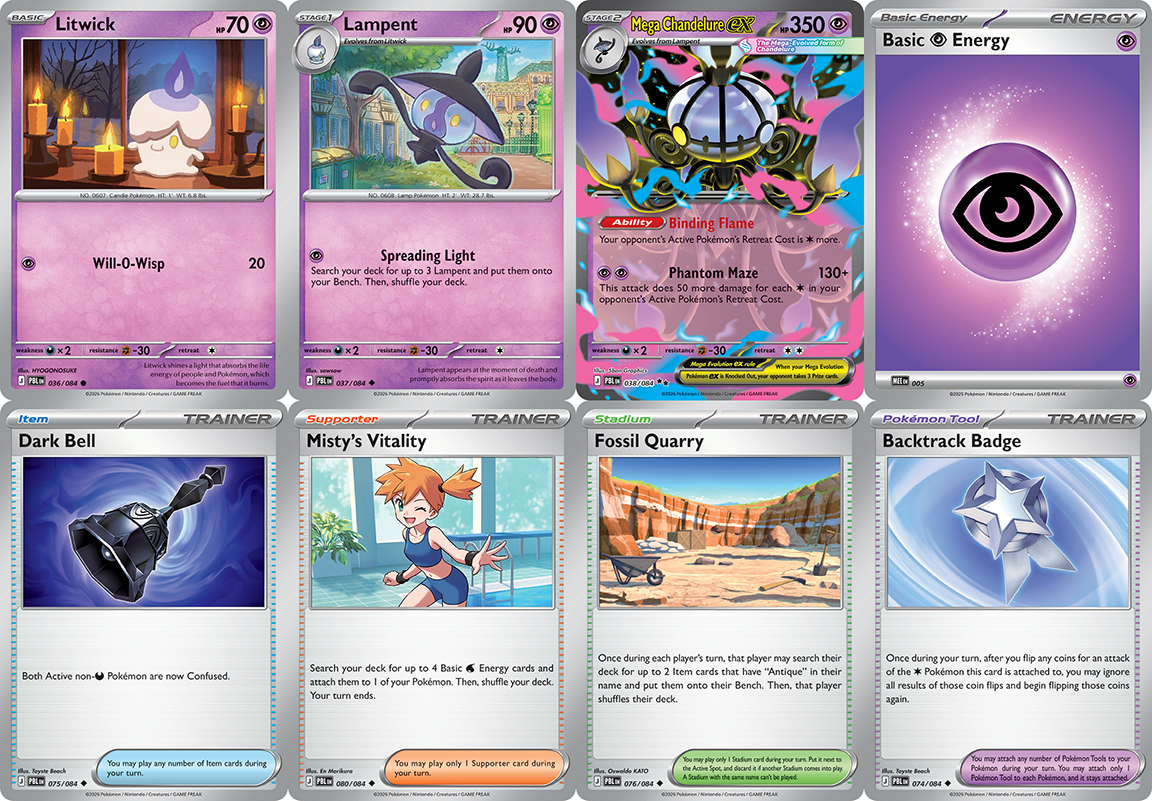
Dark Bell (Item), Misty’s Vitality (Supporter), Fossil Quarry (Stadium) and Backtrack Badge (Tool)
all cards from Pitch Black
Game Zones
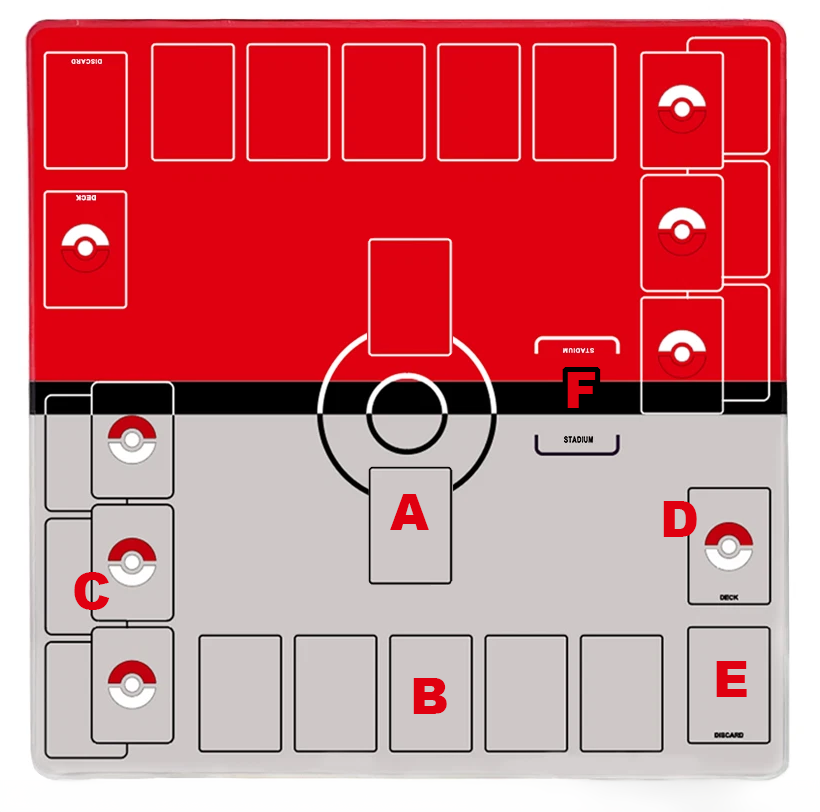
- Active Pokémon (A): The primary Pokémon is positioned in this spot. from there it can attack and take damage.
- Bench (B): The holding area behind your active spot that holds up to five waiting Pokémon.
- Prize Cards (C): The six face-down cards set aside at the start of the match; you draw one every time you knock out an opponent’s Pokémon to win the game.
- Deck (D): Where your cards wait to be put into play.
- Discard Pile (E): The designated trash zone where used items, knocked-out Pokémon, and spent cards go.
- Stadium (F): Where the shared environment cards are placed.
Battle Mechanics
- Mulligan: Drawing a new starting hand of seven cards because your original draw had zero Basic Pokémon, allowing your opponent to draw extra cards. (1 per # of times you do this)
- Retreat: Switching your Active Pokémon with a benched Pokémon by paying the retreat cost shown in Energy symbols.
- Knocked Out (KO): When a Pokémon’s damage counters equal or exceed its total health points, forcing it to the discard pile.
- Special Conditions: Status effects inflicted on a Pokémon, which include Poisoned, Burned, Asleep, Paralyzed, and Confused.
Collecting & Rarity Terms
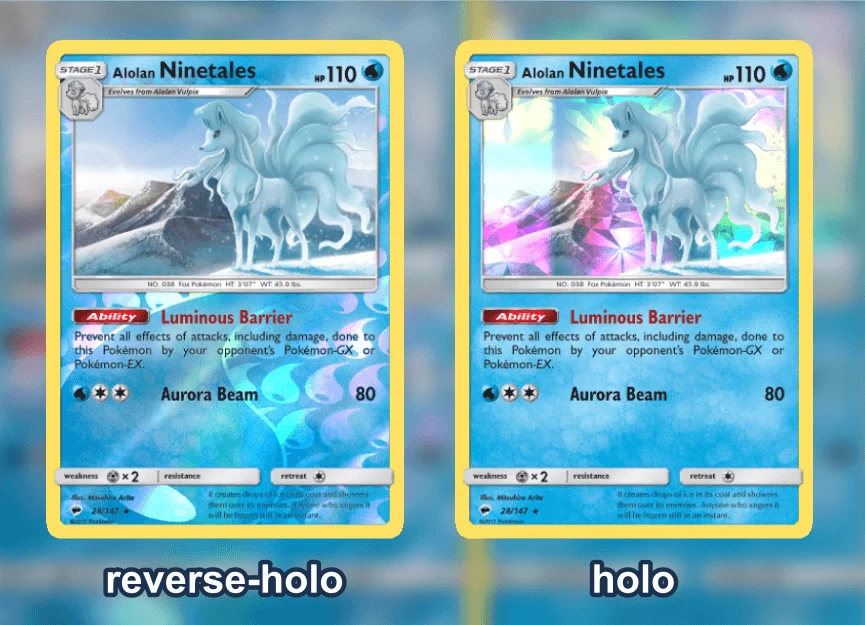
- Holo: When the Pokemon art and card border have a holographic overlay
- Reverse Holo: When the energy color with the game verbiage has a holographic overlay
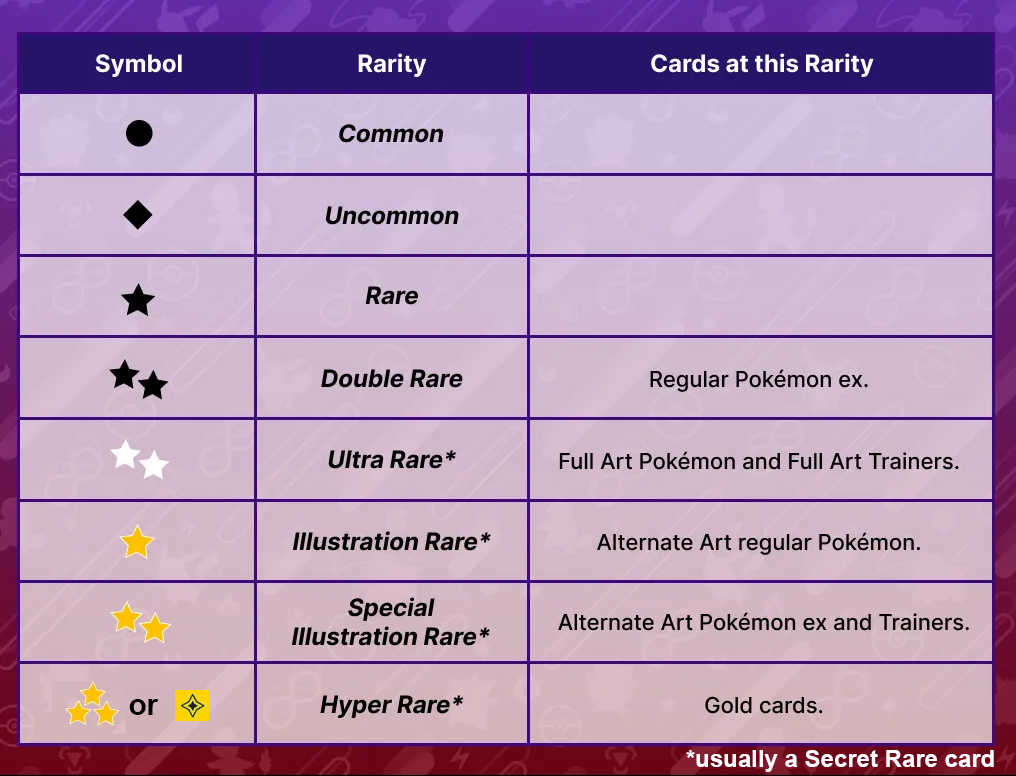
- Secret Rare: Cards with a collector number that exceeds the standard set count (such as Mega Chandelure ex 115 in an 84-card set see below).
- Illustration Rare (IR) / Special Illustration Rare (SIR): Modern rare cards featuring borderless, story-driven full artwork of Pokémon in their natural habitats.
- PTCGL: Pokémon TCG Live, the official digital application used to play the game online.
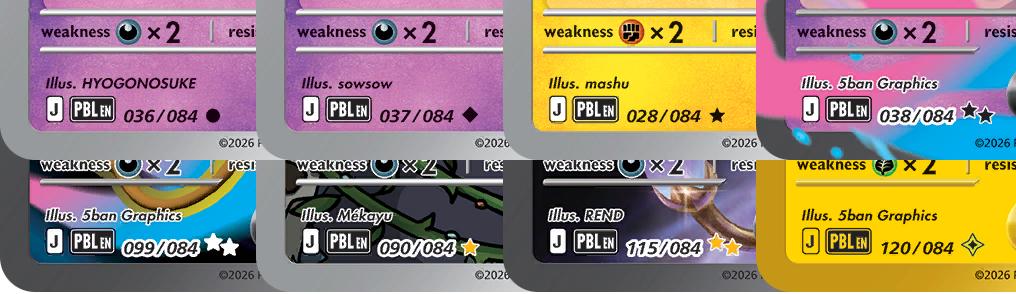
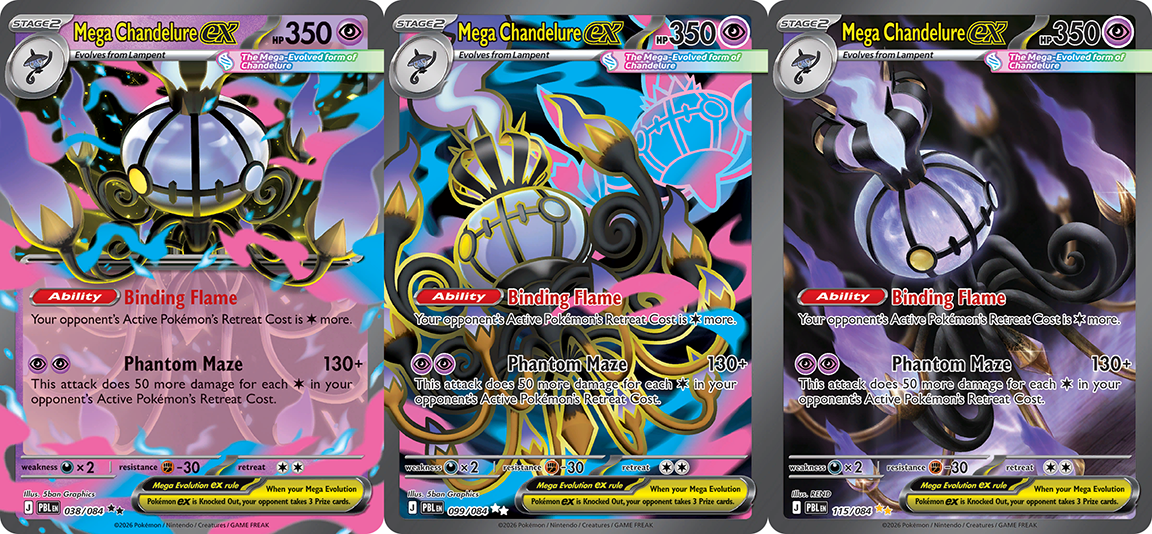
Double Rare 038/084, Ultra Rare 099/084, SIR 115/084
Advice from my FLGS
Play what you know. Comfort gives some percentage points over trying to meta deck. / Froggers aka Azriel S.
Pokémon for Dummies Parody Disclaimer
This image is an unofficial work of parody using images created by ChatGPT for entertainment and commentary purposes. It is not an actual For Dummies publication and is not sponsored, authorized, approved, or endorsed by John Wiley & Sons, Inc.
For Dummies, its associated trademarks, logos, and related trade dress are trademarks or registered trademarks of John Wiley & Sons, Inc. and/or its affiliates. The recognizable For Dummies cover design is referenced here solely as part of the parody. No ownership of those trademarks or trade dress is claimed or implied.
Pokémon and related trademarks and intellectual property are the property of their respective owners. This parody is likewise not affiliated with, sponsored by, or endorsed by The Pokémon Company, Nintendo, Game Freak, or Creatures Inc.
Pokémon card images are borrowed from LimitlessTCG.com Manipulation by Alien Graphics
Pokémon Battlefield Image is borrowed from eBay with modifications by Alien Graphics.
Rarity Chart is borrowed from TCGPlayer.com with modifications by Alien Graphics.
Holo and Reverse-Holo comparison is borrowed from RareCards.nl

